

Option A
Fixed Expenses
The predictable, non-negotiable anchor of your budget.
Best for: Building your baseline budget floor - the minimum you must earn each month to cover obligations.
Option B
Variable Expenses
The flexible, controllable costs where real budget adjustments happen.
Best for: Finding room to cut spending, redirect cash toward savings, or absorb unexpected costs.
What Makes an Expense 'Fixed' or 'Variable'?
Every dollar leaving your account each month behaves in one of two basic ways: it's either a set amount you owe regardless of what you do, or it shifts depending on your choices and habits. That's the core distinction between fixed and variable expenses - and it's more useful than it sounds.
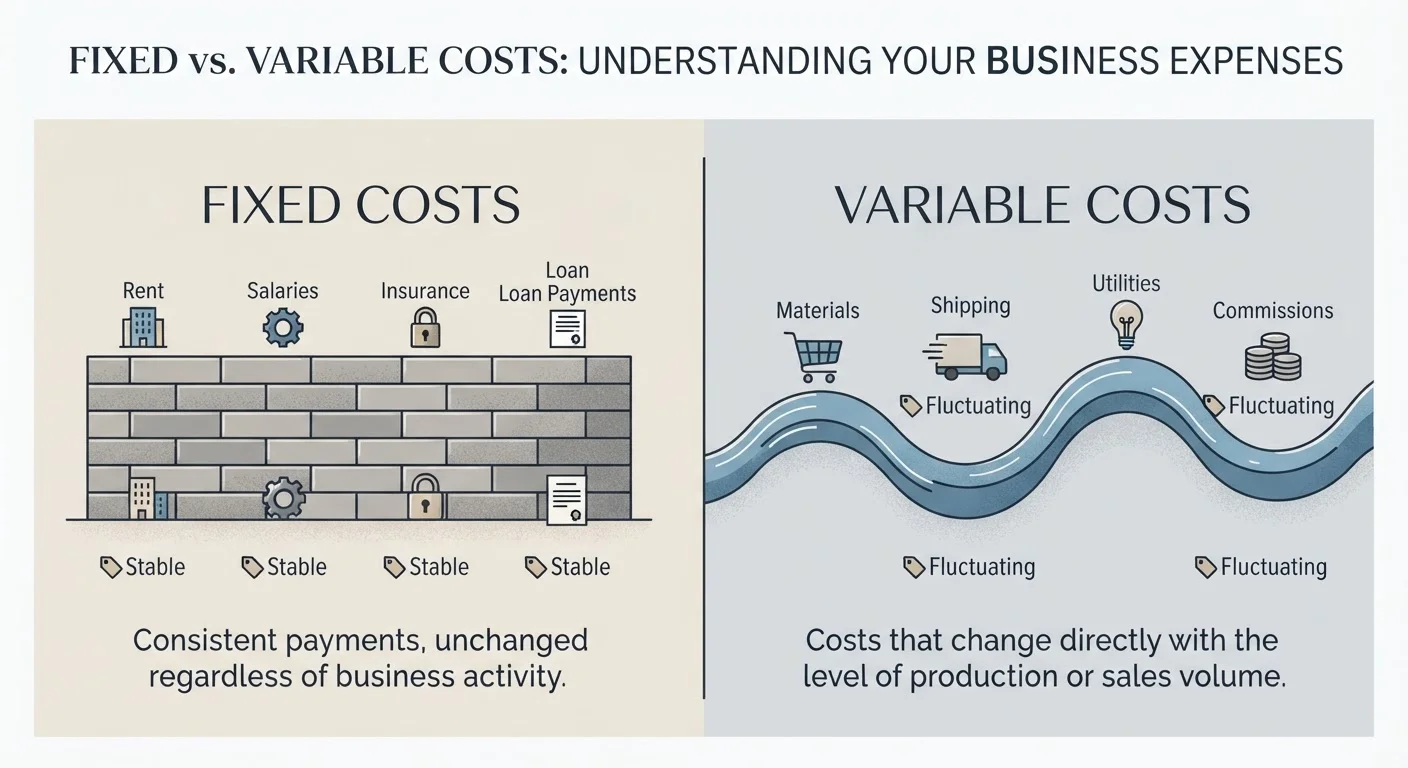
Fixed expenses are costs that stay the same from month to month. Rent or mortgage payments, car loan installments, insurance premiums, and subscription services at a locked rate are all fixed. You owe the same amount whether you had a great month or a rough one. These aren't typically negotiable in the short term - you either pay them or face consequences.
Variable expenses are costs that fluctuate based on usage, behavior, or circumstance. Groceries, gas, dining out, clothing, and entertainment all fall here. The total changes month to month, and - crucially - you often have real control over how much you spend in these categories.
There's also a middle ground worth recognizing: semi-variable expenses. Utilities are the classic example. Your electric bill has a fixed base charge, but the bulk of it rises or falls with how much you use. Cell phone plans with data overage charges work similarly. Understanding where each expense falls helps you build a budget that reflects how money actually moves rather than how you wish it did.
Side-by-Side: How They Compare
Seeing fixed and variable expenses laid out directly makes it easier to map your own spending into the right buckets. Use this comparison as a reference when categorizing your monthly costs.
| Criterion | Fixed Expenses | Variable Expenses |
|---|---|---|
| Amount each month | Stays the same | Changes month to month |
| Examples | Rent, car loan, insurance | Groceries, gas, dining out |
| Short-term control | Little to none | High - responds to behavior |
| Budget planning role | Sets your minimum income floor | Primary area for spending cuts |
| Risk if unpaid | High - late fees, credit impact | Lower - flexible by nature |
| Predictability | Easy to forecast exactly | Requires estimation or tracking |
One practical note: a cost being "fixed" doesn't mean it's permanent. A car loan ends. A lease can be renegotiated. What makes it fixed is that it doesn't change based on your behavior during the current billing cycle. Variable costs, by contrast, respond almost immediately to the choices you make this week.
Why This Distinction Changes How You Budget
Most people approach budgeting by looking at total spending and trying to cut across the board. That approach is frustrating because not all spending is equally cuttable. Sorting costs by type first changes what you can actually do with that information.
Fixed expenses define your floor. Add up everything fixed - rent, loan payments, insurance, subscriptions - and you have the minimum dollar amount you must bring in each month to avoid falling behind. If that number is uncomfortably close to your income, the problem isn't your coffee habit; it's the structure of your fixed obligations. That may mean renegotiating a lease, refinancing debt, or making a bigger lifestyle change.
Variable expenses are your levers. These are where short-term adjustments actually work. Cutting grocery spending by planning meals, pulling back on dining out, or pausing a streaming service - these moves show results within a single billing cycle. If you're trying to redirect money toward savings or pay down debt faster, variable spending is where you look first.
For people whose income shifts month to month, this distinction becomes even more critical. Budgeting on an irregular income requires knowing your fixed floor so you can prioritize what gets paid in a lean month versus what can flex.
Don't Confuse 'Variable' With 'Optional'
Variable simply means the amount changes - not that the expense is a luxury. Food, fuel, and utilities are variable in dollar terms but are genuinely necessary. When budgeting, separate the concept of variability from whether a cost is discretionary (a want) or non-discretionary (a need). Treating all variable expenses as cuttable can lead to budgets that look good on paper but fail immediately in real life.
It's also worth noting that some variable expenses are genuinely non-negotiable in practice, even if they fluctuate. Groceries, for example, are variable but not optional. Knowing this prevents over-optimistic budget cuts that don't hold up in real life. For a full glossary of terms like discretionary spending and sinking funds, see key budgeting terms every beginner should know.
Once you've categorized your expenses this way, the next step is building cushion for costs that don't fit neatly into either category - the unexpected ones. Building a budget that survives unexpected expenses is a natural next step once you know your fixed and variable baseline.
This article is for general informational and educational purposes only. It does not constitute personalized financial advice. Consult a qualified financial professional for guidance specific to your situation.
The content on this site is provided for informational purposes only and should not be considered a substitute for professional advice. While we strive to provide accurate and up-to-date information, we make no guarantees regarding its completeness or accuracy. Always consult a qualified professional for advice specific to your circumstances before making any decisions.