

Start here
How Debt Accumulates
Next
Taking Stock: Assessing What You Owe
Then
Building a Realistic Repayment Plan
When you're ready
Growing Savings While Paying Down Debt
Final step
Staying the Course
How Debt Accumulates
Debt is not just what you borrowed - it's what you borrowed plus the cost of borrowing. Most consumer debt carries an interest rate, meaning the lender charges you a percentage of your outstanding balance over time. When that interest is compounded - calculated on both the original balance and any previously accrued interest - balances grow faster than many borrowers expect.
Credit card debt is one of the most common culprits. Minimum payments are typically set low enough to keep an account current, but paying only the minimum means most of your payment covers interest, leaving the principal nearly untouched. The same dynamic applies to personal loans and medical debt placed on payment plans. Understanding this mechanism is the first step; you cannot build a strategy around something you haven't fully examined.
Taking Stock: Assessing What You Owe
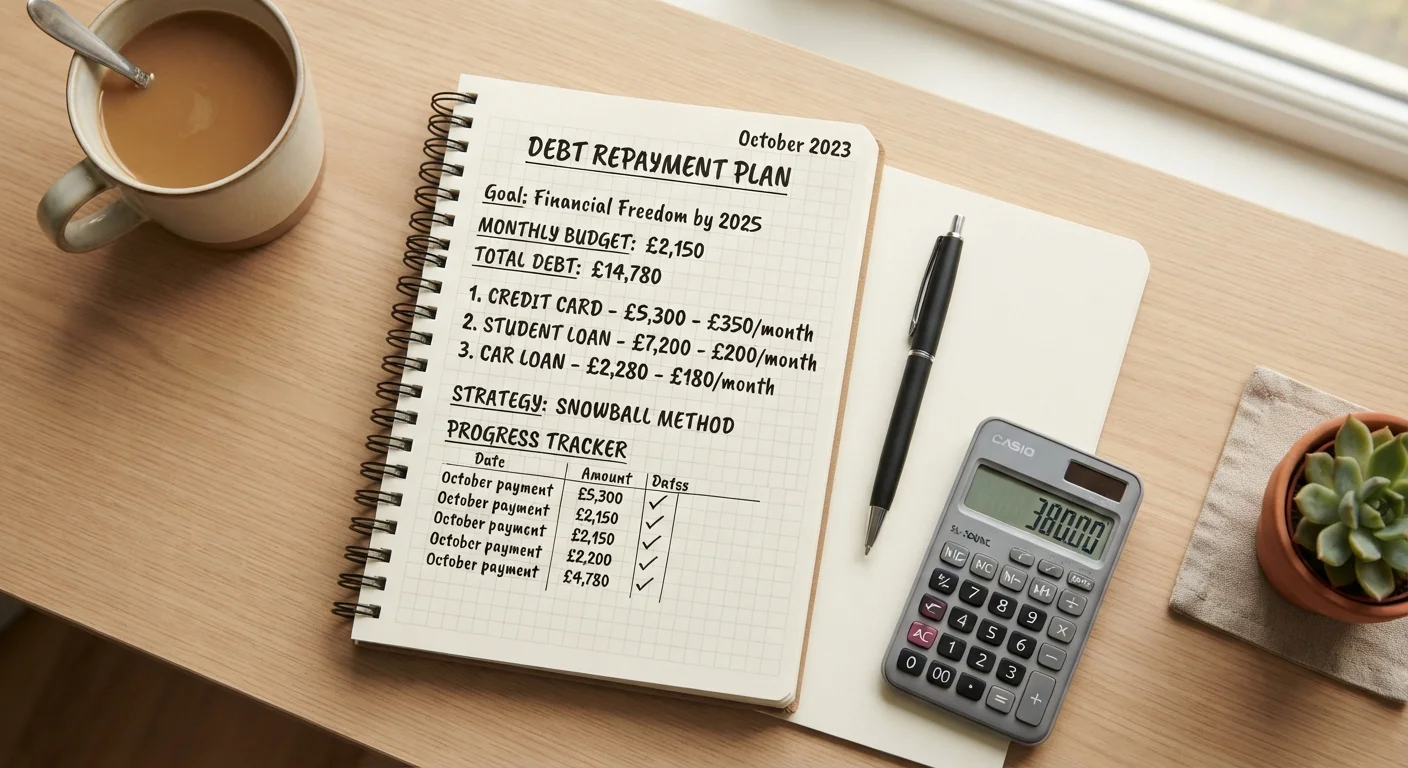
Before you can make progress, you need a complete, honest inventory. Pull together every debt you carry - credit cards, auto loans, student loans, medical bills, and any personal loans. For each one, record:
- Current balance
- Interest rate (APR)
- Minimum monthly payment
- Lender and account type
This exercise can be uncomfortable, but knowing the exact numbers replaces anxiety with facts. Many people discover their total debt is either higher or lower than their mental estimate - both outcomes are useful. Once you have the full picture, you can prioritize. A solid budget is the natural companion to this step; if you haven't built one yet, see our step-by-step budgeting guide for a plain-language starting point.
Building a Realistic Repayment Plan
Two repayment strategies dominate personal finance advice for good reason - they work for different psychological types:
- Avalanche method
- Pay minimums on all debts, then direct any extra money toward the debt with the highest interest rate. Once that's paid off, roll that payment into the next highest-rate debt. This approach minimizes total interest paid over time.
- Snowball method
- Pay minimums on all debts, then focus extra funds on the smallest balance regardless of rate. Early wins build momentum. Research in behavioral economics suggests this method can improve follow-through for some borrowers.
Neither method is objectively superior - your ability to stay consistent is what determines results. Once you've chosen a strategy, calculate roughly how long payoff will take at your current extra payment amount. Most free online debt calculators can do this in seconds. For deeper context on structuring your overall financial plan, the complete personal budgeting reference covers income tracking, expense categories, and adjustments over time.
Automate Your Extra Payment
Once you've chosen a repayment strategy and set a target extra payment amount, consider scheduling it as an automatic transfer right after payday. Automating removes the monthly decision and makes consistent progress the default, not the exception.
Growing Savings While Paying Down Debt
It might seem counterintuitive to save when you're carrying debt, but a small emergency fund - commonly suggested in the range of one month's essential expenses to start - acts as a firewall. Without it, a car repair or medical bill lands on a credit card, undoing weeks of repayment progress. That's not a sign of failure; it's a structural problem that a modest cash buffer solves.
Beyond the emergency fund, the question of whether to prioritize additional savings or faster debt payoff depends on the interest rates involved and your personal situation. High-interest debt - typically anything above roughly 7-8% APR - is often worth attacking aggressively before investing excess cash. Lower-rate debt may justify a more balanced approach. Our companion article paying off debt vs. building savings walks through the key trade-offs so you can think through the decision clearly for your circumstances.
This article is for general informational purposes only and does not constitute personalized financial advice. Consult a qualified financial professional before making decisions about your specific situation.
Staying the Course
Debt repayment is a long game for most people. Progress can feel invisible month to month, especially in the early stages when interest is consuming a large share of each payment. Tracking your balances monthly - even in a simple spreadsheet or notes app - makes the downward trend visible and reinforces that the plan is working.
Lifestyle consistency matters more than intensity. A sustainable extra payment each month beats an unsustainable sprint followed by burnout. If your income or expenses shift, revisit your budget and adjust rather than abandoning the plan entirely. The budgeting basics hub offers ongoing strategies for keeping spending in check as your situation evolves. Debt is a solvable problem - the path out is methodical, not magical.
Frequently Asked Questions
It depends on your goals. The avalanche method targets the highest-interest debt first, minimizing total interest paid. The snowball method tackles the smallest balance first to build momentum. Both work - the best one is the one you'll actually stick with.
Generally, yes - at least a small emergency fund. Without any savings cushion, an unexpected expense forces you back into debt. Once you have a basic buffer, deciding how to split extra money between saving and debt repayment is a personal trade-off worth thinking through carefully.
It varies widely based on total balance, interest rates, and how much extra you can put toward payments. Most consumer debt payoff plans range from one to five years. Consistency matters far more than speed.
Interest capitalization happens when unpaid interest is added to your principal balance, so future interest is charged on a larger amount. This is common with student loans and some credit cards, and it can significantly grow what you owe if you only make minimum payments.
Paying off debt generally helps your credit score over time by lowering your credit utilization ratio and reducing your overall debt load. Closing accounts after payoff can sometimes cause a minor temporary dip, so evaluate that decision carefully.
If your debt feels unmanageable, a nonprofit credit counseling agency can provide guidance on budgeting and debt management plans. For severe situations, consulting a licensed financial professional or bankruptcy attorney may be appropriate. Always verify credentials before engaging anyone for financial advice.
The content on this site is provided for informational purposes only and should not be considered a substitute for professional advice. While we strive to provide accurate and up-to-date information, we make no guarantees regarding its completeness or accuracy. Always consult a qualified professional for advice specific to your circumstances before making any decisions.