

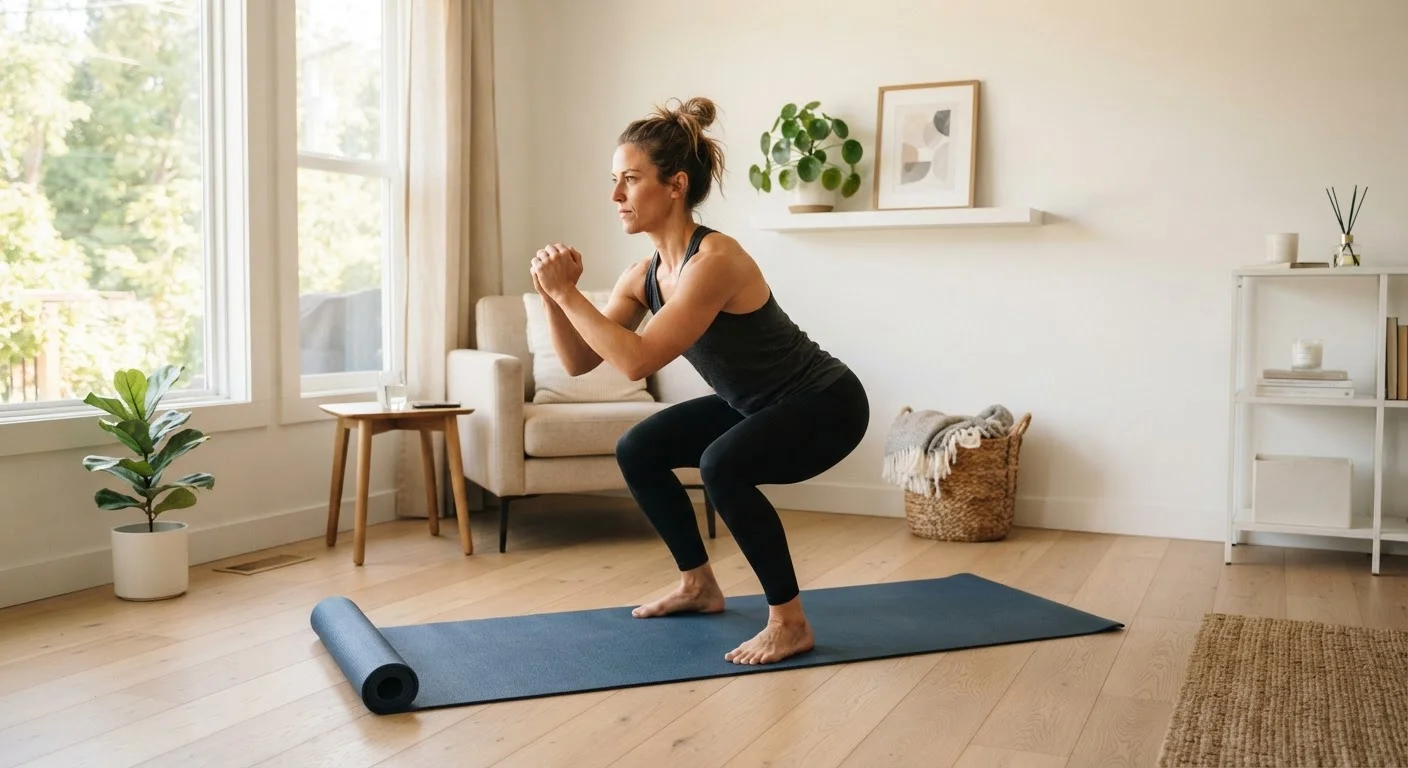
Why Bodyweight Training Works
The absence of gym equipment is not the barrier it might seem. Bodyweight training - using your own body as resistance - is a legitimate, well-established form of exercise that develops muscular strength, cardiovascular endurance, and flexibility. Push-ups, squats, and lunges are foundational movements found in physical therapy, military fitness programs, and elite athletic training alike.
What matters more than equipment is consistency, structure, and progressive challenge. A well-designed home routine built on bodyweight fundamentals can produce meaningful fitness improvements, particularly for beginners who are building a base level of strength and aerobic capacity for the first time.
The practical advantages are also real: no commute, no membership cost, no waiting for machines, and no minimum time requirement. A 20-minute session done consistently three times per week will outperform a 90-minute session that only happens sporadically. If you're new to exercise entirely, our comprehensive beginner's guide to starting an exercise routine covers the foundational concepts you'll want to understand first.
Check With a Doctor Before Starting
This article provides general fitness education, not medical advice. If you have an existing health condition, injury, chronic pain, or haven't exercised in a long time, consult a qualified healthcare professional before beginning any new exercise routine. This is especially important for adults with cardiovascular, orthopedic, or metabolic health concerns.
What You Need Before You Begin
One of the genuine advantages of home training is how little setup is required. Review the prerequisites and tools below before your first session.
What you will need
Exercise Mat or Folded Towel
Provides cushioning for floor-based exercises like planks, push-ups, and stretches.
Timer or Smartphone
Tracks work and rest intervals to keep sessions structured and consistent.
Water Bottle
Ensures you stay adequately hydrated throughout your session.
Sturdy Chair or Low Table
Can be used for modified push-ups, tricep dips, or supported squats for beginners.
Small Wins Build Lasting Habits
Research in behavioral science consistently shows that starting smaller than you think you need to is one of the most effective habit-formation strategies. A 15-minute workout you actually complete beats a 60-minute workout you skip. See our guide to fitness habits that quietly fall apart to understand what derails most routines - and how to plan around it.
How to Build Your Routine, Step by Step
Follow these steps to design a home workout routine that fits your schedule, ability, and goals. Each step builds on the previous one - resist the urge to skip ahead.
Decide How Many Days Per Week You Can Realistically Commit
Before choosing exercises, figure out your schedule. For beginners, three days per week with rest days in between is a well-supported starting point - it allows enough stimulus for adaptation while giving your body adequate recovery time. Four days is achievable once you've built the habit. Avoid planning seven days a week; rest is not laziness, it's part of the process.
Write down which specific days you'll train. Vague intentions like "a few times a week" are much harder to follow than "Monday, Wednesday, and Friday after work."
Understand the Three Components Your Routine Needs
A balanced home workout routine should include:
- Strength work: Movements that challenge your muscles against resistance - using your own bodyweight. Examples include push-ups, squats, lunges, glute bridges, and planks.
- Cardiovascular work: Elevates your heart rate and trains your aerobic system. Jumping jacks, high knees, mountain climbers, and brisk stair climbing all count.
- Mobility and flexibility: Reduces injury risk and keeps joints healthy. Hip circles, spinal rotations, and static stretches held for 20-30 seconds fall here.
You can combine all three in a single session or dedicate separate sessions to each. For most beginners, combining them in one 20-30 minute workout is more practical. To understand how strength and cardio affect your body differently, see our breakdown of strength training vs. cardio.
Build Your Workout Structure
Each session should follow this basic structure:
- Warm-up (3-5 minutes): Light movement to raise body temperature and prepare joints. Try marching in place, arm circles, and slow bodyweight squats.
- Main work (15-20 minutes): 3-5 exercises performed in a circuit - complete one set of each exercise back-to-back, rest 60-90 seconds, then repeat 2-3 rounds.
- Cool-down (3-5 minutes): Slow, static stretching targeting the muscles you just worked.
A sample beginner circuit might include: 10 squats, 8 push-ups (knees down if needed), 10 reverse lunges per leg, a 20-second plank, and 15 glute bridges. Adjust numbers to match your current ability - not someone else's.
Progress Gradually Over Time
Your body adapts to repeated challenges, so your routine needs to evolve. Progression doesn't require equipment - it requires creativity and patience. Ways to make bodyweight exercises harder include:
- Adding more repetitions or rounds
- Slowing the movement down (a 3-second lowering phase in a squat is significantly harder)
- Reducing rest time between sets
- Advancing to harder variations (standard push-ups from incline push-ups, then to decline)
Aim to make one small change every one to two weeks rather than overhauling your entire routine at once.
Track Your Sessions and Adjust as Needed
Keep a simple log - even a notes app on your phone works. Record what exercises you did, how many rounds, and how you felt. After four weeks, review it. Are you completing sessions easily? It may be time to progress. Struggling with energy or motivation? Consider whether your sleep, nutrition, or stress levels need attention. A sustainable routine responds to your real life, not an idealized version of it.
Supporting your workouts with balanced eating also matters. Our practical guide to building a balanced plate is a helpful companion resource.
Keeping It Going: The Consistency Challenge
The biggest obstacle in home fitness isn't exercise selection - it's showing up consistently when there's no external structure compelling you to do so. A few evidence-informed strategies help:
- Anchor your workout to an existing habit. Exercising right after your morning coffee or immediately before dinner leverages what behavioral researchers call "habit stacking."
- Reduce friction. Keep your mat unrolled, lay your workout clothes out the night before, and have your timer ready. The easier it is to start, the more likely you'll follow through.
- Allow for imperfect sessions. A shortened or lower-intensity workout still counts. Perfect adherence to a plan is rarely sustainable; flexible adherence to a routine usually is.
Exercise also has well-documented benefits for mood, stress resilience, and sleep quality - meaning a consistent fitness routine often supports other areas of wellbeing. If you're also working on your mental wellness habits, our guide to building a daily mental health routine explores how small consistent habits create meaningful change over time.
This article is for general informational and educational purposes only and does not constitute medical advice. Consult a qualified healthcare professional before beginning any new exercise program, particularly if you have an existing health condition or injury.
The content on this site is provided for informational purposes only and should not be considered a substitute for professional advice. While we strive to provide accurate and up-to-date information, we make no guarantees regarding its completeness or accuracy. Always consult a qualified professional for advice specific to your circumstances before making any decisions.