

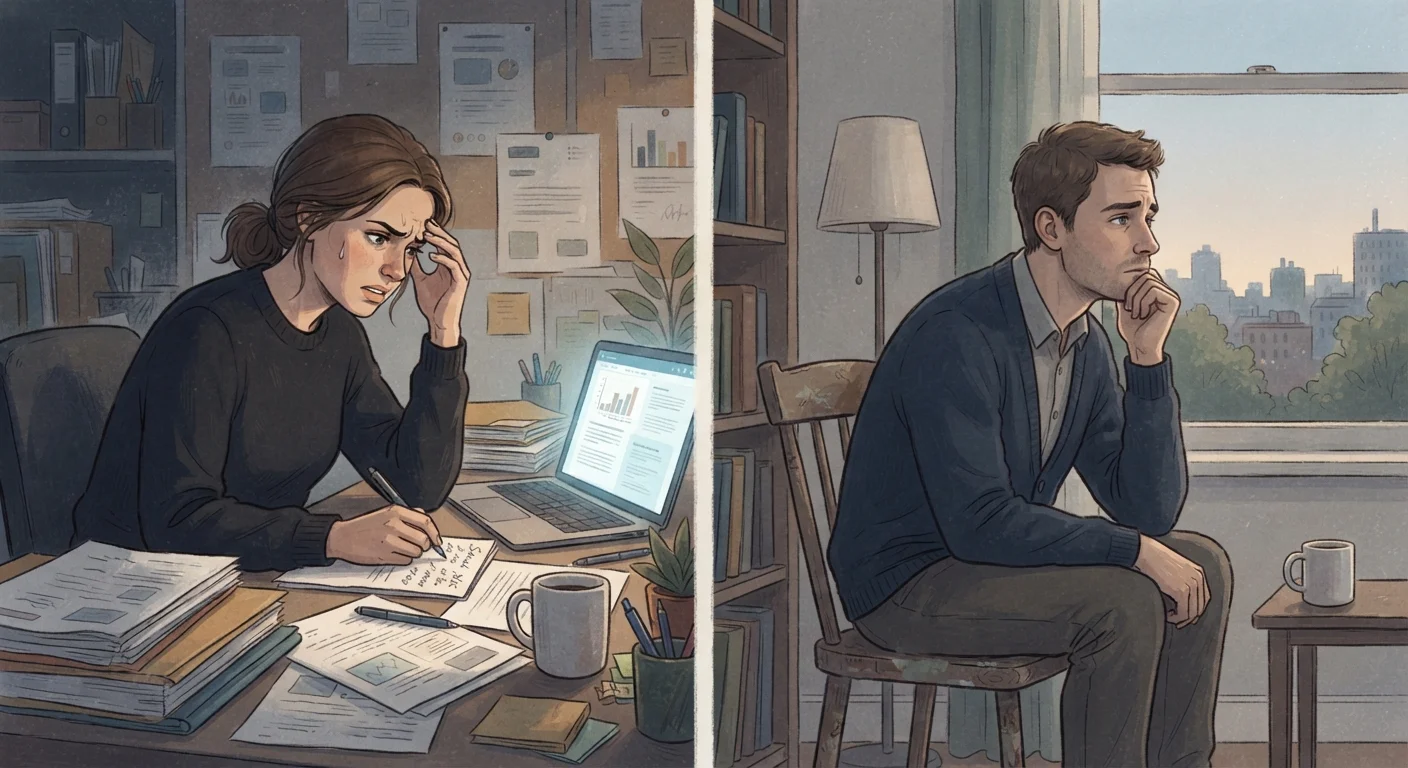
Option A
Stress
The body's direct response to an external pressure or demand.
Best for: Understanding a reaction tied to a specific, identifiable situation or trigger.
Option B
Anxiety
A persistent internal worry that lingers beyond the triggering event.
Best for: Recognizing worry that feels disproportionate, ongoing, or difficult to explain.
What Is Stress, Exactly?
Stress is the body's natural response to external demands - a tight deadline, a difficult conversation, or a sudden change in circumstances. It is rooted in the fight-or-flight response, the physiological process that mobilizes energy so you can meet a challenge. Hormones such as cortisol and adrenaline surge, your heart rate increases, and your focus sharpens.
Crucially, stress is usually proportional and time-limited. Once the trigger is resolved - the presentation is over, the argument settles - the physical and emotional symptoms typically fade. Stress is not inherently harmful; short-term stress can even improve performance. The concern arises when external pressures are constant and the body never gets a chance to return to baseline, which can wear on physical and mental health over time.
Common sources of stress include work demands, financial pressures, relationship conflicts, and major life transitions. Stress is a near-universal human experience, not a sign of weakness or disorder.
What Sets Anxiety Apart?
Anxiety shares many of stress's physical sensations - rapid heartbeat, muscle tension, trouble sleeping - but it operates differently at the root level. Rather than responding to a clear, present-day threat, anxiety is characterized by persistent, often disproportionate worry that can surface even when no obvious stressor exists.
According to the National Institute of Mental Health, anxiety disorders affect tens of millions of adults in the United States, making them among the most prevalent mental health conditions in the country. These disorders - which include generalized anxiety disorder (GAD), social anxiety disorder, and panic disorder - involve worry that is difficult to control, recurring, and disruptive to daily life.
Anxiety can also be anticipatory, meaning it focuses on future events that may never occur. A person might feel a familiar dread before a routine errand, or lie awake replaying scenarios that are unlikely to happen. Unlike stress, anxiety does not reliably resolve when circumstances improve. This persistence is one of the clearest distinguishing features.
| Criterion | Stress | Anxiety |
|---|---|---|
| Primary trigger | External, identifiable stressor | Internal worry, often without clear cause |
| Duration | Resolves when stressor passes | Persists beyond triggering events |
| Proportionality | Usually proportional to situation | Often disproportionate or hard to explain |
| Physical symptoms | Tension, elevated heart rate, fatigue | Similar, plus restlessness and avoidance |
| Clinical diagnosis | Not a diagnosable disorder | Can meet criteria for anxiety disorders |
| Common management | Rest, lifestyle adjustments, time management | Therapy (e.g., CBT), possible medication, lifestyle support |
If you find yourself wondering whether your own experience has crossed a threshold worth paying attention to, Signs That Everyday Stress May Have Crossed Into Something Worth Addressing offers practical indicators to watch for.
Overlapping Symptoms and Why the Confusion Is Understandable
Both stress and anxiety can produce headaches, irritability, fatigue, difficulty concentrating, and gastrointestinal discomfort. This symptom overlap is exactly why so many people struggle to distinguish between the two - and why neither experience should be dismissed as trivial.
One useful lens: ask yourself whether you can identify a specific cause. Stress typically has an answer to the question, "What is this about?" Anxiety often does not - or the worry feels out of proportion to what triggered it. Another signal is duration: stress tends to ebb as circumstances change; anxiety tends to stay.
When Stress and Anxiety Overlap
Stress and anxiety are not mutually exclusive. Prolonged or unresolved stress can increase vulnerability to anxiety, and people living with anxiety disorders may also experience acute stress like anyone else. Noticing both patterns - rather than trying to pick just one label - can give a fuller picture of what you are experiencing. A mental health professional can help you make sense of the distinction in your own life.
Anxiety can also compound stress. Financial pressure, for example, may begin as a stressor but evolve into persistent anxiety about money and future security. Understanding this relationship is part of why financial anxiety has gained recognition as a distinct pattern affecting how people plan and make decisions.
What You Can Do - and When to Seek Support
For both stress and anxiety, foundational wellness habits form a meaningful first line of response. Regular physical activity, consistent sleep, social connection, and mindfulness practices are broadly supported by research as tools that help regulate the nervous system. Reducing caffeine and building structured downtime into your day can also lower baseline arousal levels.
For anxiety that is persistent, severe, or interfering with work, relationships, or daily functioning, these lifestyle strategies may not be sufficient on their own. Evidence-based treatments - including cognitive behavioral therapy (CBT) and, in some cases, medication - have strong support in clinical literature. A qualified mental health professional can help determine what fits your specific situation.
This article is general health information and not a substitute for personalized medical or mental health advice. If you are experiencing significant distress, please reach out to a licensed healthcare provider.
This article is for informational and educational purposes only. It is not a substitute for professional medical or mental health advice, diagnosis, or treatment. Always consult a qualified healthcare professional for concerns about your mental or physical health.
The content on this site is provided for informational purposes only and should not be considered a substitute for professional advice. While we strive to provide accurate and up-to-date information, we make no guarantees regarding its completeness or accuracy. Always consult a qualified professional for advice specific to your circumstances before making any decisions.