

Start here
What Mindfulness Actually Is (and Isn't)
Build understanding
What the Research Shows
Take action
How to Start Practicing Today
Troubleshoot
Common Obstacles and How to Work With Them
Sustain it
Fitting Mindfulness Into Everyday Life
What Mindfulness Actually Is (and Isn't)
Mindfulness often gets wrapped in language that puts people off - talk of emptying your mind, achieving inner peace, or following a spiritual path. None of that is required. At its core, mindfulness is a trainable attention skill: the practice of deliberately noticing your present-moment experience - thoughts, physical sensations, emotions - without immediately judging or reacting to what you find.
Mindfulness
The practice of paying deliberate, non-judgmental attention to your present-moment experience - thoughts, sensations, and emotions - without trying to change them.
Meditation
A structured mental exercise in which you train attention and awareness, often by focusing on the breath, body, or a specific anchor point.
MBSR
Mindfulness-Based Stress Reduction - an 8-week, evidence-based program developed by Jon Kabat-Zinn that introduced secular mindfulness into mainstream medicine.
Rumination
The tendency to repeatedly replay stressful thoughts or worries, which mindfulness practice is specifically designed to interrupt.
Anchor
A sensory focus point - most commonly the breath - used during meditation to bring wandering attention back to the present moment.
The secular form most widely taught in the United States today was developed in the late 1970s by Jon Kabat-Zinn, who created the MBSR program at the University of Massachusetts Medical School. His work stripped away religious context and tested mindfulness using the standards of clinical science. That approach opened the practice to anyone, regardless of belief system.
What mindfulness is not: it is not relaxation on demand, a way to stop thinking, a personality trait you either have or don't, or a quick fix for mental health conditions. Understanding this distinction helps beginners set realistic expectations and avoid common frustration.
What the Research Shows
A substantial body of peer-reviewed research supports mindfulness as a useful tool for everyday stress management. Meta-analyses - studies that pool findings across many trials - consistently find that mindfulness-based programs reduce self-reported stress, anxiety, and depressive symptoms in non-clinical populations. The American Psychological Association acknowledges the evidence base while also noting that effect sizes vary and that more rigorous large-scale trials are still needed.
Key findings that hold up across multiple studies include:
- Stress reduction: MBSR participants report meaningful decreases in perceived stress after eight weeks of structured practice.
- Attention and focus: Regular meditators show measurable improvements in sustained attention tasks, though the magnitude depends on practice consistency.
- Rumination: Mindfulness practice appears to interrupt repetitive negative thinking patterns, which are linked to both anxiety and depression.
- Physical health markers: Some studies report modest reductions in blood pressure and improvements in sleep quality, though findings are more mixed here.
It is important to distinguish established consensus from emerging findings. Mindfulness for general stress and mood is well-supported. Claims about curing disease, dramatically rewiring the brain after just a few sessions, or replacing medication are not supported by current evidence.
How to Start Practicing Today
Start With Just Two Minutes
Rather than committing to a 20-minute daily session, begin with two minutes of focused breathing. Sit, close your eyes, and notice the physical sensation of each inhale and exhale. When your mind wanders - and it will - gently return attention to the breath. Short, consistent practice builds the habit faster than occasional long sessions.
The most accessible entry point for beginners is breath awareness meditation. Here is a simple framework:
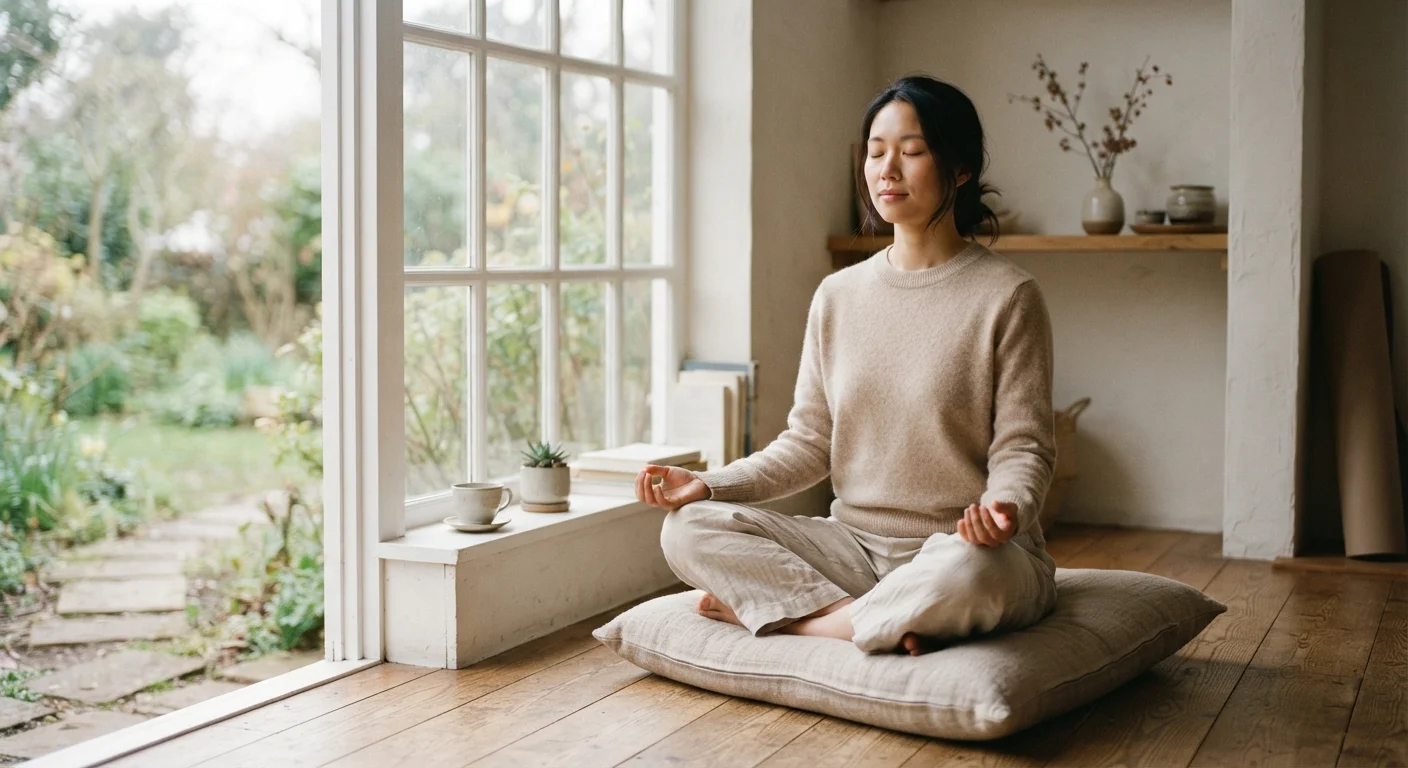
- Choose a position. Sit in a chair with your feet flat on the floor, or on the floor cross-legged. Comfort matters more than aesthetics - there is nothing special about a particular posture.
- Set a timer. Even two to five minutes is sufficient to start. Removing the need to check a clock reduces a common distraction.
- Focus on a sensory anchor. Direct attention to the physical sensation of breathing - the rise and fall of your chest, or the feeling of air at your nostrils. You don't need to breathe in any special way.
- Notice when your mind wanders. It will. This is not failure. The moment you notice distraction and redirect attention back to the breath is the actual practice - not a mistake to avoid.
- End without judgment. When the timer sounds, take a breath and resume your day. No score, no performance, no expectation.
Body scan meditation is another beginner-friendly option: you systematically move attention through different parts of the body, noticing sensation without trying to change anything. Guided audio recordings can be particularly helpful for this format.
Common Obstacles and How to Work With Them
When to Pause and Seek Professional Support
For most people, mindfulness practice is safe and low-risk. However, individuals with PTSD, severe anxiety, psychosis, or certain trauma histories may occasionally experience increased distress when turning attention inward. If practice triggers persistent anxiety, dissociation, or distressing memories, stop and consult a licensed mental health professional before continuing.
Most beginners encounter the same handful of challenges. Knowing they are normal reduces the likelihood of giving up.
- "My mind won't stop."
- A busy mind during meditation is not a sign you're doing it wrong - it's evidence your attention is working. The goal is not silence; it's noticing. Each time you catch a wandering thought, you've successfully practiced.
- "I feel restless, not calm."
- Restlessness is a sensation like any other - and noticing it with curiosity rather than resistance is valid practice. Calm is a possible outcome over time, not a prerequisite.
- "I don't have time."
- Two minutes is enough to build the habit. Linking practice to an existing cue - morning coffee, before bed, after lunch - makes it easier to sustain without adding a new scheduling burden.
- "I tried it once and it didn't help."
- Mindfulness is a skill that develops through repetition. A single session is like one trip to the gym: unlikely to produce noticeable change. Consistent, modest practice across weeks is what the research measures.
Fitting Mindfulness Into Everyday Life
Formal seated meditation is just one form of mindfulness practice. Many people find it easier to sustain informal mindfulness - applying deliberate attention to activities they already do. Washing dishes, walking, eating, or waiting in line all become opportunities to practice noticing sensory experience rather than running on autopilot.
If you're interested in building a broader mental wellness routine, see our guide to building a daily mental health routine - small, consistent habits are at the heart of sustainable well-being. Similarly, if you find mindfulness helpful for processing emotions, journaling for mental wellness is a complementary evidence-based practice worth exploring.
Mindfulness also extends beyond mood management. Some readers find that a clearer, less reactive mind supports better decision-making in other life areas - including financial habits. Our piece on building a healthier relationship with money touches on how awareness and pattern recognition - skills mindfulness builds - apply to financial behavior too.
Mindfulness Is General Wellness Education
The information in this article is for general educational purposes and is not a substitute for professional medical or mental health advice. If you are managing a diagnosed mental health condition, please speak with a qualified healthcare provider before beginning any new wellness practice.
The most important step is simply beginning. You don't need a perfect environment, a specialized app, or a long block of time. A few minutes of honest attention, practiced regularly, is where every experienced meditator started.
Frequently Asked Questions
No. While mindfulness has roots in Buddhist tradition, the secular form taught in clinical and wellness settings requires no spiritual beliefs. It is a mental skill that anyone can learn regardless of faith or worldview.
Research suggests that even short, consistent sessions - sometimes as brief as 10 minutes - can support measurable improvements in stress and focus over several weeks. Consistency matters more than session length. Always consult a healthcare professional if you have specific mental health goals.
No. Mindfulness is about observing your thoughts without reacting to them, not eliminating thoughts altogether. Trying to force a blank mind often creates more frustration than benefit.
No. Mindfulness is a supportive wellness practice, not a medical treatment. People managing clinical conditions like depression or anxiety disorders should work with a qualified mental health professional. Mindfulness may complement but should not substitute professional care.
Some people, particularly those with trauma histories, find stillness uncomfortable or distressing. If this happens, consider starting with brief movement-based mindfulness or speaking with a therapist before continuing. Don't push through significant distress without professional guidance.
Apps can provide structure and guided sessions that many beginners find useful. However, they are a tool, not a requirement. Guided recordings, books, and community classes work equally well for many people.
The content on this site is provided for informational purposes only and should not be considered a substitute for professional advice. While we strive to provide accurate and up-to-date information, we make no guarantees regarding its completeness or accuracy. Always consult a qualified professional for advice specific to your circumstances before making any decisions.