

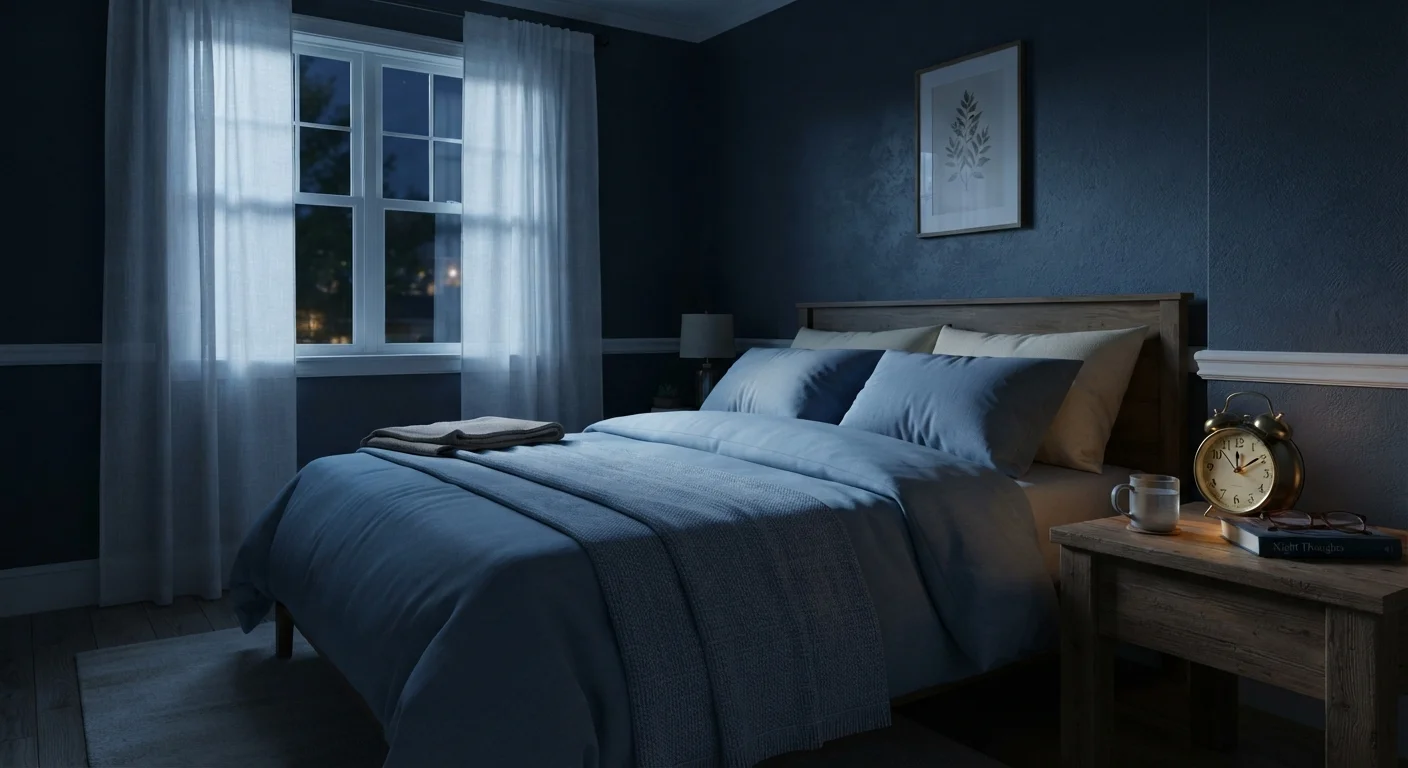
Why Sleep Is More Than Rest
Most people think of sleep as downtime - the body powering off until morning. In reality, the sleeping brain is actively engaged in some of its most critical work: consolidating memories, clearing metabolic waste, regulating hormones, and processing emotional experiences from the day.
During REM sleep in particular, the brain replays and integrates emotionally charged experiences, effectively reducing their psychological charge. When that process is interrupted night after night, the emotional residue accumulates. You wake up not just tired, but less equipped to handle ordinary stress - more reactive, less patient, and more prone to negative thinking.
This is why sleep quality shows up so consistently as a factor in everyday mental well-being, not just in clinical mental illness. It's a daily maintenance function, not a luxury.
How Mental Health Disrupts Sleep - and Vice Versa
The bidirectional nature of this relationship is where most people's understanding falls short. It's intuitive to accept that bad sleep makes you feel worse. What's less appreciated is how powerfully mental health challenges interfere with sleep itself.
Anxiety keeps the nervous system in a state of low-level alert, making it hard to initiate or maintain sleep. Depression often disrupts sleep architecture - some people sleep too much but wake feeling unrefreshed; others lie awake in the early hours, unable to return to sleep. Chronic stress elevates cortisol in ways that are fundamentally incompatible with the body's natural sleep-wake rhythm.
~35%
U.S. adults reporting insufficient sleep
According to the Centers for Disease Control and Prevention, more than one in three American adults regularly gets less than the recommended 7 hours of sleep per night.
10x
Increased likelihood of depression with insomnia
Research published in peer-reviewed sleep medicine literature has found that people with chronic insomnia are roughly ten times more likely to experience clinical depression than those without sleep difficulties.
24 hrs
Time before significant cognitive impairment
Studies on total sleep deprivation show measurable declines in attention, working memory, and emotional regulation after a single night without sleep - effects comparable in some measures to legal intoxication.
The result is a feedback loop: impaired sleep worsens mood and cognitive function, which deepens psychological distress, which further impairs sleep. Recognizing this cycle - rather than treating sleep and mental health as separate concerns - is a prerequisite for making progress on either front. If you've noticed that stress seems to be pushing past manageable levels, see signs that everyday stress may have crossed into something worth addressing.
What Disrupted Sleep Actually Does to the Brain
Sleep deprivation doesn't just leave you feeling foggy. It produces measurable changes in brain function that directly affect emotional experience. Studies using neuroimaging have shown that even one night of poor sleep significantly amplifies activity in the amygdala - the brain region responsible for threat detection and fear responses - while weakening its connection to the prefrontal cortex, which governs rational thought and impulse control.
In practical terms, this means a sleep-deprived person is more likely to perceive neutral situations as threatening, to react disproportionately to minor frustrations, and to struggle to regulate those reactions. Over time, that pattern erodes emotional resilience and strains relationships - two factors that in turn affect mental well-being.
It also affects cognitive performance: working memory, concentration, and decision-making all degrade meaningfully with insufficient sleep, which can compound stress in work and personal life. Isolation and low mood often follow reduced social engagement, a connection explored further in how isolation affects the brain.
Practical Strategies That Work on Both Sides
Because the relationship is bidirectional, effective strategies ideally address both sleep and mental wellness simultaneously rather than in isolation.
- Consistent sleep and wake times: Anchoring your schedule - even on weekends - reinforces circadian rhythm and makes falling asleep more reliable over time.
- Wind-down routines: A predictable pre-sleep routine signals to the nervous system that the alert phase of the day is ending. This is especially helpful for anxiety-driven sleep difficulty.
- Limiting stimulants and screens: Caffeine has a half-life of roughly five to six hours in most adults, and blue-spectrum screen light suppresses melatonin production. Both are worth managing in the hours before bed.
- Daytime physical activity: Regular movement is associated with improved sleep quality and reduced symptoms of anxiety and depression - a genuine two-for-one effect supported by a substantial body of research.
- Stress processing during waking hours: Journaling, structured worry time, or relaxation techniques practiced during the day reduce the mental backlog that tends to surface at bedtime.
These strategies align with building a broader daily mental health routine. For a practical framework, see building a daily mental health routine without overhauling your life.
This article is for general informational purposes only and does not constitute medical advice. If you are experiencing persistent sleep problems or mental health concerns, please consult a qualified healthcare professional.
Frequently Asked Questions
Chronic sleep deprivation is associated with increased risk of mood disorders, heightened anxiety, and reduced emotional resilience. While poor sleep alone may not cause a diagnosable mental health condition, it is a significant contributing factor. Research consistently shows that sleep quality is one of the strongest predictors of next-day emotional well-being.
Anxiety activates the body's stress response, raising cortisol and adrenaline levels that signal alertness - the opposite of what the brain needs to wind down for sleep. Racing thoughts and physical tension further prevent the nervous system from shifting into the restful state required for sleep onset. This is why anxiety and insomnia so frequently co-occur.
Most adults need between 7 and 9 hours of sleep per night, according to guidance from the American Academy of Sleep Medicine. Consistent sleep below 6 hours is associated with measurably worse mood and cognitive performance. Individual needs vary, so quality - not just quantity - also matters significantly.
Practical starting points include keeping a consistent bedtime, limiting screens for 30-60 minutes before bed, and avoiding caffeine in the afternoon. Relaxation techniques such as slow breathing or progressive muscle relaxation can help calm an anxious nervous system before sleep. These are general wellness strategies - if sleep problems are severe or persistent, consult a healthcare provider.
If sleep difficulties last more than a few weeks, consistently affect your ability to function, or occur alongside significant changes in mood, motivation, or behavior, it is worth speaking with a qualified healthcare professional. A clinician can assess whether an underlying condition - such as insomnia disorder, depression, or an anxiety disorder - warrants targeted treatment.
The content on this site is provided for informational purposes only and should not be considered a substitute for professional advice. While we strive to provide accurate and up-to-date information, we make no guarantees regarding its completeness or accuracy. Always consult a qualified professional for advice specific to your circumstances before making any decisions.