

Why Inspection Findings Aren't All Created Equal
A home inspection report can run 30 to 60 pages and flag dozens of items - from missing outlet covers to aging water heaters. For buyers, the challenge is learning which findings represent genuine financial or safety exposure and which are routine maintenance notes that nearly every older home carries.
Inspectors are trained to observe and report, not to evaluate cost or advise on whether to proceed. That responsibility falls to the buyer, ideally with input from their real estate agent, an attorney, and where warranted, specialist contractors. The red flags below are the categories most likely to affect your decision to buy, renegotiate, or walk away - and understanding each one helps you respond strategically rather than emotionally.
Before you reach closing, a pre-closing checklist can help you track which findings were resolved and which remain open. It's also worth knowing that waiving an inspection contingency to compete in a hot market has real consequences - understand what you're giving up before making that call.
Foundation and Structural Defects
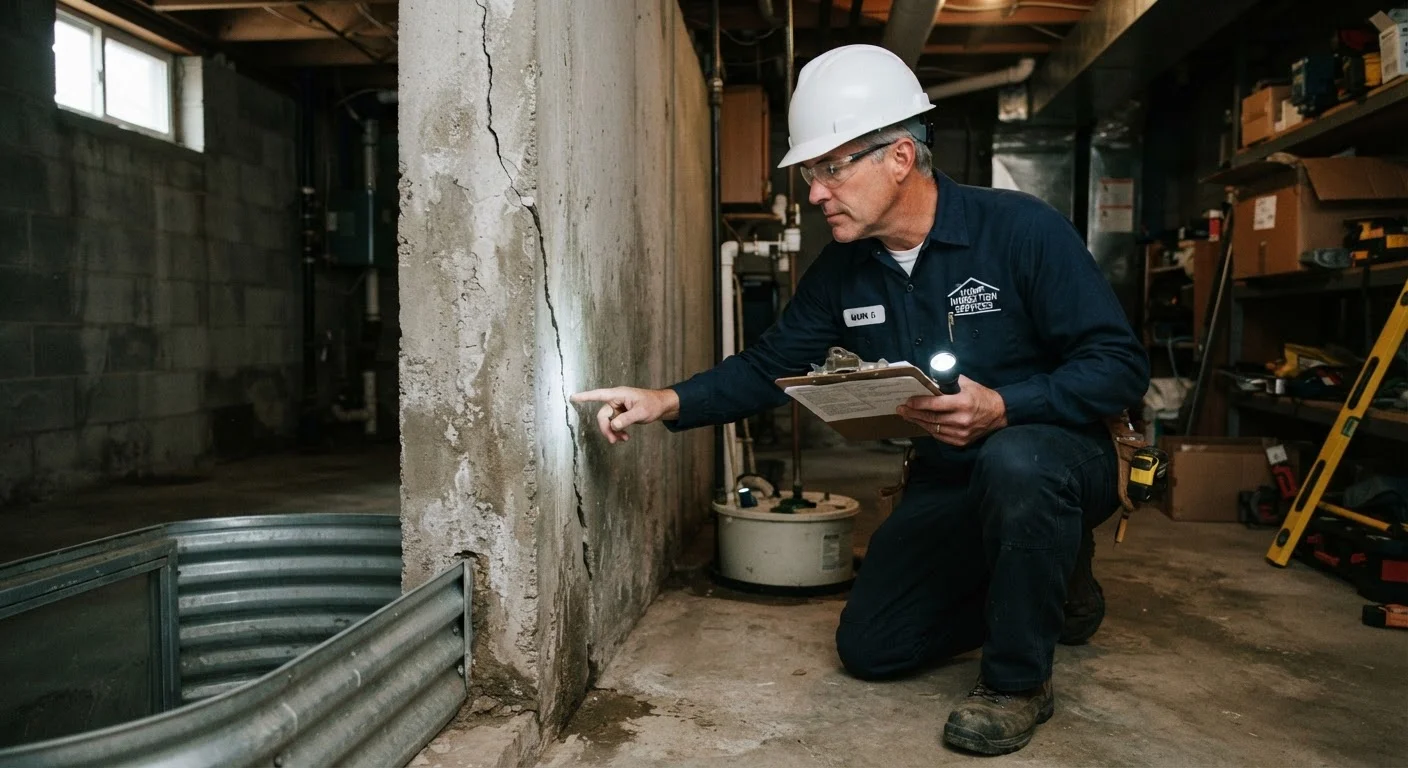
Cracks in the foundation, bowing basement walls, or uneven floors can signal settling or structural movement that may cost tens of thousands of dollars to stabilize. Not every crack is catastrophic - hairline vertical cracks are common in concrete block foundations - but horizontal cracks, stair-step cracks in block walls, or cracks with displacement on either side warrant immediate evaluation by a licensed structural engineer, not just the general inspector.
Buyers who encounter these findings should resist pressure to accept a seller's reassurance that the cracks are "cosmetic." An independent structural assessment provides a written report and repair estimate that quantifies the actual risk.
Horizontal foundation cracks or displaced walls always warrant a licensed structural engineer's assessment before proceeding.
Roof Condition and Remaining Useful Life
A roof replacement is one of the most predictable large expenses in homeownership, yet buyers frequently underestimate how much inspection findings in this area matter. Inspectors look for missing or curling shingles, granule loss, compromised flashing around chimneys and vents, and sagging ridgelines. Any of these can indicate that the roof is near or past the end of its serviceable life.
Asphalt shingle roofs typically last 20 to 30 years depending on climate and maintenance. If the inspector flags a roof as "past useful life" or notes active leakage, expect a full replacement cost - commonly $10,000 to $25,000 or more depending on size and material - to factor into your negotiation. For a deeper look at what roof signals mean, roof warning signs explained provides useful context.
A roof flagged as past its useful life should immediately be factored into your purchase price negotiation.
Water Intrusion and Moisture Damage
Active water intrusion - whether from a leaking roof, a failed sump system, or improper grading that directs runoff toward the foundation - is one of the most consequential red flags an inspection can reveal. Water damage that has persisted over time creates conditions for mold growth, wood rot, and deterioration of structural framing.
Inspectors use moisture meters and may flag staining, efflorescence (white mineral deposits on basement walls), or musty odors as indicators. Buyers should ask whether observed moisture is active or historical, and whether a mold assessment by a certified industrial hygienist is warranted. Remediation costs vary widely depending on the extent of affected material.
Persistent moisture creates conditions for mold and structural rot - always determine whether intrusion is active or resolved.
Electrical System Issues
Outdated electrical panels - particularly those with known safety concerns such as certain older fuse-based systems or panels that have been subject to widespread recall or insurer scrutiny - can create both safety hazards and insurance challenges. Some insurers decline to underwrite homes with specific panel types until they are replaced.
Beyond the panel, inspectors check for aluminum branch wiring in homes built between roughly 1965 and 1973, double-tapped breakers, missing ground fault circuit interrupter (GFCI) protection in kitchens and bathrooms, and ungrounded outlets. These issues range from code violations to active fire risks, and an electrician's assessment is essential to scope the work accurately. Also check that smoke and carbon monoxide detectors are properly installed and current.
Certain panel types and aluminum wiring can make a home difficult to insure - get an electrician's written assessment.
HVAC System Age and Condition
Heating and cooling systems have finite service lives - furnaces typically 15 to 20 years, central air conditioning units 10 to 15 years. An inspector who notes that systems are near or past those benchmarks is signaling that replacement costs should be anticipated. A full HVAC replacement can run $5,000 to $15,000 or more depending on home size, system type, and regional labor rates.
Beyond age, inspectors check for heat exchanger cracks in furnaces (a carbon monoxide risk), inadequate airflow, ductwork issues, and proper venting. If the inspection raises any concern about combustion appliances, a dedicated test by an HVAC technician is the appropriate next step.
HVAC systems near the end of their service life should be priced into your offer, not treated as the seller's problem to fix.
Plumbing - Pipes, Drainage, and Water Heaters
Inspectors evaluate visible supply lines, drainage, water pressure, and water heater age and condition. Key concerns include older galvanized steel pipes (prone to corrosion and reduced flow), polybutylene piping (a material associated with higher failure rates that some insurers flag), evidence of past leaks, and slow drains that may indicate blockage or inadequate slope in drain lines.
Water heaters have a typical useful life of 8 to 12 years. An aging unit flagged by an inspector isn't an emergency, but it should be reflected in your negotiations if replacement is imminent. For older homes, a sewer scope - a camera inspection of the drain line from the house to the municipal connection - is often advisable even if the general inspector doesn't include it as standard practice.
A sewer scope is often not included in a standard inspection but can reveal costly drain-line problems in older homes.
How Buyers Typically Respond to Serious Findings
When a major red flag surfaces, buyers generally have three paths: request that the seller repair the issue before closing, ask for a price reduction or credit to cover remediation costs, or exercise the inspection contingency and exit the contract. Which approach makes sense depends on the severity, the local market, and how motivated both parties are.
For issues like active water intrusion or outdated electrical panels, getting specialist estimates before negotiating puts buyers in a much stronger position than relying on ballpark figures. A general contractor or structural engineer can provide a written scope - that document becomes the basis for your ask.
Get Specialist Quotes Before Negotiating
When an inspection flags a major issue, don't negotiate based on guesswork. Bring in the appropriate specialist - a structural engineer, licensed electrician, roofing contractor, or HVAC technician - to provide a written scope and cost estimate. That document gives you a factual foundation for your repair request or price reduction ask, and it protects you from both overpaying and undershooting the actual cost.
Even after a successful negotiation, verify the agreed work was actually completed during your final walk-through. Sellers sometimes address cosmetic aspects of a problem while leaving the underlying cause untouched. Your agent and inspector can help you confirm what was done and whether it meets the agreed standard.
This article is for general informational purposes only and does not constitute legal, financial, or professional home inspection advice. Always consult a licensed home inspector, structural engineer, and qualified real estate professional for guidance specific to your situation.
The content on this site is provided for informational purposes only and should not be considered a substitute for professional advice. While we strive to provide accurate and up-to-date information, we make no guarantees regarding its completeness or accuracy. Always consult a qualified professional for advice specific to your circumstances before making any decisions.