

Summary
22 items · 20-40 minutes
Why One Caribbean Checklist Covers All the Islands
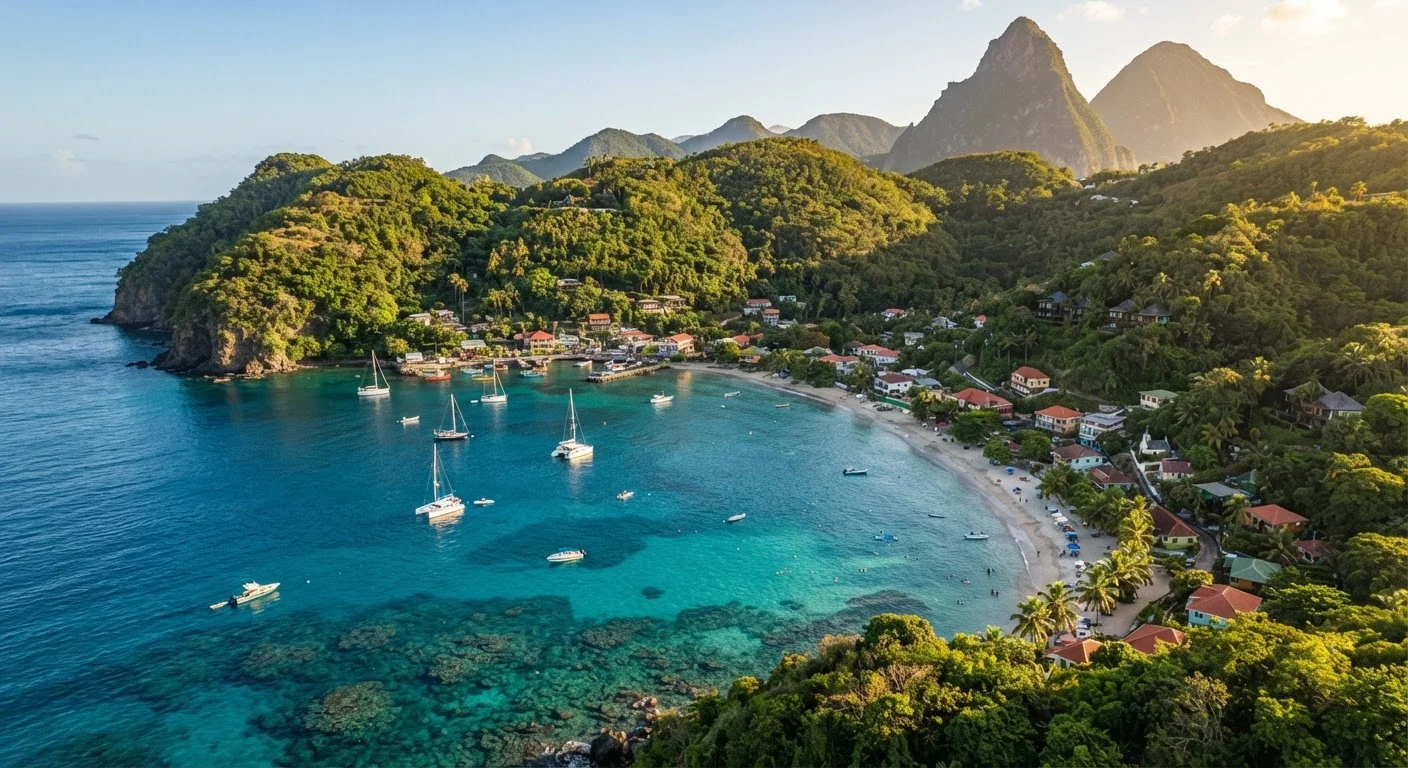
"The Caribbean" describes more than 7,000 islands spread across roughly 1 million square miles of ocean - governed by more than two dozen separate nations and territories. A beach vacation in Barbados involves entirely different logistics, risks, and entry rules than one in Haiti, Cuba, or the Dutch island of Bonaire. Marketing imagery flattens these differences into a single blue-water fantasy, which is why systematic evaluation matters before you book anything.
This checklist is organized around the decisions that actually affect your trip: whether the destination is physically reachable on your budget and timeline, whether you can enter it legally, whether the infrastructure will support your needs, and whether the timing you're considering carries real weather risk. Work through each group honestly, not just the items that confirm what you already want to hear.
For a broader framework on evaluating any destination critically, see how to read a destination honestly before you commit. Once you've chosen your island, a full pre-departure checklist will help you finish the preparation process.
Access and Reachability
Entry Requirements and Documents
Seasonal and Weather Risk
Infrastructure and Safety
Cost and Budget Realism
Entry Requirements and Documentation
Entry rules in the Caribbean are genuinely varied. Some islands are U.S. territories (Puerto Rico, the U.S. Virgin Islands) and require no passport for American citizens. Others are independent nations with their own visa policies, health documentation mandates, and customs requirements. A few islands have historically required proof of specific vaccinations - requirements that can change on short notice.
Do not rely on travel blogs for entry documentation details. Verify directly through the destination country's official immigration authority and cross-check with the U.S. State Department's country information pages. For a thorough breakdown of what documentation categories to investigate, see what to verify for country entry requirements and everything to confirm before leaving the country.
Entry Rules Change - Always Verify Directly
Health documentation requirements, visa policies, and entry restrictions in the Caribbean have changed multiple times in recent years and can be updated on short notice. Do not rely on travel agency summaries or blog posts that may be months or years out of date. Always verify entry requirements directly through the destination government's official immigration portal and the U.S. State Department's country page within 30 days of your departure.
Practical Logistics Before You Finalize Any Booking
Infrastructure quality across the Caribbean ranges from developed resort corridors with reliable roads and hospitals to remote islands where electricity is intermittent and the nearest emergency room requires a boat or small-plane transfer. These factors matter regardless of your travel style. Even if you plan to stay at an all-inclusive resort, you should understand what surrounds it.
Medical access is particularly important to assess. Some smaller islands have clinics but no surgical facilities; serious medical emergencies may require medical evacuation to a larger island or back to the U.S. mainland. Travel insurance that includes medical evacuation coverage is worth investigating for any Caribbean trip, particularly for travelers with existing health conditions - though you should consult a licensed insurance professional about the specifics of any policy.
For travelers also planning a land leg of their trip, general travel tips covers a wide range of planning essentials. And if a road trip connects any part of your journey, the pre-departure road trip checklist addresses vehicle-specific preparation in full.
Medical Evacuation Is a Real Possibility
On smaller or more remote Caribbean islands, hospitals may lack surgical capability, specialist physicians, or intensive care units. A serious accident or medical emergency could require an emergency air or sea evacuation to a larger island or the U.S. mainland - a service that can cost tens of thousands of dollars without appropriate insurance coverage. Investigate travel insurance options that include medical evacuation before booking any remote Caribbean destination, and consult a licensed insurance professional about what coverage is appropriate for your situation.
The content on this site is provided for informational purposes only and should not be considered a substitute for professional advice. While we strive to provide accurate and up-to-date information, we make no guarantees regarding its completeness or accuracy. Always consult a qualified professional for advice specific to your circumstances before making any decisions.