

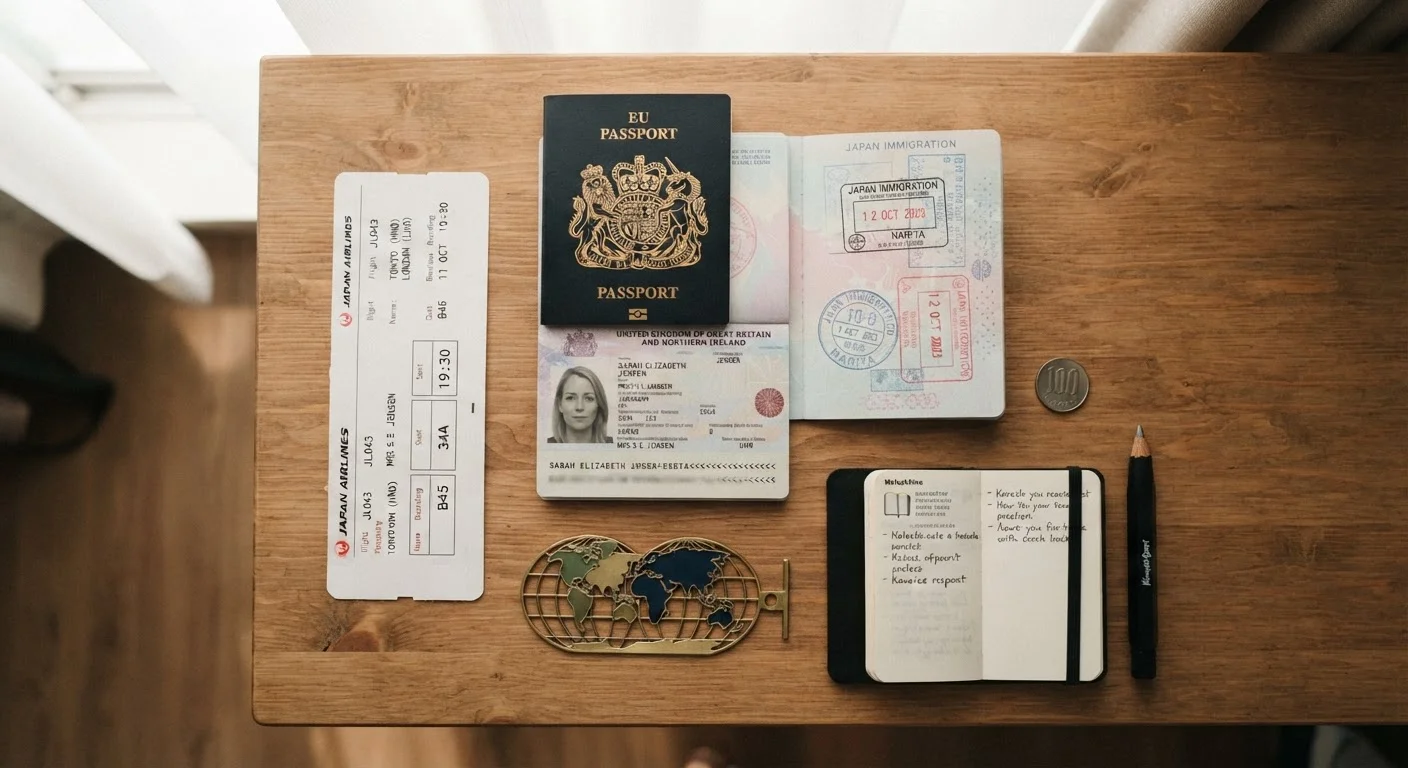
The Passport: Your Identity at Every Border
Your passport is the foundational travel document - a booklet issued by your own government that certifies your citizenship, identity, and right to travel internationally. Without it, airlines will not board you on international flights and border agents will not allow entry into foreign countries.
A U.S. passport, for example, is issued by the U.S. Department of State and includes your full name, photograph, date of birth, and a unique identifying number. It also contains a machine-readable zone that border systems scan to verify your identity against immigration databases.
Two things frequent travelers miss: first, many countries require your passport to remain valid for three to six months beyond your planned departure from their territory - not just your arrival. Second, some countries require at least two or more blank pages for stamps. Check both before you travel. For a broader pre-trip document review, see what to confirm before leaving the country.
The Visa: Permission From a Foreign Government
A visa is a separate document - or an endorsement stamped or adhered inside your passport - issued by the government of the country you want to visit. Where a passport says who you are, a visa says you are allowed to come in, under specific conditions.
Visas come in several types, each with distinct rules:
- Tourist visa: For leisure travel, typically with restrictions on working or studying.
- Business visa: For work-related visits such as meetings or conferences, usually not covering employment.
- Transit visa: Required by some countries even if you are only passing through an airport.
- Student or work visa: Long-stay visas for study or employment, usually requiring sponsorship.
Visa access varies significantly by nationality. Citizens of some countries can visit dozens of nations visa-free; citizens of others face more restrictions. The format also varies: some visas must be obtained weeks in advance at an embassy; others are available as a visa on arrival or as an electronic travel authorization (eTA) - a pre-approved digital clearance linked to your passport number.
Apply for Visas Well in Advance
Processing times for visas vary from a few days to several weeks or even months, depending on the country and the type of visa. Apply as early as possible - well before you book non-refundable flights or accommodations - to avoid being caught without required documentation. Some high-demand visas have appointment backlogs that can affect timelines significantly.
For a detailed breakdown of what you may encounter at each destination, review country entry requirements before booking.
Arrival Cards and Entry Forms: The Often-Overlooked Step
Many countries require travelers to complete an arrival card (sometimes called an embarkation/disembarkation card or customs declaration) upon entry. These are short paper or digital forms asking for your contact information in the destination country, purpose of visit, how long you plan to stay, and what goods you are bringing in.
These forms are not proof of identity - they are administrative tools that help immigration and customs officials process your entry and flag anything that warrants further inspection. Some countries have moved to digital versions collected before you land; others still distribute paper forms on the plane.
Entry Rules Change - Always Verify Officially
Entry requirements are set by sovereign governments and can be updated at any time. This article provides general educational context, not legal or regulatory advice. Before every international trip, verify specific visa, passport validity, and entry requirements directly through the official immigration website of your destination country and your own government's foreign travel advisory service.
Before your next trip, pair your document checklist with a full pre-departure review using the travel preparation checklist - it covers documents alongside medications, home security, and more.
How the Three Documents Work Together
Think of these documents as a sequence of gates. Your passport opens the first gate: it gets you through your home country's departure control and onto an international flight. The visa (or visa-waiver status) opens the second gate: it establishes that the destination country has pre-authorized your visit. The arrival form is the final administrative step - it completes the record of your entry and declares anything customs needs to know about.
193+
Countries requiring a passport for entry
Virtually every sovereign nation requires a valid passport for foreign nationals seeking entry, making it the single most essential travel document.
~57
Average countries accessible visa-free (U.S. passport)
According to passport index data, U.S. passport holders can access a significant number of destinations without a prior visa, though rules vary and change over time.
6 months
Minimum passport validity required by many destinations
A large number of countries require travelers' passports to remain valid for at least six months beyond the intended stay, per standard immigration policies.
A critical point many travelers overlook: a valid visa does not guarantee entry. Border officials retain the authority to deny admission to any traveler if they have concerns about the purpose of the visit or if the traveler cannot satisfy the requirements on arrival. Carry supporting documentation - return tickets, hotel reservations, or proof of funds - to answer any questions confidently.
Entry rules also change. A country that was visa-free last year may introduce new requirements, and travel advisories can affect entry for certain nationalities. Verify requirements through official government immigration websites or your country's foreign affairs department close to your departure date.
Frequently Asked Questions
A passport is issued by your own government and proves who you are and what country you are a citizen of. A visa is issued by a foreign government and grants you permission to enter that specific country. You need both when a destination requires a visa.
No. A visa is pre-authorization to travel to the border, but border officials have final authority to admit or refuse any traveler. Officials may deny entry even with a valid visa if they have concerns about the purpose or circumstances of your visit.
Many countries require your passport to be valid for at least 6 months beyond your planned return date, though some require only 3 months. Check the specific requirement for your destination before booking. An expiring passport can result in denied boarding.
A visa on arrival (VOA) is a visa issued at the port of entry rather than applied for in advance. Eligible nationalities can obtain it upon arrival, but you typically still need to meet requirements such as having a return ticket, sufficient funds, and a passport with adequate validity.
No. Many countries have visa-free agreements with each other, meaning citizens of certain countries can enter for a limited stay without applying for a visa in advance. The specific access you have depends on your passport's nationality and the destination country's rules.
Border officers may ask you to complete it again or question the discrepancy. Intentionally providing false information on an entry form is a serious matter and can result in denial of entry or legal consequences. Always fill out these forms accurately and honestly.
The content on this site is provided for informational purposes only and should not be considered a substitute for professional advice. While we strive to provide accurate and up-to-date information, we make no guarantees regarding its completeness or accuracy. Always consult a qualified professional for advice specific to your circumstances before making any decisions.