

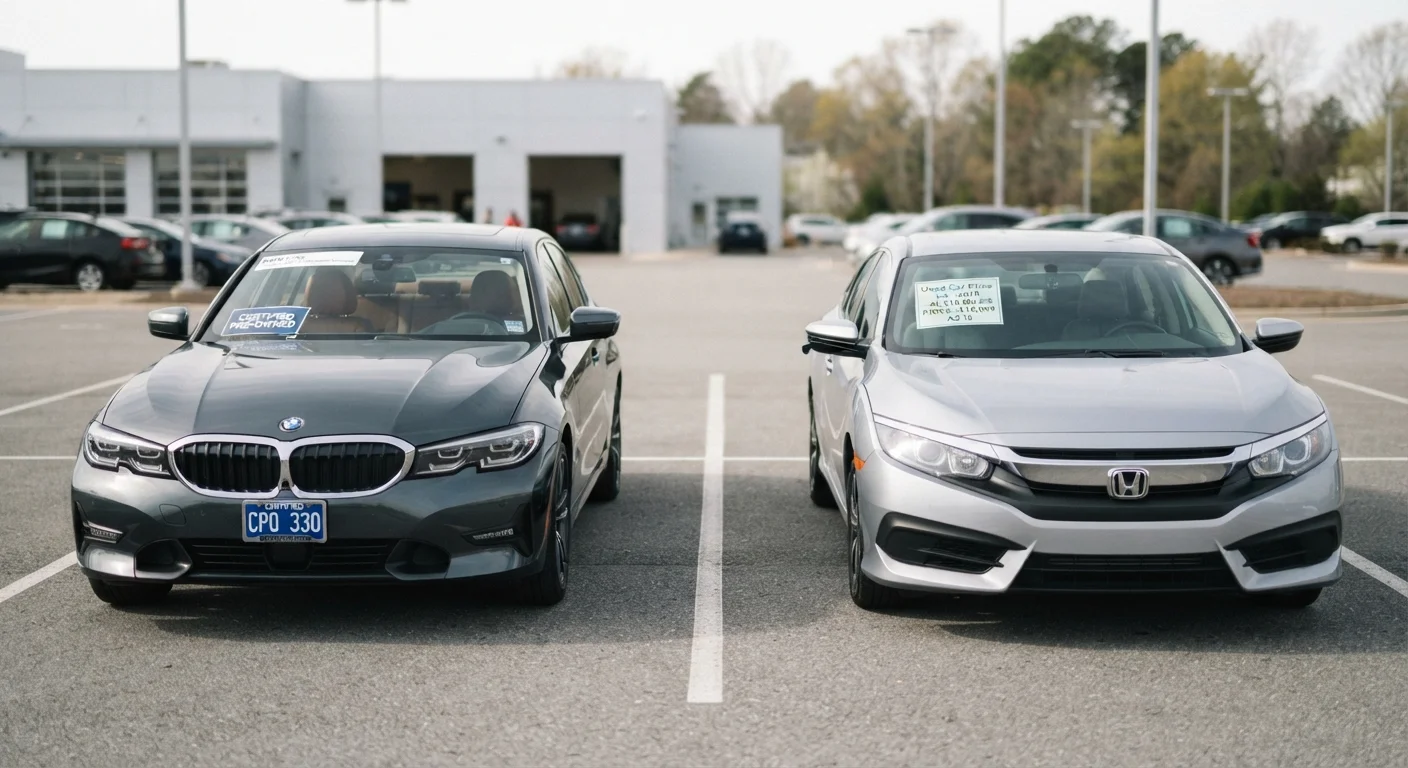
Option A
Certified Pre-Owned (CPO)
The manufacturer-backed, inspected used car option.
Best for: Buyers who want peace of mind, warranty coverage, and a documented inspection process from a franchised dealership.
Option B
Standard Used Car
The straightforward, lower-cost pre-owned alternative.
Best for: Budget-conscious buyers comfortable doing their own due diligence or working with an independent mechanic.
What 'Certified' Actually Means
The word certified carries real weight - but only when it's backed by a manufacturer's program. A certified pre-owned vehicle is one that has been inspected, reconditioned to a defined standard, and enrolled in a warranty program operated by the original automaker. To qualify, a car typically must be less than five or six years old, carry fewer than 80,000 miles, and pass a multi-point inspection - often 100 to 200+ checkpoints depending on the brand.
Critically, CPO certification is only available through franchised dealerships tied to a specific brand. A Toyota CPO vehicle can only be sold by an authorized Toyota dealer. If you see a dealer advertising a CPO vehicle for a brand they don't franchise, be skeptical - that label may refer to the dealer's own internal certification program, which carries no manufacturer backing and no standardized warranty.
Standard used cars, by contrast, carry no such requirements. A used car might be in excellent condition, fully serviced, and mechanically sound - or it might not be. The buyer bears full responsibility for assessing that. Before visiting any lot, reviewing the right questions to ask before a test drive can help you gather the most useful information quickly.
What CPO Programs Cover - and Where They Fall Short
A CPO warranty typically includes a powertrain component (engine, transmission, drivetrain) and may also extend the bumper-to-bumper coverage that remained on the original new-car warranty. Some programs add roadside assistance, complimentary vehicle history reports, and limited exchange privileges. These are genuine benefits that provide meaningful financial protection.
However, CPO coverage is not uniform across automakers, and this is where many buyers are caught off guard. Deductibles, coverage exclusions, transferability rules, and the distinction between what's covered under the powertrain warranty versus what's not can differ substantially from one program to the next. Wear items - brakes, tires, wiper blades - are almost universally excluded. Some programs have significant exclusions around electronics or emissions components.
| Criterion | Certified Pre-Owned (CPO) | Standard Used Car |
|---|---|---|
| Warranty Coverage | Manufacturer-backed powertrain + limited bumper-to-bumper | None (unless dealer adds one) |
| Inspection Standard | Standardized multi-point inspection (manufacturer-defined) | Varies; no required standard |
| Age & Mileage Limits | Strict eligibility thresholds (typically <6 years, <80K miles) | No restrictions |
| Where Sold | Franchised dealerships only | Dealerships, independents, private sellers |
| Price Premium | Higher - reflects warranty and certification costs | Lower - no built-in program cost |
| Financing Options | Often includes manufacturer-subsidized rates | Standard lender rates apply |
| Vehicle History Report | Typically included | Must be requested or purchased separately |
The practical implication: read the actual warranty document for the specific CPO program, not just the marketing summary. Ask the dealership to show you what is and is not covered in writing before you sign anything.
Is the CPO Premium Worth It?
CPO vehicles typically command a price premium over comparable non-certified used cars. That gap can vary widely based on the brand, vehicle age, and local market conditions - but it's real, and it needs to be weighed against what you're actually receiving in return.
For buyers who want predictable ownership costs in the near term, CPO coverage can provide genuine value - particularly on vehicles that are expensive to repair when something goes wrong. The calculus is different, however, for a buyer purchasing a vehicle that's near the end of its CPO eligibility, since the remaining warranty term may be relatively short.
A standard used car with a clean vehicle history report and a clean bill of health from an independent pre-purchase inspection can close much of the confidence gap. That third-party inspection - typically costing between $100 and $200 - is money well spent regardless of which path you choose. Keep in mind, too, that total ownership costs extend well beyond the purchase price: understanding the full cost of car ownership before committing helps you compare options more clearly.
Depreciation also plays a role. CPO vehicles, by definition, have already absorbed a significant portion of their initial depreciation - which can be an advantage. For a deeper look at how this works, see our piece on how depreciation affects your buying decision.
Dealer-Certified vs. Manufacturer-Certified
Some independent dealerships market vehicles as "dealer-certified" - meaning the dealer has done their own inspection and may offer a limited in-house warranty. This is not the same as a manufacturer CPO program. Dealer certifications are unregulated, unstandardized, and not backed by the automaker. When evaluating any certified claim, confirm specifically whether it is a manufacturer-sponsored CPO program or a dealer's own designation.
The content on this site is provided for informational purposes only and should not be considered a substitute for professional advice. While we strive to provide accurate and up-to-date information, we make no guarantees regarding its completeness or accuracy. Always consult a qualified professional for advice specific to your circumstances before making any decisions.