

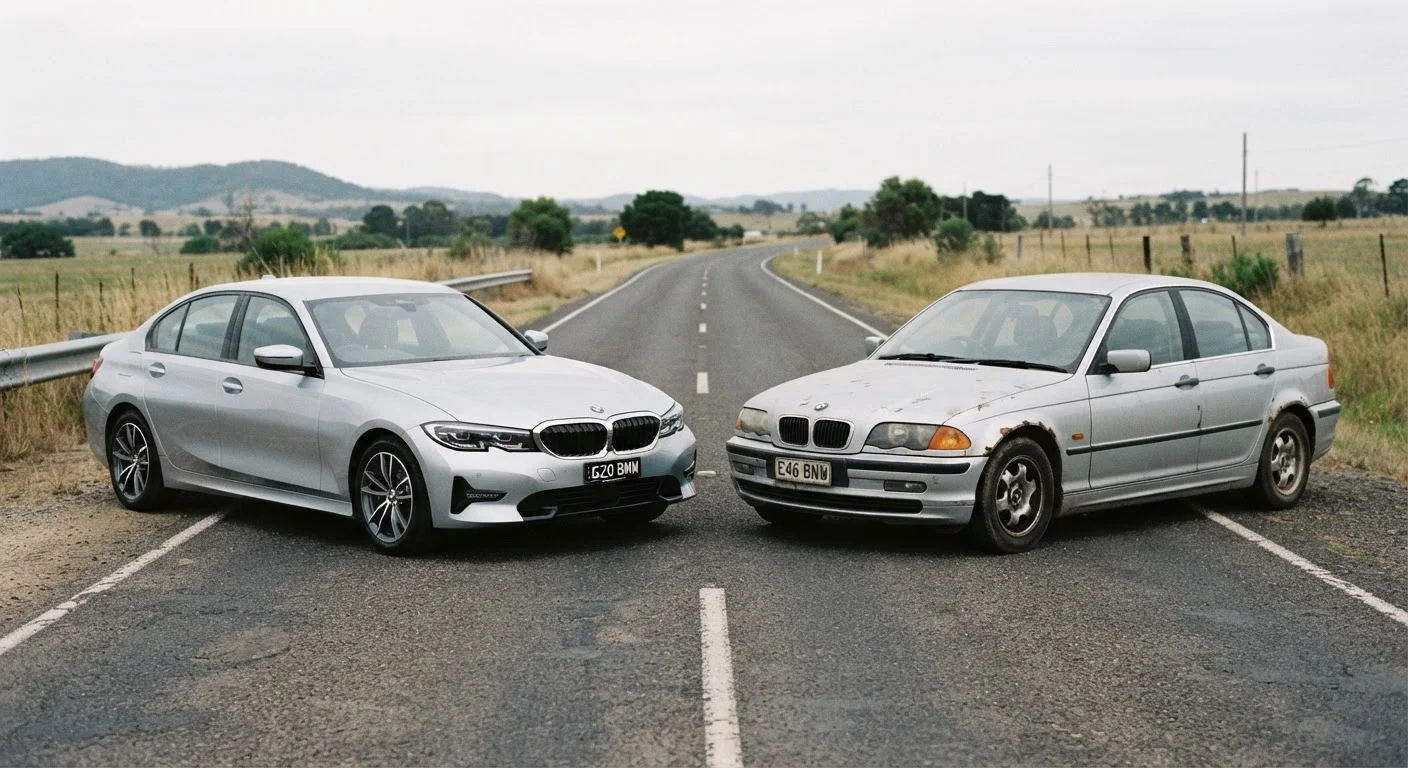
What Depreciation Actually Means for Your Wallet
When most people evaluate a car purchase, they focus on the monthly payment or the sticker price. What often goes unexamined is depreciation - the steady erosion of a vehicle's market value that begins the moment you drive off the lot. For many drivers, depreciation represents a larger financial cost than fuel, insurance, or maintenance over a typical ownership period.
Think of depreciation less as an abstract accounting concept and more as a tangible out-of-pocket loss. If you buy a vehicle for $40,000 and sell it five years later for $22,000, you've absorbed $18,000 in depreciation - regardless of how well you maintained the car or how few miles you drove. That cost is real, even if no single bill arrives in the mail.
For a fuller view of how depreciation fits alongside insurance, registration, and fuel costs, see the real costs of car ownership.
20%+
Average new-car value lost in year one
Industry valuation analysts consistently estimate new vehicles lose roughly 20% or more of their value within the first 12 months of ownership.
~50%
Value lost over five years on average
Automotive cost-of-ownership research broadly shows most new vehicles retain only around half their original value after five years, though this varies significantly by model.
#1
Depreciation as a cost-of-ownership factor
Depreciation is widely cited by automotive financial analysts as the single largest component of total vehicle ownership cost for most drivers.
How Depreciation Is Calculated
Depreciation doesn't follow a perfectly straight line. The steepest drop typically occurs in the first year - often 15-25% of the purchase price - and then the rate slows progressively. By years four and five, the annual value loss is usually much smaller in dollar terms, though the cumulative total continues to climb.
Several variables shape how quickly a specific vehicle depreciates:
- Brand and model reputation: Vehicles with strong reliability track records and high consumer demand tend to hold value better.
- Fuel efficiency: When gas prices rise, fuel-efficient models often see slower depreciation and stronger used-market demand.
- Supply and demand: Popular configurations in short supply depreciate more slowly; models with excess inventory move in the opposite direction.
- Mileage and condition: Higher mileage and any accident history accelerate value loss beyond the standard curve.
- Trim level and options: Some features add resale appeal; others add cost without proportional return at trade-in.
Understanding these variables before you buy - not after - is where the real financial advantage lies.
Why Some Vehicles Hold Value Better Than Others
Certain categories of vehicles consistently outperform others when it comes to retaining value. Pickup trucks and body-on-frame SUVs have historically depreciated more slowly in the US market, largely because of persistent demand from both work and consumer buyers. Some reliable compact and midsize vehicles also maintain strong resale values due to low operating costs and broad appeal.
At the other end of the spectrum, luxury sedans and certain electric vehicles have historically seen steeper depreciation, though the EV market is evolving rapidly as technology matures and charging infrastructure expands.
The practical implication: if you're choosing between two similarly priced vehicles, one with a stronger resale trajectory will cost you measurably less to own over time. A $2,000 difference in projected five-year depreciation is real money - and it's knowable before you sign anything.
Trade-in valuations vary widely between dealerships, and depreciation is a key reason why - understanding it gives you a stronger negotiating foundation.
Using Depreciation to Make a Smarter Buying Decision
Depreciation knowledge changes how you approach the entire car-buying process. For new-car buyers, it argues for prioritizing models with strong resale histories and avoiding trim-level upgrades that don't translate to higher trade-in values. For used-car buyers, it highlights a genuine financial advantage: purchasing a two- or three-year-old vehicle means someone else absorbed the sharpest depreciation drop, often representing thousands of dollars in built-in savings.
If you're considering a certified pre-owned vehicle, understanding depreciation helps you evaluate whether the premium over a standard used car is justified. See what certified pre-owned actually covers before making that call.
Routine upkeep also plays a role. Vehicles with clean maintenance histories and documented service records depreciate more slowly than neglected ones - another reason that consistent car maintenance is as much a financial decision as a mechanical one.
Finally, if you're weighing whether to buy at all, depreciation is a central variable in the honest comparison between ownership and other transportation options.
This article is for general informational purposes only and does not constitute financial or purchasing advice. Vehicle values vary by market, condition, and timing. Consult current valuation resources and qualified professionals when making significant vehicle purchasing decisions.
Frequently Asked Questions
Most new vehicles depreciate between 15% and 25% in their first year of ownership. By the end of five years, many vehicles have lost 40-60% of their original purchase price, though this varies considerably by make, model, and market conditions.
High initial pricing, low fuel efficiency, limited brand prestige, poor reliability reputation, and oversupply in the used market all accelerate depreciation. Luxury vehicles and certain sedans tend to depreciate faster than trucks and SUVs in many market conditions.
Yes. Lease payments are largely calculated based on the projected depreciation of the vehicle over the lease term. Vehicles with slower depreciation often carry lower lease payments because the residual value - what the car is worth at lease end - remains higher.
Automotive valuation services such as Kelley Blue Book and Edmunds publish depreciation data and five-year cost-to-own estimates. Comparing the current used price of a three- to five-year-old version of your target model against its original MSRP gives a practical real-world picture.
Absolutely. Poor maintenance records, cosmetic damage, high mileage, and accident history all accelerate value loss beyond standard depreciation curves. Keeping detailed service records and maintaining a vehicle in good condition helps protect resale value.
Buying used means you let the previous owner absorb the steepest portion of the depreciation curve - typically the first one to three years. This is one of the primary financial arguments for purchasing a lightly used vehicle over a brand-new one.
The content on this site is provided for informational purposes only and should not be considered a substitute for professional advice. While we strive to provide accurate and up-to-date information, we make no guarantees regarding its completeness or accuracy. Always consult a qualified professional for advice specific to your circumstances before making any decisions.