

Why the MSRP Is Only the Beginning
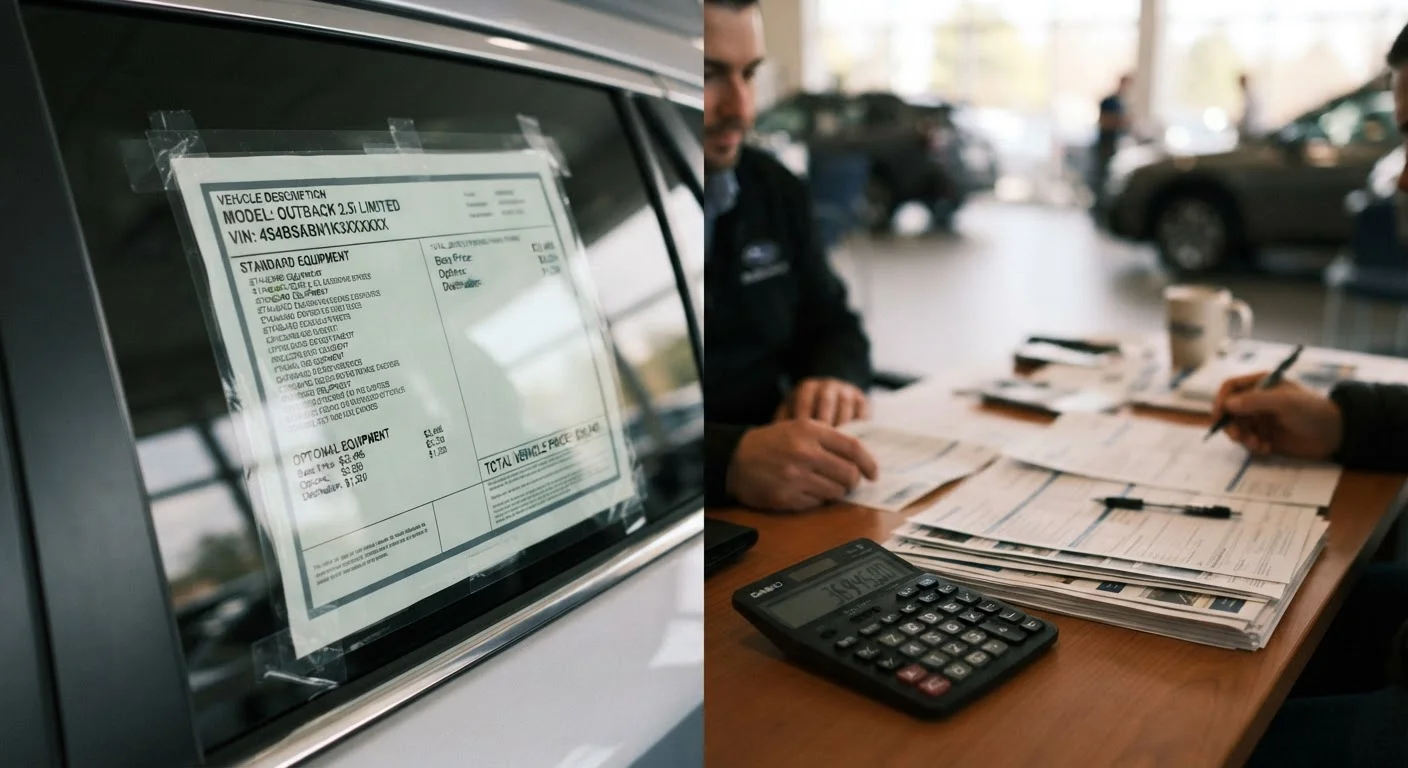
Walk into any new car dealership and the first number you'll see is the MSRP - displayed prominently on that window sticker. It looks official, and it is, but it represents only the starting point of a much longer price calculation. Federal law requires that sticker to be posted, but it doesn't require the final transaction to stay anywhere near it.
Between the manufacturer's suggested price and what you actually hand over, a range of fees, charges, and optional costs typically stack up. Some are mandatory and legitimate; others are discretionary and worth scrutinizing closely. Understanding the difference before you sit down to negotiate gives you a clearer view of what any deal actually costs.
Overpaying for a car rarely comes from one big mistake - it's usually the result of several smaller charges going unexamined at the wrong moment.
Fees That Are Almost Always Added
Certain charges appear on nearly every vehicle purchase regardless of where you buy or what you negotiate. Knowing them in advance means they won't catch you off guard.
$1,000-$2,000+
Typical range for destination and delivery fees on new vehicles
Destination charges are set by manufacturers and vary by brand and vehicle type; they appear on the window sticker and are non-negotiable.
~$500
Average documentation fee charged by US dealerships
Documentation fees vary widely by state and dealership; some states cap them by law while others impose no limit.
72-84 months
Increasingly common auto loan terms in the US
Longer loan terms reduce monthly payments but substantially increase total interest paid over the life of the loan.
- Destination and delivery charge: This fee covers transporting the vehicle from the manufacturing plant to the dealership. It's set by the manufacturer and is non-negotiable - but it should already appear on the window sticker itself, not be added again separately.
- Sales tax: Calculated as a percentage of the purchase price and determined by your state and sometimes your county or municipality. The rate varies significantly by location.
- Title and registration fees: State-mandated fees for transferring ownership and registering the vehicle. These differ by state and sometimes by vehicle weight or type.
- Documentation fee: A dealer charge for processing paperwork. In many states this is capped; in others it can range from modest to several hundred dollars with little standardization.
These items should be clearly itemized on any purchase agreement. If they're bundled into a single vague line, ask for a full breakdown before proceeding.
Dealer Markups and Add-Ons: What Gets Layered On
Beyond the fixed fees, dealerships often introduce additional charges that can meaningfully inflate the final price. Two categories deserve particular attention.
Market adjustments: During periods of high demand or constrained inventory, some dealers add an amount above MSRP and label it a market adjustment or dealer markup. This is a dealership decision, not a manufacturer one, and it can range from a few hundred to several thousand dollars depending on the vehicle's popularity and availability.
Dealer-installed add-ons: These are accessories or protection packages the dealership has already attached to the car - things like paint sealant, window tinting, floor mats, or security systems - and priced them into the vehicle before you arrived. You may have little option to remove what's physically installed, but you can sometimes negotiate the markup on these items.
Paint protection, fabric sealer, and window etching are commonly offered at signing. Understanding what each one actually delivers helps you assess whether the cost is warranted.
Ask for the Out-the-Door Price in Writing
Before finalizing any agreement, request a complete written breakdown of all costs - including taxes, fees, and any add-ons - expressed as a single total. This figure is what you'll actually pay and is the most useful number for comparing offers between dealerships. Don't rely on verbal summaries alone.
How Financing Changes the Total You Pay
The purchase price of the vehicle is only part of the financial picture when you're taking out a loan. The interest rate - expressed as an Annual Percentage Rate, or APR - and the loan term together determine how much you'll ultimately spend.
A lower monthly payment achieved through a longer loan term can obscure a significantly higher total cost. A buyer who finances $30,000 at 7% APR over 72 months pays considerably more in interest than someone financing the same amount over 48 months, even though the monthly payment looks more manageable on paper.
Dealerships also earn income through financing arrangements when they connect buyers with lenders, which means the rate offered in the finance office may not always be the most competitive one available. Arriving with a pre-approved rate from a bank or credit union gives you a concrete benchmark to compare against.
For a broader view of how layered costs work in major purchases, it's worth understanding what goes into a mortgage payment beyond the loan itself - the principle of costs building on top of a base price applies across large financial commitments.
Reading the Full Picture Before You Sign
The clearest way to understand what you're actually paying is to request the out-the-door price in writing before any negotiation concludes. This single figure - encompassing the vehicle price, all fees, taxes, and any agreed-upon add-ons - is what you'll actually be paying, and it's the number worth comparing across dealerships.
Review every line item on the purchase agreement individually. Question anything that isn't clearly explained. Charges that appear vague or duplicative - a "dealer prep fee" alongside a documentation fee, for instance - are worth asking about specifically.
The costs of owning a vehicle extend well beyond the purchase transaction itself. Insurance, fuel, maintenance, and depreciation all contribute to the true cost of the vehicle over time - making it worth understanding the full financial commitment, not just the number on the window.
This article is for general informational purposes only and does not constitute financial or legal advice. Consult a qualified professional for guidance specific to your situation.
Frequently Asked Questions
MSRP is the manufacturer's suggested base price for the vehicle. The out-the-door price includes all taxes, title and registration fees, documentation charges, and any dealer-added options - making it the true total you pay before driving away. These two numbers can differ by several thousand dollars.
In some states, documentation fees are capped by law, while in others they vary widely between dealers. Even where they aren't regulated, some dealers are willing to reduce or offset them as part of a negotiation. It's always worth asking for an itemized breakdown and discussing each charge.
A dealer market adjustment is an additional charge a dealership adds above the MSRP, often citing high demand or limited supply for a particular model. This markup is not set by the manufacturer and is entirely at the dealer's discretion. Whether it's justified depends on actual local market conditions.
A longer loan term lowers your monthly payment but increases the total interest paid over the life of the loan. For example, spreading a loan over 72 or 84 months instead of 48 can cost significantly more in interest overall, even if the interest rate appears similar.
Common add-ons include paint protection coatings, fabric sealants, window etching, extended warranties, and tire-and-wheel protection plans. These are often presented after a deal is agreed upon. Each one carries a cost, and not all of them deliver equivalent value - review them individually rather than as a bundle.
Yes. Getting pre-approved for an auto loan through a bank or credit union before visiting a dealership gives you a baseline interest rate to compare against dealer-offered financing. This puts you in a stronger negotiating position and helps you evaluate whether the dealer's financing terms are truly competitive.
The content on this site is provided for informational purposes only and should not be considered a substitute for professional advice. While we strive to provide accurate and up-to-date information, we make no guarantees regarding its completeness or accuracy. Always consult a qualified professional for advice specific to your circumstances before making any decisions.