

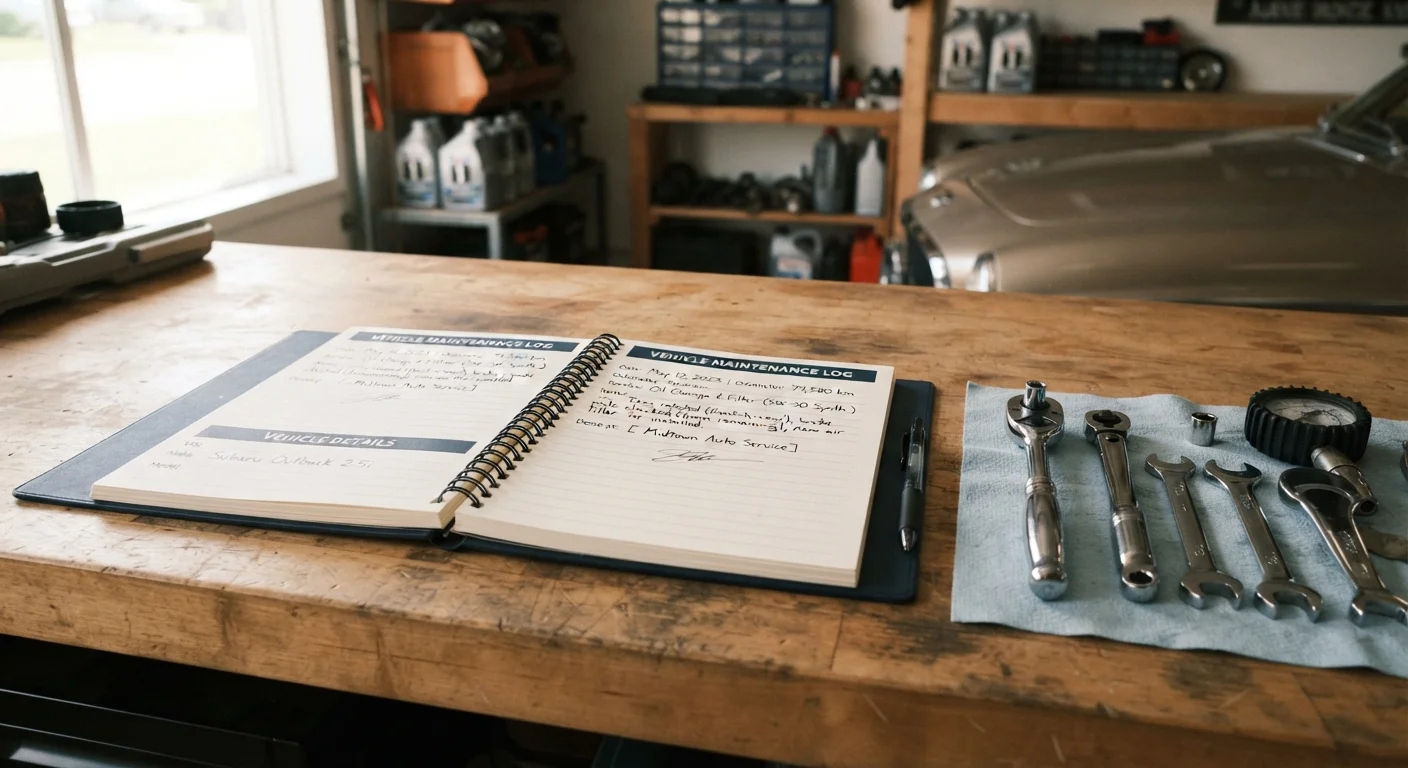
What a Maintenance Log Actually Is
A car maintenance log is a running record of every service, repair, and inspection performed on your vehicle. It captures the date, mileage, work completed, parts used, and who did the work - whether that was a dealership, an independent shop, or you in your own driveway.
It's not a complicated document. A dedicated notebook, a spreadsheet, or a smartphone app all work equally well. What matters is that you record entries consistently and keep the log with the vehicle so it's available whenever you need it.
Think of it as a medical chart for your car. Just as a doctor's record of past treatments informs future care, your maintenance log gives mechanics - and you - an accurate picture of what's been done, what's due, and what might be causing a problem. For a deeper foundation, reviewing your vehicle owner's manual tells you exactly which services your manufacturer recommends and at what intervals.
The Practical Benefits of Keeping Records
Drivers who keep maintenance logs gain several concrete advantages over those who rely on memory or receipts stuffed in a glove box.
Record every service at the time it happens, not weeks later from memory.
Delayed entries introduce errors - wrong mileage, missed items, uncertain dates. Accurate real-time records mean you can trust what's in the log when you need it most, such as during a warranty dispute or a pre-purchase inspection.
Note the mileage for every entry, not just the date.
Most maintenance schedules are mileage-based, not calendar-based. Without odometer readings, you can't accurately determine when the next service is due or whether a shop's recommendation is premature.
Keep all physical receipts and attach them to the log or store them in a labeled envelope.
Receipts provide third-party verification that corroborates your log entries. They're especially valuable during warranty claims or when a buyer wants proof of service from a licensed shop.
Flag upcoming services directly in the log so nothing slips through the cracks.
A log isn't only a backward-looking record - it's a planning tool. Noting 'next timing belt due at 60,000 miles' at the bottom of an entry prevents the kind of oversight that leads to expensive mechanical failures.
Beyond daily ownership, a thorough log pays dividends when you decide to sell. Private buyers and dealers alike respond well to documented service history - it reduces uncertainty about the vehicle's condition. As our coverage of vehicle history reports explains, commercial reports have real blind spots; a personal log fills many of those gaps with firsthand, verified detail.
What to Record - and How Often
Every log entry should include at minimum: the date, current odometer reading, service performed, cost, and who did the work. If parts were replaced, note the brand and part number when available.
Record entries for routine maintenance - oil changes, tire rotations, fluid top-offs, filter replacements - as well as any unplanned repairs, diagnostic work, or inspections. Don't overlook smaller items like wiper blade replacements or cabin air filter swaps; they're easy to forget and easy to double-charge if a shop can't verify when the last one was done.
If you're unsure how frequently certain services should occur, the answer lives in your owner's manual. Mileage-based schedules vary significantly by vehicle, and as our article on oil change intervals explains, blindly following a generic 3,000-mile rule can mean unnecessary expense - or genuine neglect - depending on your car.
Maintenance Logs and Resale Value
When you eventually sell or trade in your vehicle, a complete maintenance log is one of the most persuasive documents you can hand a prospective buyer. It demonstrates that the car was cared for systematically - not just when a warning light forced the issue.
Skipping that documentation doesn't just leave buyers guessing; it can also mask a pattern of neglected service that a mechanic will eventually uncover. Our guide on why deferred maintenance costs more than you think details how gaps in service history compound into expensive repairs - the exact scenario a log helps you avoid in the first place.
Whether you use an independent shop or a dealership service center, always request a written service summary after every visit and transfer the key details into your log the same day. Consistency is what turns a few loose receipts into a credible ownership history.
The content on this site is provided for informational purposes only and should not be considered a substitute for professional advice. While we strive to provide accurate and up-to-date information, we make no guarantees regarding its completeness or accuracy. Always consult a qualified professional for advice specific to your circumstances before making any decisions.