

Start here
What the Owner's Manual Actually Contains
Core knowledge
The Maintenance Schedule: Your Car's Roadmap
Go deeper
Fluids, Capacities, and Specifications
Be prepared
Warning Lights and What to Do
Apply it
How to Use Your Manual as an Ongoing Reference
What the Owner's Manual Actually Contains
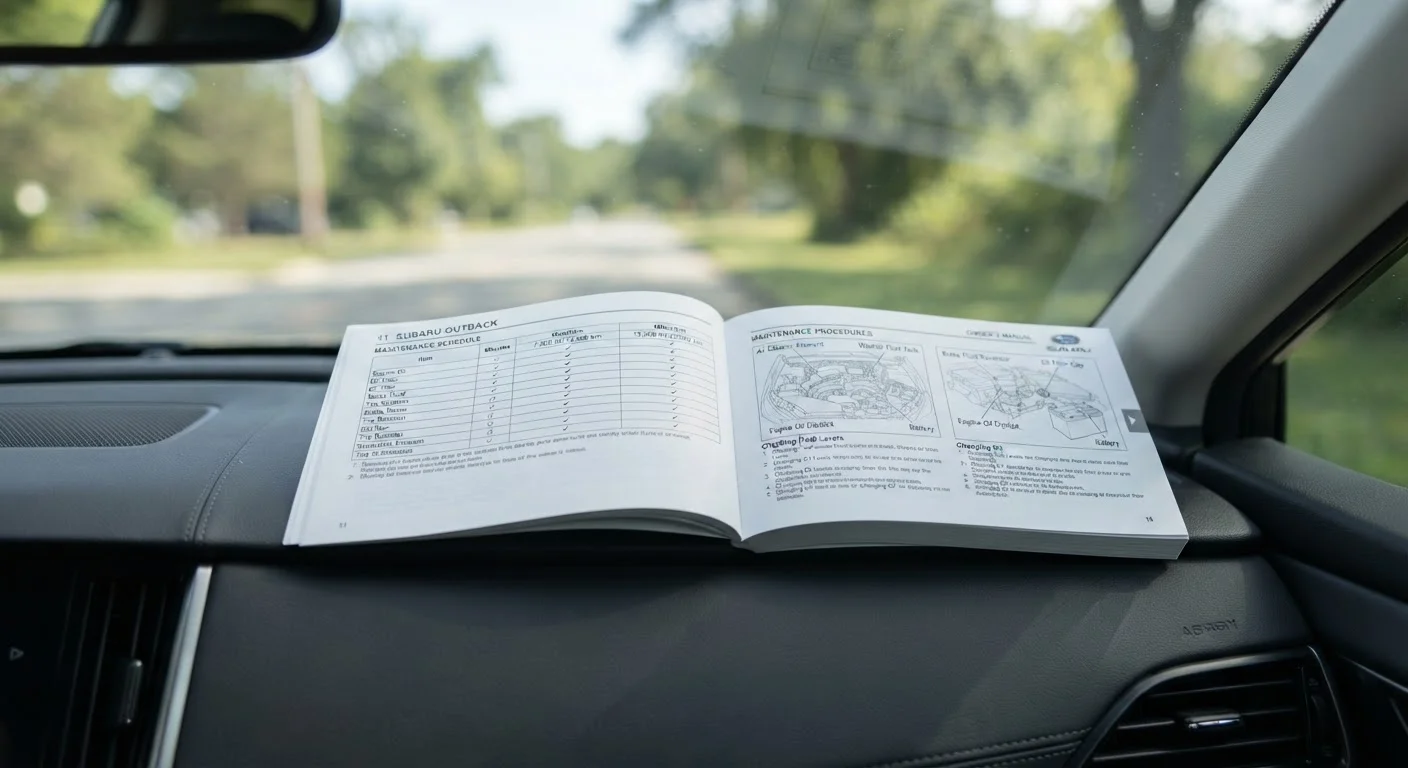
Most drivers tuck the owner's manual into the glove box and never open it - which means they're missing out on the single most vehicle-specific resource available to them. Unlike general automotive advice you find online, the manual is written for your exact make, model, year, and engine configuration.
A typical owner's manual is organized into several broad categories:
- Instrument panel and controls - how every button, dial, and display works
- Safety systems - airbags, seatbelts, child seat anchors, and driver-assistance features
- Starting, driving, and parking - including towing limits and fuel requirements
- Maintenance schedule - the manufacturer's recommended service intervals
- Technical specifications - fluid types, tire pressures, fuse locations, and capacities
- Warning and indicator lights - what each symbol means for your specific vehicle
The index at the back is your fastest navigation tool. If something on your dash lights up or a feature behaves unexpectedly, the index will point you to the right page faster than any search engine.
Maintenance schedule
A table in the owner's manual that lists every recommended service - like oil changes, filter replacements, and brake inspections - organized by mileage or time interval.
Viscosity
A measure of how thick or thin an oil is. Engine oils use a code like 5W-30 - the numbers indicate how the oil flows at cold starts and operating temperature.
Severe service schedule
A more frequent maintenance timeline for vehicles regularly driven in demanding conditions, such as short trips, extreme heat or cold, towing, or heavy stop-and-go traffic.
Payload limit
The maximum total weight a vehicle can safely carry, including passengers and cargo. Exceeding it puts stress on the suspension, brakes, and drivetrain.
Indicator light
A symbol that illuminates on your dashboard to communicate a vehicle status or condition, ranging from routine information (like a turn signal) to urgent warnings.
Coolant type
The specific formulation of antifreeze your engine requires. Mixing incompatible coolant types can reduce their protective properties and cause corrosion.
The Maintenance Schedule: Your Car's Roadmap
The maintenance schedule is arguably the most financially valuable section of the manual. It lays out, by mileage and time interval, exactly which services your vehicle needs and when. Following it helps prevent breakdowns and keeps your warranty intact.
One of the most persistent misconceptions in car ownership is that oil changes should happen every 3,000 miles regardless of the vehicle. As the common maintenance myths guide explains, many modern vehicles - especially those using full synthetic oil - can go significantly longer between changes. Your manual's schedule tells you the manufacturer-tested interval, which is the most reliable number to follow.
Pay attention to two tracks many manuals include: a normal service schedule and a severe service schedule. Severe conditions include frequent short trips under five miles, extreme temperatures, towing, or stop-and-go urban driving. Many drivers qualify for the severe schedule without realizing it, which means shorter service intervals on items like engine air filters and brake fluid.
Fluids, Capacities, and Specifications
The specifications section prevents one of the most avoidable sources of vehicle damage: using the wrong fluid. Engine oil viscosity (such as 5W-30 or 0W-20), coolant type, transmission fluid specification, and brake fluid grade are all listed here and are not interchangeable across vehicles.
For a broader look at what each fluid does and where to locate it under the hood, see our guide to car fluids and what each one does. Your manual's specifications section tells you the exact type to use - the fluids guide explains the why behind each one.
The specifications section also lists:
- Tire inflation pressures - often different for front and rear axles, and different from the maximum pressure printed on the tire sidewall itself
- Fuel type - whether your engine requires regular, mid-grade, or premium unleaded
- Towing and payload limits - exceeding these can cause serious drivetrain damage
For a deeper dive on keeping your tires in safe shape, the tire maintenance guide walks through pressure, tread depth, and rotation intervals alongside the specifications your manual provides.
Download a Searchable Digital Copy
If your physical manual is worn, missing, or hard to read in dim light, most manufacturers offer free PDF versions through their official websites. A digital copy lets you search by keyword - type in "tire pressure" or "oil type" and jump directly to the relevant page without flipping through hundreds of pages.
Warning Lights and What to Do
When a warning light appears on your dashboard, your owner's manual is the authoritative first reference - not a generic online list. Light meanings, colors, and urgency levels vary between manufacturers and even between trim levels of the same model. A red oil pressure light means something different from an amber oil life monitor, and your manual distinguishes them clearly.
For a practical walkthrough of what individual symbols commonly signal and how urgently to respond, the car warning lights guide is a useful companion. Always cross-reference what you find there with your own manual's section for your specific vehicle.
As a general rule: red lights indicate conditions requiring immediate attention and often mean you should stop driving safely as soon as possible. Amber or yellow lights typically signal a condition to monitor or address soon. Blue and green lights are generally informational. When in doubt, have the vehicle inspected by a qualified mechanic rather than driving on.
How to Use Your Manual as an Ongoing Reference
Your owner's manual works best as a living reference rather than a one-time read. A few practical habits make a real difference:
- Before any DIY check - consult the manual for the correct procedure. Checking oil level, for example, sometimes requires a warm or cool engine depending on the vehicle. Our DIY car checks guide pairs well with the manual for basic under-hood tasks.
- When choosing a service provider - bring the maintenance schedule with you so you can compare what a shop recommends against what the manufacturer actually requires. See dealer vs. independent mechanic for help weighing your options.
- When logging your service history - note which manual-specified intervals you've completed. A well-documented service history built around the manufacturer schedule adds real credibility and value at resale. The car maintenance log guide explains exactly how to build that record.
If your glove box copy is worn out or missing, download the PDF version from the manufacturer's website - it's free and searchable, making it even easier to find specific information quickly.
Frequently Asked Questions
Most manufacturers publish owner's manuals as free PDF downloads on their official websites. Search for your vehicle's year, make, and model along with "owner's manual PDF." Some automakers also provide digital manuals through their mobile apps.
It varies significantly by vehicle. Many modern cars specify oil changes every 7,500 to 10,000 miles - or more - using full synthetic oil, rather than the old 3,000-mile guideline. Always follow your manual's interval, not a generic rule.
Yes, a dedicated section lists and explains every warning and indicator light specific to your vehicle. This is the most accurate reference because light meanings can differ between manufacturers and even between trim levels.
Using the wrong viscosity or specification can reduce engine protection and potentially void warranty coverage. Stick to the grade listed in the manual; if you're unsure, consult a qualified mechanic before substituting.
Not always. Dealers sometimes recommend additional services beyond what the manufacturer requires. The manual's factory schedule is the baseline your warranty is built around - compare any dealer recommendations against it.
No. The manual helps you understand your vehicle and perform basic checks, but it doesn't substitute for a qualified mechanic's diagnosis of unusual sounds, warning lights, or mechanical concerns.
The content on this site is provided for informational purposes only and should not be considered a substitute for professional advice. While we strive to provide accurate and up-to-date information, we make no guarantees regarding its completeness or accuracy. Always consult a qualified professional for advice specific to your circumstances before making any decisions.