

Our Verdict
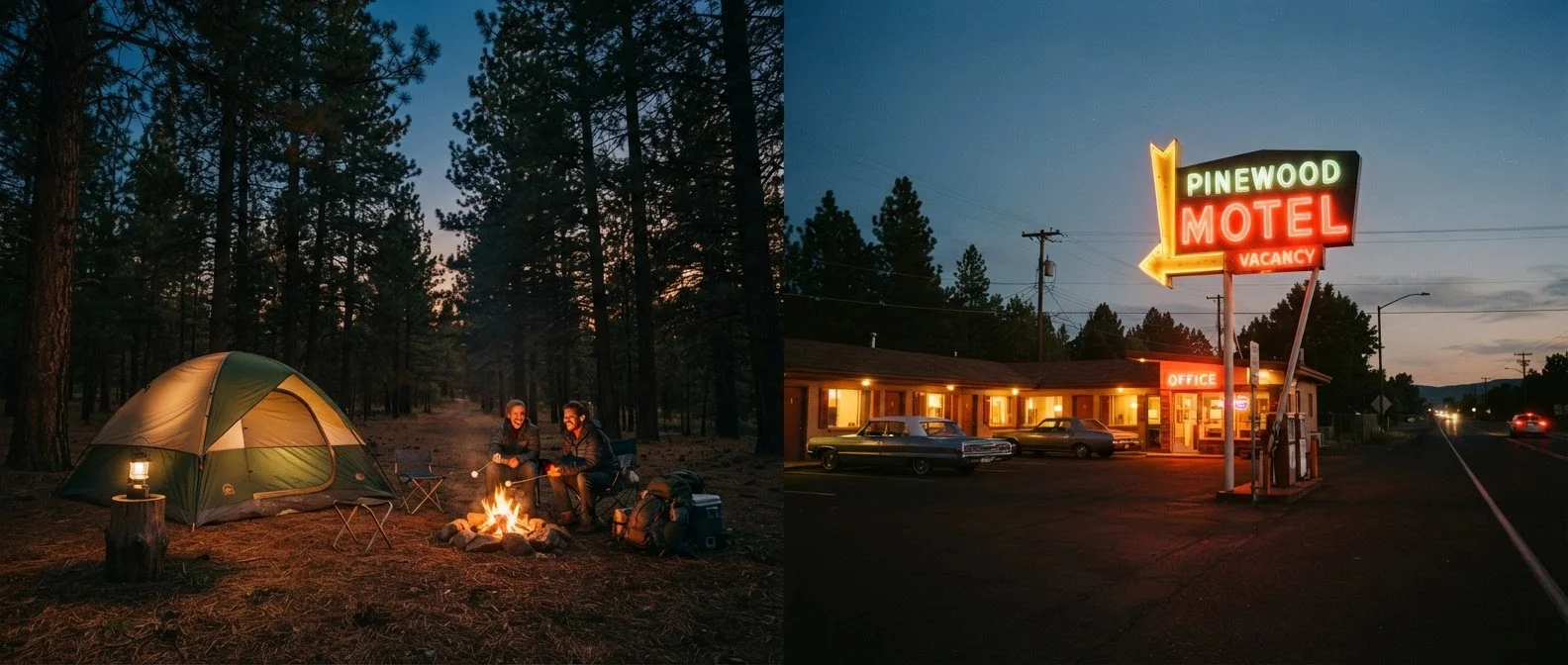
There is no universally superior overnight option for road trips - the right choice depends on budget, comfort expectations, travel pace, and how much gear you're willing to carry. Campgrounds reward the prepared and adventurous; motels reward the spontaneous and comfort-conscious; hybrid options like cabin rentals and RV parks split the difference meaningfully.
Best for travelers who can clearly articulate their priorities - cost, comfort, or flexibility - and plan their overnight stops around those values rather than defaulting to habit.
Why Your Overnight Choice Shapes the Whole Trip
Where you sleep on a road trip isn't just a logistical footnote - it affects your budget, your driving schedule, your energy levels, and even the kinds of destinations you can reach. A traveler committed to campgrounds can access remote national forest sites that no motel can match. A traveler prioritizing motels can move fast, stop late, and stay dry without any setup. Understanding this upstream impact helps you plan a trip that actually fits how you travel.
If you're working through your route and itinerary planning, overnight strategy belongs in that conversation early - not as an afterthought once you've already mapped your stops.
Campgrounds: Low Cost, High Effort
Campgrounds - whether operated by the National Park Service, state agencies, private operators like KOA, or dispersed on public land - represent the most affordable overnight option for most road trippers. Fees at developed campgrounds in the US typically range from around $15 to $50 per night, and dispersed camping on Bureau of Land Management (BLM) land is often free with minimal restrictions.
Campgrounds offer the lowest nightly accommodation cost
Developed campgrounds typically charge $15-$50 per night, and dispersed public land camping is often free. Over a multi-week trip, this gap compounds significantly compared to motel rates.
Camping puts you closer to natural and remote destinations
Many of the most scenic stops on American road trips - national forests, canyon lands, coastal bluffs - are accessible overnight only via campgrounds. No motel can replicate that proximity.
Motels require zero gear and minimal setup time
After a long driving day, the simplicity of checking into a motel room is a genuine recovery advantage. There's no unpacking equipment, no weather risk, and no logistical overhead.
Hotel and motel stays offer consistent amenities
Climate control, a real bed, running hot water, and secure storage are standard at virtually any motel or hotel - removing variables that can affect sleep quality and next-day driving performance.
Cabin rentals split cost and comfort effectively
Cabin accommodations at state parks or private campgrounds often cost less than a motel while providing walls, a roof, and a bed - making them a practical middle ground for gear-light travelers.
Group travel makes vacation rentals cost-competitive
When split among multiple travelers, a full vacation rental unit can undercut per-person motel costs while adding kitchen access and communal space that individual rooms can't provide.
The trade-offs are real, though. You need gear - at minimum a tent, sleeping bags rated for the expected temperatures, and some means of cooking or storing food. Setup and breakdown take time. Weather is not negotiable. And during summer peak season, popular sites in national parks or near major attractions can book out months in advance, requiring a level of pre-planning that limits spontaneity.
Camping requires significant gear investment and transport
A functional camping setup - tent, sleeping bags, sleeping pads, cooking equipment - represents a real upfront cost and takes up vehicle cargo space that may not be available on all trips.
Popular campgrounds book months in advance in peak season
Reservation windows for high-demand sites in national parks can open six months ahead. Spontaneous road trippers are often shut out of their preferred camping stops entirely.
Weather makes camping unpredictable and sometimes miserable
Rain, cold, heat, and insects are part of camping regardless of how well you prepare. A string of poor-weather nights can undermine trip enjoyment in ways a motel stay never would.
Motel quality is highly inconsistent between properties
Brand affiliation is not a reliable indicator of cleanliness or condition at roadside properties. Relying on recent traveler reviews is essential, and occasional disappointing stays are difficult to avoid entirely.
Motel and hotel costs add up quickly over multi-week trips
Even budget motel rates of $70-$100 per night accumulate to $500-$700 per week - a figure that can strain trip budgets significantly when multiplied across a longer itinerary.
Middle-ground options have limited last-minute availability
Cabins, vacation rentals, and glamping sites along popular corridors are typically reserved well in advance, meaning travelers who don't plan ahead often find these options unavailable when they need them.
For travelers combining outdoor destinations with driving, campgrounds make obvious sense. For those whose route prioritizes scenic byways over efficiency, dispersed camping along less-traveled corridors can be a genuine adventure - not just a money-saving compromise.
Roadside Motels and Hotels: Comfort Without Complication
The American roadside motel is a road trip institution for good reason. You pull in, check in, and you're done - no tent poles, no sleeping pads, no raccoon-proofing your cooler. A private room with a locked door, a real bed, climate control, and a shower represents a meaningful recovery tool, especially on long driving days. For travelers with children, older adults, or anyone managing physical limitations, this convenience isn't a luxury - it's often a necessity.
Watch for Demand Surges Near Major Attractions
Motels and hotels within 30 miles of major national parks, popular beaches, or festival venues can see nightly rates spike two to three times their off-peak levels during peak weekends. If your route passes through a high-draw destination, checking local event calendars before finalizing dates can prevent sticker shock at check-in. Booking even 48-72 hours ahead during summer travel season is often not enough in these corridors.
Costs vary considerably. Budget chains and independent motels in rural areas often fall in the $60-$120 range per night, while properties near national parks, coastal towns, or urban areas can run significantly higher - particularly in summer. Booking platforms have made price comparison easier, but availability can still collapse quickly around holidays and local events. If you're traveling during peak season, understanding how seasonality affects lodging availability and pricing is worth doing before you finalize dates.
Quality inconsistency is the biggest risk. Unlike campgrounds where the experience is fairly predictable, motel quality varies enormously between properties and even between visits to the same chain location. Reading recent reviews and not assuming brand name equals quality is a practical habit worth developing.
Middle-Ground Options: Cabins, RV Parks, and Vacation Rentals
Between the tent and the motel room sits a growing range of middle-ground accommodations that road trippers increasingly rely on. Cabin rentals at private campgrounds and state parks offer shelter without requiring camping gear, often at prices between a tent site and a budget motel. RV parks - even for tent campers - frequently offer better amenities than primitive campgrounds, including electrical hookups, bathhouses, and laundry facilities.
45M+
American households that camp annually
According to the Outdoor Foundation's annual participation reports, tens of millions of American households participate in camping each year, with road-based camping representing a significant share.
$15-$50
Typical nightly rate at a developed campground
National Park Service and state-managed campgrounds generally fall in this range, though fees vary by location, hookups, and season.
6 months
How far ahead top campground reservations open
Recreation.gov - the federal reservation platform for national park campgrounds - opens reservations up to six months in advance for many high-demand sites.
Vacation rental platforms have also expanded what's possible along less-traveled routes. A private room or small guesthouse can sometimes undercut local hotel pricing while offering a kitchen - a meaningful advantage for keeping food costs down. For those traveling as a group, splitting a vacation rental may cost less per person than multiple motel rooms. This dynamic is one reason solo versus group road trips involve such different accommodation math.
The practical limitation of these options is lead time. Last-minute availability for cabins or rentals along popular corridors is limited. Spontaneous travelers often find that middle-ground options are unavailable on short notice, pushing them back toward walk-in motels or less desirable campsite options.
Making the Decision That Fits Your Trip
The honest answer to "campground or motel?" is: it depends on what you're optimizing for. Cost and immersion in nature point toward camping. Speed, comfort, and flexibility point toward motels. A blended approach - camping near outdoor destinations, moteling through urban or high-mileage segments - is how many experienced road trippers actually operate.
Your vehicle matters too. A car with limited cargo space makes hauling camping gear impractical without a roof rack or cargo carrier. If you're on your first extended road trip, starting with motels and adding camping incrementally on future trips is a sensible approach that avoids gear investment until you know you'll use it.
Whatever you choose, build your overnight stops into your daily driving plan before you leave - not at 7 p.m. when you're exhausted and options have narrowed. That planning discipline, more than any specific accommodation choice, is what makes overnight stops work.
The content on this site is provided for informational purposes only and should not be considered a substitute for professional advice. While we strive to provide accurate and up-to-date information, we make no guarantees regarding its completeness or accuracy. Always consult a qualified professional for advice specific to your circumstances before making any decisions.