

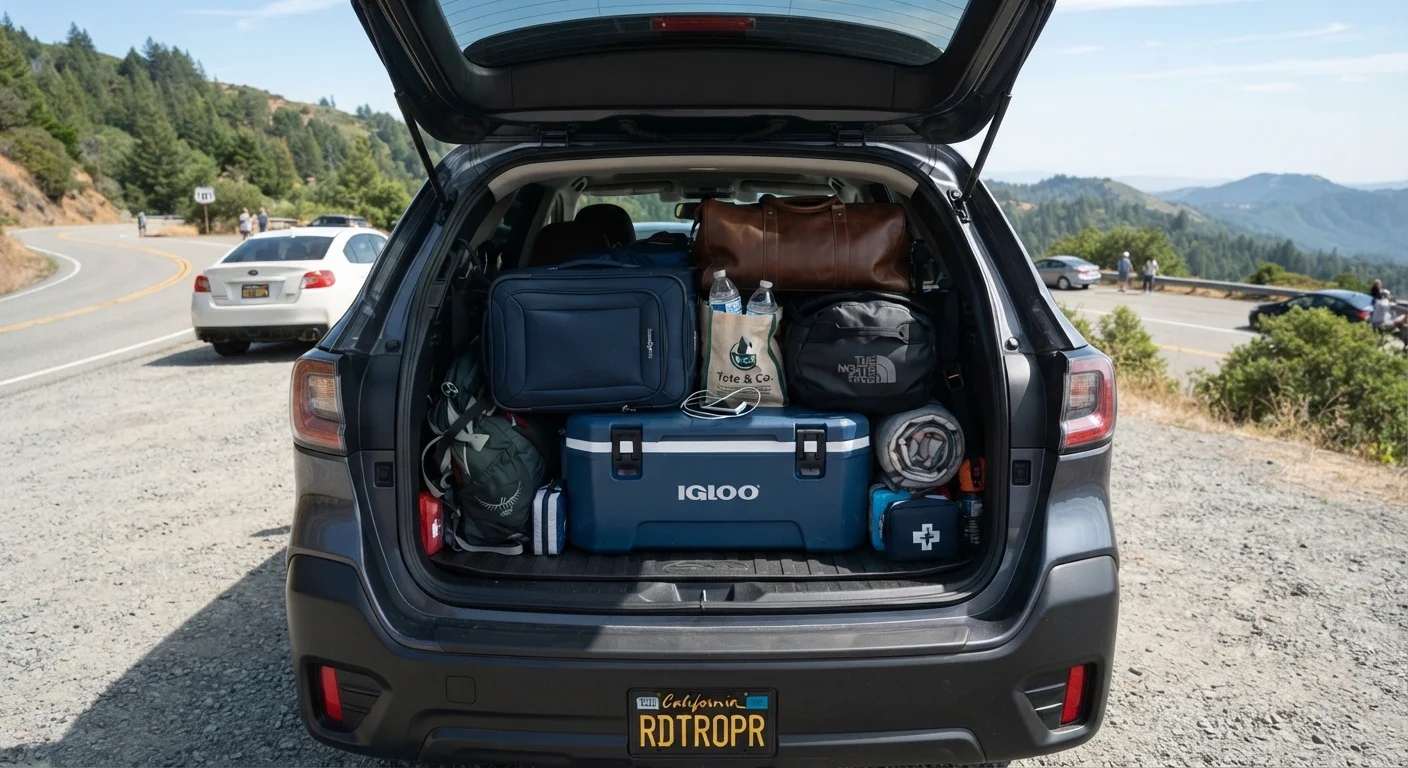
Why Packing Strategy Matters More Than You Think
Most drivers treat packing as an afterthought - something to wrestle with the morning of departure. But how you load your vehicle directly affects its handling, fuel efficiency, and your ability to respond quickly in an emergency. An overloaded or poorly balanced car takes longer to stop, corners less predictably, and puts extra stress on tires that are already working hard at highway speeds.
Before you start loading, check your owner's manual for two key numbers: the payload capacity (the maximum combined weight of passengers and cargo your vehicle is rated to carry) and the Gross Vehicle Weight Rating (GVWR) - the maximum allowable total weight of the loaded vehicle. Exceeding either figure isn't just hard on your car; it can void your warranty and create a legal liability if you're involved in an accident. For a broader trip preparation framework, see the pre-departure road trip checklist that covers these and related considerations in full.
The Right Way to Distribute Weight
Weight placement is the single most important variable in how a loaded car handles. Follow these principles every time you pack:
Place the heaviest items low and centered in the cargo area.
Heavy items positioned high or far to the rear shift the vehicle's center of gravity, increasing the risk of rollover and making steering feel vague. Keeping weight low and close to the axle centerline preserves the factory-engineered balance of the suspension.
Distribute weight evenly side to side, not just front to back.
A load concentrated on one side creates uneven tire wear and can cause the vehicle to pull during braking. Symmetric loading keeps all four contact patches working as designed.
Fill gaps between items with soft goods to prevent shifting.
Unsecured cargo that slides during cornering or braking becomes a projectile and alters weight distribution dynamically - the worst possible time for balance to change.
Keep rear sightlines completely clear before moving the vehicle.
A blocked rear window eliminates your direct rearview mirror sight line, forcing reliance solely on side mirrors - which have blind spots. In a parking lot or tight road scenario, this significantly increases collision risk.
Pack frequently needed items last so they're retrieved first.
Digging through a fully loaded trunk at every rest stop wastes time, disturbs your weight arrangement, and often means items are repacked carelessly - undoing careful loading.
If you're carrying passengers in the rear seat, their weight counts toward your payload figure - factor that in before loading the trunk. For guidance on the mechanical systems that support a loaded vehicle, inspect tires, brakes, and suspension before any long haul.
Quick Wins Before You Load a Single Bag
A few simple decisions before packing begins can prevent the most common loading mistakes:
What you ultimately decide to leave behind is just as important as what goes in. Packing decisions that make or break a trip explores the broader principles of editing your load before you ever reach the car.
Roof Carriers, Hitch Cargo, and External Storage
When interior space runs out, external storage seems like an easy fix - but it introduces trade-offs worth understanding. A roof-mounted cargo box or basket raises your vehicle's center of gravity, which increases body roll during lane changes and can make the car feel noticeably less planted in crosswinds. At highway speeds, aerodynamic drag from an unloaded roof box can reduce fuel efficiency by a meaningful margin; a fully loaded one can increase that effect further.
Hitch-mounted cargo carriers keep weight lower and have less aerodynamic impact, but they add length to your vehicle - a factor when parking or reversing. Whatever external option you use, verify that the weight of the loaded carrier doesn't exceed the carrier's rated capacity or your vehicle's hitch receiver rating, which are separate figures. Always double-check that tie-downs and locking mechanisms are secure before each day of driving, not just at initial loading. Loose cargo at speed is a serious road hazard for every driver around you.
Avoid the common pitfall of treating external storage as overflow for items you might need during the trip - accessing a roof box at a rest stop is inconvenient and potentially unsafe on busy roads. Pack only items you won't need until your destination.
The content on this site is provided for informational purposes only and should not be considered a substitute for professional advice. While we strive to provide accurate and up-to-date information, we make no guarantees regarding its completeness or accuracy. Always consult a qualified professional for advice specific to your circumstances before making any decisions.