

Why Every Driver Needs an Emergency Kit
Breakdowns, flat tires, and minor accidents don't announce themselves in advance. They happen on rural stretches with no cell signal, in extreme heat, or in the middle of the night when help is hours away. An emergency kit doesn't require a worst-case scenario to be useful - it's the kind of preparation that quietly pays off anytime something unexpected interrupts a drive.
This isn't about overpacking. It's about having the right items for the situations that actually occur. Whether you're planning a cross-country road trip or a weekend drive, reviewing your kit before you leave is a step that belongs on every pre-departure checklist. See Your Pre-Departure Road Trip Checklist for a full rundown of what to verify before hitting the road.
| Recommended kit check frequency | At least once a year, or before any long trip |
| Most common roadside event | Dead battery / flat tire (AAA Roadside Assistance data) |
| Warning triangle placement distance | 100-300 feet behind stopped vehicle (General roadside safety guidance) |
| Minimum water to carry | 1 liter per person |
| Storage location | Trunk or cargo area (secured) |
The Core Items and What They Actually Do
Understanding why each item belongs in the kit helps you prioritize and use it correctly under pressure.
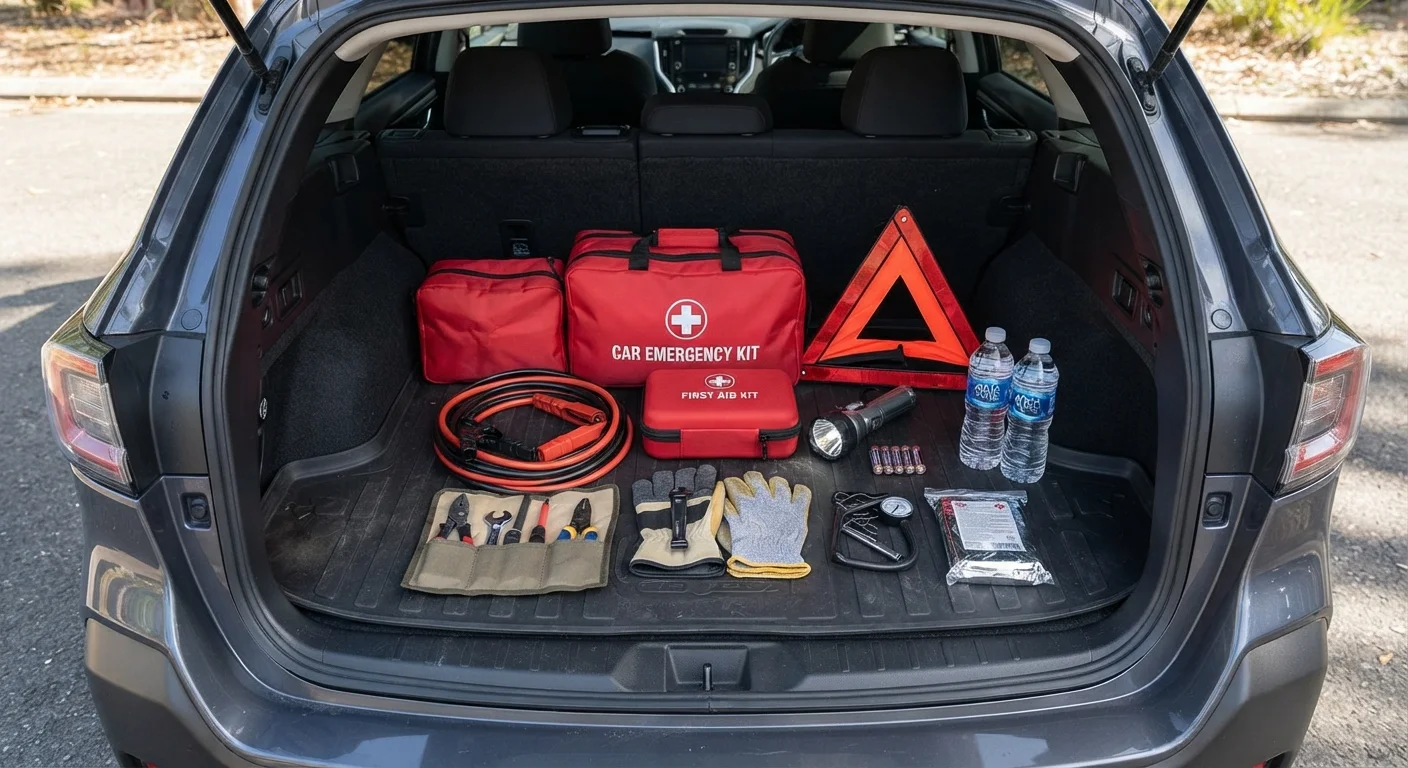
Jumper Cables or a Portable Jump Starter
A dead battery is one of the most common roadside events. Standard jumper cables require a second vehicle, while a portable lithium jump starter lets you restart the car independently - useful when you're alone or on an empty road. Look for one rated for your engine size.
Reflective Warning Triangles or Road Flares
Visibility is your primary safety concern any time your vehicle is stopped on or near a roadway. Placing warning triangles 100-300 feet behind your car gives approaching drivers adequate time to slow down. Flares serve the same purpose but are especially effective in rain or fog.
First Aid Kit
A basic kit should include adhesive bandages, sterile gauze, medical tape, antiseptic wipes, tweezers, and disposable gloves. This handles minor injuries - cuts from broken glass, blisters from walking to get help - while you wait for professional assistance.
Flashlight and Extra Batteries
Many breakdowns happen at night. A durable flashlight helps you inspect a tire, read a dipstick, or signal to other drivers. Keep spare batteries separate in a sealed bag to preserve charge.
Tire Inflation Kit or Spare Tire
Many newer vehicles no longer include a full-size spare. A portable tire inflator and sealant can temporarily fix a slow leak, but won't handle a blowout. Know what your vehicle carries and whether your spare (if any) is properly inflated - this is part of the pre-trip vehicle checks every driver should complete.
Basic Tool Kit
A compact set including a wrench, pliers, screwdrivers, and zip ties can address minor mechanical issues. This won't replace a mechanic, but it can secure a loose component long enough to safely reach a service station.
Water and Non-Perishable Snacks
If you're stranded in heat or waiting several hours for a tow, dehydration becomes a real concern. Keep at least one liter of water per person in the vehicle and rotate it regularly to avoid degradation from heat exposure.
Emergency Blanket and Rain Poncho
Mylar emergency blankets are compact and can prevent hypothermia in cold weather or provide shade in extreme heat. A rain poncho is useful if you need to change a tire or walk for help in wet conditions.
Phone Charger or Power Bank
Your phone is your primary lifeline for calling roadside assistance, navigating to safety, or contacting emergency services. A fully charged power bank stored in your kit ensures you're never stranded with a dead phone.
Extras Worth Adding for Long Trips
Beyond the core kit, longer routes through remote areas justify a few additional items. A gallon of coolant or distilled water can address minor overheating. A tow strap is valuable in rural or off-road situations. Cash in small bills covers tolls or emergency purchases when card readers aren't available. A paper map of your route remains useful when cell coverage fails.
For first-time road trippers, understanding what to do if something goes wrong is just as important as what you carry. First Road Trip Ever? Here's What No One Thinks to Tell You covers the practical realities that most planning guides skip over.
Store everything in a durable bag or bin that stays in the trunk at all times - not the back seat where it can become a hazard in sudden stops. Review and replenish the kit at least once a year, or before any significant trip. A complete emergency kit is one component of a larger preparation mindset; the Complete Road Trip Planning Playbook covers the full picture from route selection to vehicle readiness.
The content on this site is provided for informational purposes only and should not be considered a substitute for professional advice. While we strive to provide accurate and up-to-date information, we make no guarantees regarding its completeness or accuracy. Always consult a qualified professional for advice specific to your circumstances before making any decisions.