

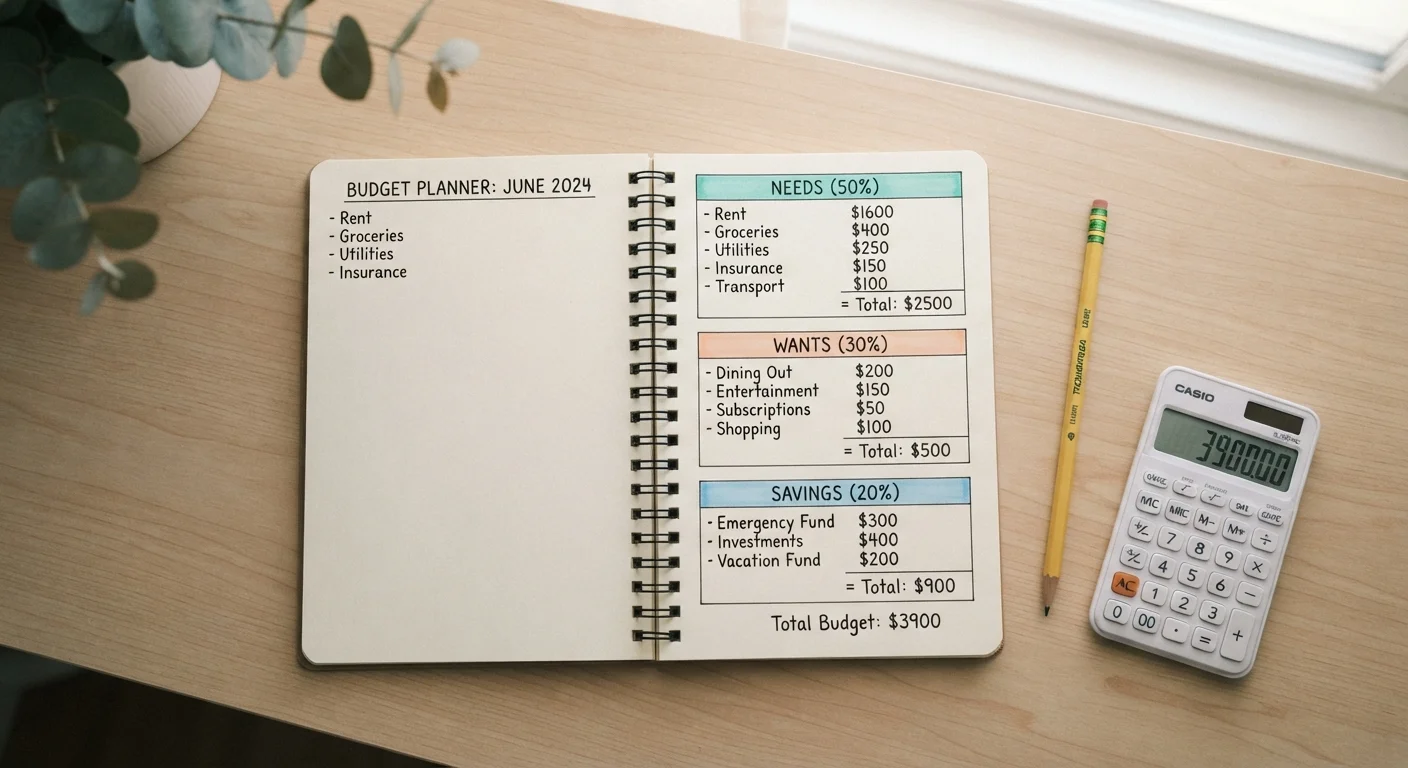
Where the Rule Comes From
The 50/30/20 framework was popularized by U.S. Senator Elizabeth Warren and her daughter Amelia Warren Tyagi in their 2005 book All Your Worth: The Ultimate Lifetime Money Plan. Their core argument was that overly complicated budgets fail because most people won't maintain them. A three-bucket system, they reasoned, is simple enough to actually use.
The rule isn't a rigid law - it's a practical starting point. It gives structure to income allocation without requiring you to log every coffee purchase or grocery run. For many households, that simplicity is exactly what makes it stick.
Breaking Down the Three Categories
50% - Needs: This covers the essentials you genuinely can't go without. Rent or mortgage payments, utilities, groceries, transportation to work, health insurance premiums, and minimum loan payments all belong here. The test is straightforward: would skipping this expense cause a serious, immediate consequence? If yes, it's a need.
The tricky part is honesty. A streaming service feels essential if you've had it for years, but it's a want. Drawing a clear line between needs and wants is one of the most important skills in personal budgeting.
30% - Wants: This is discretionary spending - things that improve your life but aren't strictly necessary. Dining out, entertainment subscriptions, travel, gym memberships, and clothing beyond the basics all fit here. The 30% bucket isn't frivolous; it reflects the reality that sustainable budgets leave room for enjoyment.
20% - Savings and Debt Repayment: This bucket does the heavy lifting for your financial future. It covers emergency fund contributions, retirement account deposits (like a 401(k) or IRA), and extra payments on debt above the minimum. Whether to prioritize savings or debt payoff within this 20% depends on interest rates and your current financial cushion.
57%
Americans who don't follow a budget
According to a Gallup survey, more than half of U.S. adults do not maintain a detailed household budget, underscoring the appeal of simpler frameworks like the 50/30/20 rule.
34%
Median share of income spent on housing
The U.S. Bureau of Labor Statistics Consumer Expenditure Survey consistently shows housing as the largest single expense category for American households, often straining the 50% needs target.
< 40%
Americans with 3 months of emergency savings
Bankrate's annual emergency savings report has found that fewer than four in ten Americans could cover three months of expenses from savings, highlighting why the 20% savings allocation matters.
How to Apply It to Your Paycheck
Start with your actual take-home pay - the number deposited in your bank account each month after taxes and any pre-tax deductions like health insurance. If your income varies, use a conservative monthly estimate.
Multiply that number by 0.50, 0.30, and 0.20 to get your target dollar amounts for each category. Then compare those targets to what you're actually spending. Most people find the eye-opener isn't the wants category - it's realizing their needs are consuming 60% or 65% of income, leaving little room for savings.
If your needs exceed 50%, look first at housing costs, which tend to be the biggest driver. In high-cost cities, strict adherence to 50% may be unrealistic - adjusting to 60/20/20 or similar variations is acceptable. The framework is a guide, not a mandate.
Once the math is set, the single most effective step is automation. Setting up an automatic transfer to savings on payday removes the decision entirely. A practical automation setup can make the 20% savings target feel effortless over time.
When the Rule Works - and When It Doesn't
The 50/30/20 rule is well-suited for people with a stable, predictable income who want a low-maintenance budgeting system. It's also a strong starting point for anyone new to budgeting who finds detailed tracking overwhelming.
It works less well in a few common scenarios. High-cost-of-living areas can push needs well above 50%, making the percentages feel arbitrary. People with aggressive financial goals - paying off debt quickly, saving for a house down payment, or building wealth faster - may find the 30% wants allocation too generous. And for freelancers or gig workers, applying a percentage-based system to a variable income requires extra planning. Budgeting strategies for irregular income offer useful adaptations for those situations.
If you want more granular control over every dollar, zero-based budgeting offers a different philosophy worth comparing. But for most people starting out, the 50/30/20 rule provides enough structure to build good habits without the overhead that causes most budgets to fall apart.
This article is for general informational and educational purposes only and does not constitute personalized financial advice. Consult a qualified financial professional for guidance specific to your situation.
Frequently Asked Questions
It uses net income - the amount you actually take home after taxes and payroll deductions. Using gross income would inflate your budget categories and lead to shortfalls in practice.
Needs are expenses you genuinely cannot avoid: rent or mortgage, utilities, groceries, basic transportation, insurance, and minimum debt payments. Subscriptions, dining out, and gym memberships generally count as wants, not needs.
It can work, but may require adjustment. If housing and essential costs consume more than 50% of your income, you may need to trim the wants category or temporarily lower the savings percentage while working to increase income.
Minimum debt payments belong in the needs category since skipping them has serious consequences. Extra payments above the minimum - used to pay debt down faster - typically fall in the 20% savings and debt category.
There is no single best method for everyone. The 50/30/20 rule works well for people who want a simple structure without detailed tracking. Those with complex finances or aggressive savings goals may prefer a more granular approach like zero-based budgeting.
Apply the percentages to your average monthly income or your lowest expected month to stay conservative. For more detailed strategies on variable pay, see guidance specific to freelancers and gig workers.
The content on this site is provided for informational purposes only and should not be considered a substitute for professional advice. While we strive to provide accurate and up-to-date information, we make no guarantees regarding its completeness or accuracy. Always consult a qualified professional for advice specific to your circumstances before making any decisions.