

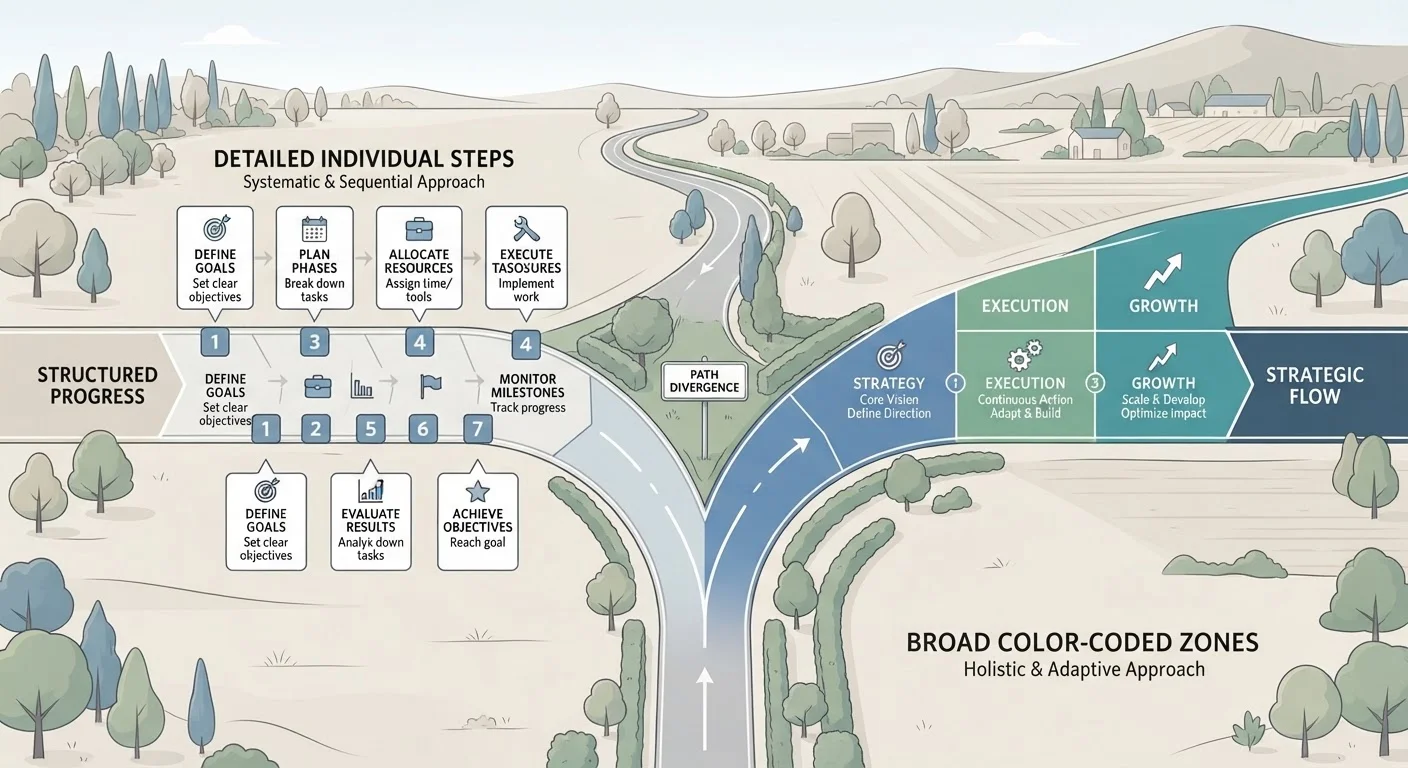
Option A
Zero-Based Budgeting
The meticulous, dollar-by-dollar method.
Best for: People who want complete control over every spending decision and are willing to invest time each month planning their finances.
Option B
The 50/30/20 Rule
The straightforward, percentage-based framework.
Best for: People who want a simple, low-maintenance structure that sets broad guardrails without micromanaging every expense.
How Each Method Actually Works
Before comparing the two, it helps to understand what each method asks of you in practice.
Zero-based budgeting (ZBB) starts with your monthly income and works downward, assigning every dollar to a category - rent, groceries, utilities, savings, entertainment - until you reach zero. That zero doesn't mean you've spent everything; it means every dollar has been deliberately placed somewhere, including savings and investments. You rebuild this plan from scratch each month. See our guide to building a zero-based budget for a practical walkthrough.
The 50/30/20 rule takes a different angle. It divides your after-tax income into three broad categories: 50% toward needs (housing, utilities, groceries, minimum debt payments), 30% toward wants (dining out, subscriptions, hobbies), and 20% toward savings and additional debt repayment. The 50/30/20 rule explained in full covers exactly how to apply these percentages to your paycheck. The method sets guardrails rather than line items.
| Criterion | Zero-Based Budgeting | 50/30/20 Rule |
|---|---|---|
| Setup time | 1-2 hours per month | Under 15 minutes |
| Spending granularity | Every dollar categorized | Three broad buckets |
| Best income type | Variable or tight income | Stable, predictable income |
| Flexibility mid-month | Requires re-planning | Adjustments are easy |
| Awareness of spending patterns | Very high | Moderate |
| Beginner-friendliness | Moderate learning curve | Easy to start immediately |
| Effectiveness for debt payoff | High - precise allocation | Moderate - broad target only |
| Monthly maintenance | Ongoing throughout month | Minimal after initial setup |
Where Each Method Shines - and Struggles
Zero-based budgeting delivers clarity that few other methods can match. When you account for every dollar, it's nearly impossible to ignore creeping subscription costs or habitual small purchases that quietly drain a checking account. This granularity is especially powerful for people paying down debt or trying to consistently fund savings. The trade-off is real, though: ZBB requires meaningful time each month to plan, and mid-month adjustments when unexpected expenses arise can feel disruptive.
The 50/30/20 rule wins on accessibility. Most people can apply it in under 10 minutes after their first paycheck. It accommodates lifestyle variety - the 30% "wants" bucket doesn't judge what you spend on - and it's forgiving of imperfect months. The problem is that it can mask problems. If your housing costs consume 40% of income alone, the remaining percentages don't hold, and the rule offers no guidance on how to adapt. It also doesn't help you identify specific areas of overspending.
If you're entirely new to budgeting, consider starting with our step-by-step first budget guide before committing to either method.
When the 50/30/20 Percentages Don't Add Up
In high cost-of-living areas, housing alone can consume well over 30% of after-tax income, making the 50% needs target impossible to hit. If your fixed costs already exceed 50%, the rule still has value as an aspirational framework, but you'll need to adapt the categories to your actual situation rather than treat the percentages as rigid requirements. Tracking where you currently stand is more useful than forcing numbers that don't reflect your reality.
Choosing the Right Fit for Your Financial Life
The honest answer is that neither method is objectively better - they suit different people and different phases of life. A few questions help clarify which is worth trying first.
- How variable is your income? Freelancers, gig workers, and anyone with irregular paychecks typically benefit more from zero-based budgeting, where each month's plan reflects actual income rather than an assumed percentage split.
- How much time can you commit? If monthly financial planning sounds like a chore you won't sustain, the 50/30/20 rule's minimal upkeep makes it far more likely to stick.
- Do you have a specific financial goal with a deadline? ZBB's precision can accelerate progress on goals like building an emergency fund or paying off a credit card faster than a broad percentage rule allows.
- Do you already know where your money goes? If spending awareness is the gap, zero-based budgeting forces that education. If you already have a handle on your habits, the 50/30/20 rule may provide all the structure you need.
Some people blend the two - using the 50/30/20 framework as a high-level target and zero-based planning within each category. You might also explore how your budgeting tools affect which method feels sustainable. The envelope method is another tactile alternative worth considering if neither approach here resonates.
Ultimately, the best budgeting method is the one you'll actually use. Start with the approach that fits your current habits, track it for two or three months, and adjust from there. Your money mindset - the attitudes and habits shaping how you relate to money - will influence which system you sustain long-term.
This article is for general informational and educational purposes only and does not constitute personalized financial advice. Consult a licensed financial professional for guidance specific to your situation.
The content on this site is provided for informational purposes only and should not be considered a substitute for professional advice. While we strive to provide accurate and up-to-date information, we make no guarantees regarding its completeness or accuracy. Always consult a qualified professional for advice specific to your circumstances before making any decisions.