

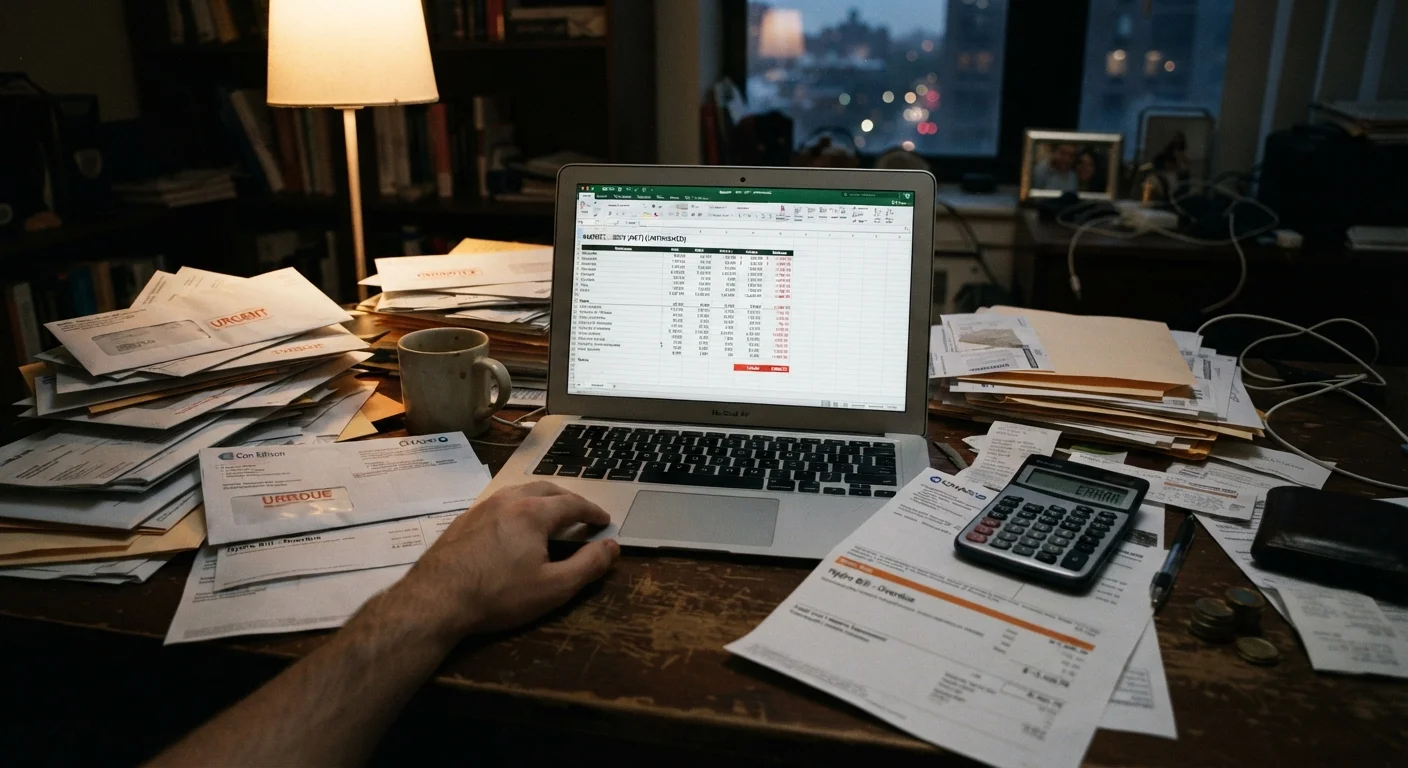
Avoidance Has a Price Tag
Most expensive financial habits are easy to spot - impulse purchases, high-interest debt, no emergency fund. But one habit quietly outranks them all in long-term cost: simply not looking.
Financial avoidance is the pattern of steering clear of money-related tasks because engaging with them feels uncomfortable. It shows up as unopened bank statements, skipped budget reviews, and delayed conversations about debt. Unlike overspending, avoidance doesn't feel like a decision. It feels like nothing - which is part of why it's so hard to catch.
The costs, however, are concrete. Late fees accumulate. Interest compounds on balances you didn't realize were growing. Credit scores drop from missed payments. Opportunities to renegotiate bills, catch billing errors, or redirect savings go unnoticed. Over months and years, the financial gap between someone who checks in regularly and someone who doesn't can be substantial - not because of income differences, but because of information gaps.
This isn't about blame. Avoidance is a well-documented behavioral response to anxiety. When a task is associated with bad news or feelings of inadequacy, the brain learns to treat it as a threat. Avoiding it provides temporary relief. The problem is that the relief is real and immediate, while the costs are delayed and easy to underestimate. That asymmetry makes avoidance self-reinforcing. Understanding that dynamic is the first step toward interrupting it. For a broader look at how emotional patterns shape spending decisions, see The Psychological Roots of Overspending.
Common Avoidance Mistakes - and How to Break Them
Financial avoidance rarely announces itself. It hides inside reasonable-sounding delays and small deferrals. Here are the patterns that do the most damage:
Ignoring account statements and balances until a crisis forces a look.
Why it happens: Checking balances when finances feel shaky triggers anxiety, so the brain treats the task as a threat to avoid. Not looking feels protective in the short term.
Letting bills go unopened or emails unread to avoid seeing bad news.
Why it happens: People assume the worst and delay confirmation, not realizing that unopened bills still accrue late fees and that errors go uncaught.
Putting off difficult money conversations with a partner, family member, or employer.
Why it happens: Money conversations carry emotional stakes - fear of conflict, shame, or exposing vulnerability. Deferring feels like protecting the relationship.
Skipping budget reviews for weeks or months after falling off track.
Why it happens: Missing a budget goal once can trigger an all-or-nothing mindset - 'I've already blown it, so there's no point checking in.' This turns one slip into a prolonged gap.
Avoiding refinancing, negotiating, or canceling services because the process feels complicated.
Why it happens: Uncertainty about the steps involved makes the task feel larger than it is, and the cost of inaction is invisible until it's tallied up.
If you've avoided starting a budget because it feels overwhelming or pointless, it's worth examining the beliefs driving that resistance. Budgeting myths that keep people from ever starting often play a bigger role than people realize. And once you're ready to build a system, building a budget that survives unexpected expenses is a practical next step.
What Makes Engagement Sustainable
Willpower is not a reliable fix for avoidance. The research on behavioral change consistently shows that reducing friction - making the desired action easier - works better than relying on motivation alone.
33%
Americans with no monthly budget review
A National Financial Educators Council survey found roughly one in three Americans report never reviewing their monthly budget or spending, leaving gaps invisible until they compound.
$1,200+
Average annual late fee exposure per household
Consumer Financial Protection Bureau data has consistently shown that late fees on credit cards and utilities represent a significant recurring cost for households that miss payment due dates.
Practically, this means designing your financial habits so engagement requires as little activation energy as possible. Set up automatic alerts for account balances. Schedule a recurring 15-minute calendar block for a weekly money check-in rather than waiting until something goes wrong. Keep a single spreadsheet or app open and accessible rather than hunting for information when it's needed.
Avoidance thrives in complexity. The more steps between you and your financial picture, the easier it is to defer. Simplifying that access - fewer accounts, clearer summaries, automated payments for fixed bills - removes the excuses that avoidance relies on. The budgeting basics hub covers practical tools for setting up exactly this kind of low-friction system.
It also helps to decouple financial check-ins from the emotional weight of judgment. Reviewing your spending is information-gathering, not a performance review. Separating those two things - looking at the numbers versus evaluating yourself - makes regular engagement far more sustainable. If debt is part of what you've been avoiding, the saving and debt resources offer structured approaches for facing those numbers and building a plan.
This article is for general informational and educational purposes only and does not constitute personalized financial advice. For guidance specific to your situation, consult a qualified financial professional.
The content on this site is provided for informational purposes only and should not be considered a substitute for professional advice. While we strive to provide accurate and up-to-date information, we make no guarantees regarding its completeness or accuracy. Always consult a qualified professional for advice specific to your circumstances before making any decisions.