

Our Verdict
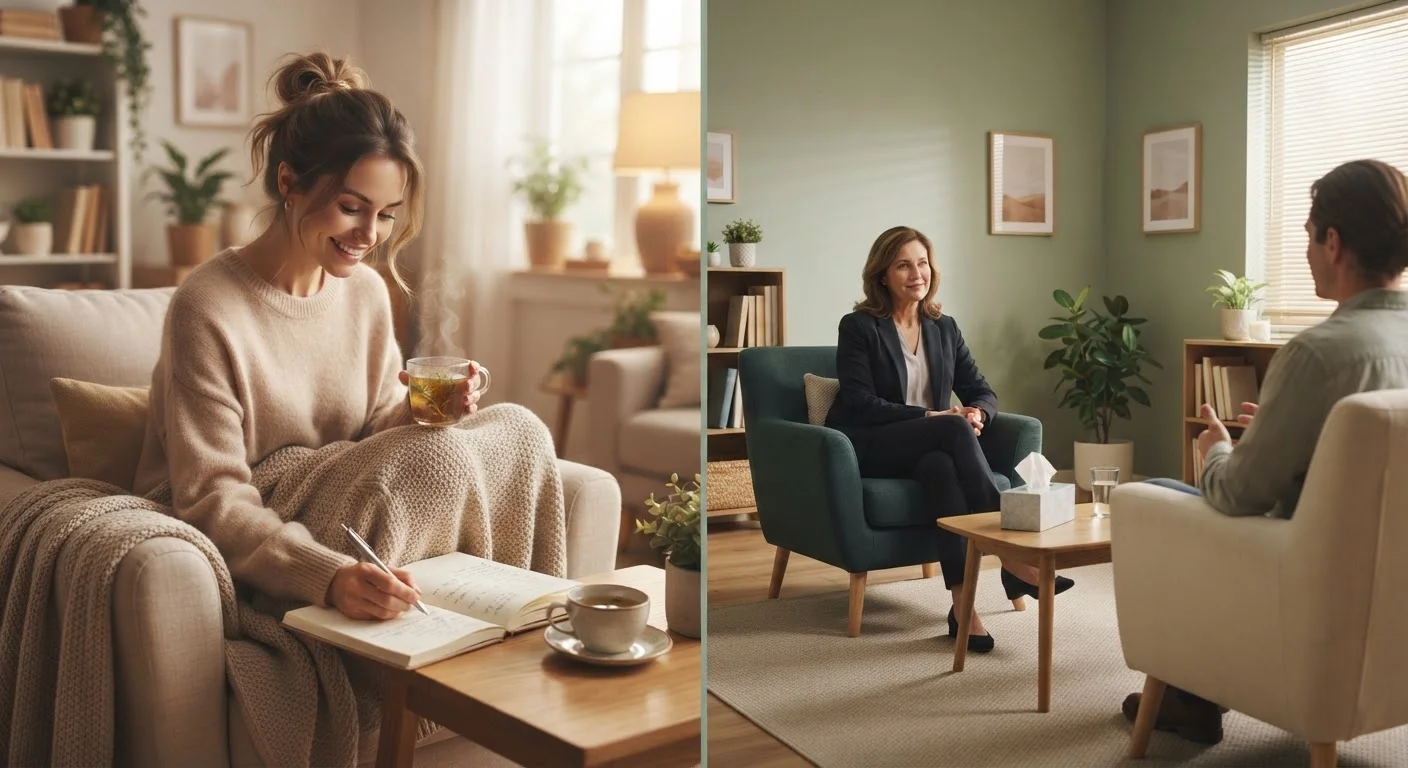
Self-care is a genuine and valuable part of mental wellness, but it occupies a different lane than professional mental health treatment. The two are not competing options - they address different levels of need and work best when used together thoughtfully. Knowing which one your situation calls for is the most important decision you can make.
| Best for | Recommended |
|---|---|
| Managing everyday stress, building resilience, and maintaining general well-being | Self-Care |
| Persistent symptoms, functional impairment, or diagnosed mental health conditions | Professional Mental Health Treatment |
| Readers who want to support their mental wellness proactively between therapy sessions | Both Together |
What Each One Actually Means
The terms self-care and mental health treatment are sometimes used as if they're interchangeable, but they describe genuinely different things. Understanding the distinction - without dismissing either - is the starting point for making good decisions about your mental well-being.
Self-care refers to intentional habits and practices that support overall health. Sleep hygiene, regular physical activity, social connection, journaling, and stress-reduction techniques all fall into this category. These are activities a person manages independently, and research does support their role in maintaining mental wellness. For a deeper look at what mental wellness actually encompasses, see what mental health actually means.
Mental health treatment, by contrast, involves evaluation, diagnosis, and care delivered by licensed professionals - therapists, counselors, psychologists, and psychiatrists - using structured, evidence-based approaches such as cognitive behavioral therapy (CBT) or medication management. It addresses clinical conditions, not just fluctuating mood or life stress.
Where Self-Care Genuinely Helps
Self-care is not a placeholder or consolation prize. For people managing everyday stress, life transitions, or mild low mood, consistent self-care practices can meaningfully reduce distress and build long-term resilience. The key word is consistent - occasional bubble baths don't carry the same weight as reliable sleep schedules or regular physical movement.
Evidence-supported self-care practices include:
- Sleep: Prioritizing quality rest has measurable effects on mood regulation, cognitive function, and emotional resilience. The relationship runs both ways - as explored in the link between sleep and mental health.
- Physical activity: Regular moderate exercise is associated with reduced anxiety and depressive symptoms in healthy populations.
- Journaling: Structured reflective writing has shown promise for processing difficult emotions, though its benefits depend heavily on how it is practiced. See what the research says about journaling.
- Social connection: Maintaining meaningful relationships is one of the most consistently supported protective factors for mental wellness.
For guidance on weaving these habits into a realistic routine, building a sustainable daily mental health routine is a useful place to start.
Use Self-Care as a Foundation, Not a Fix
Think of self-care practices as maintaining a baseline, much like regular exercise maintains physical fitness. They work best when applied consistently during stable periods, building the resilience reserves you can draw on during harder times. If you find that consistent self-care isn't moving the needle after a few weeks, that information itself is worth bringing to a professional.
The Limits of Self-Care
Self-care has a ceiling. It can support mental wellness, but it cannot treat clinical mental health conditions in the way that professional care can. Relying solely on self-directed practices when a condition requires clinical attention can delay recovery and, in some cases, allow symptoms to worsen.
Self-care is generally not sufficient when:
- Symptoms are persistent, lasting most of the day for several weeks or more
- Functioning is impaired - relationships, work, or daily tasks are significantly disrupted
- Thoughts of self-harm or hopelessness are present
- Anxiety or low mood is out of proportion to circumstances or doesn't respond to lifestyle adjustments
These are signals - not failures. Noticing them and acting on them is itself an act of self-care. For a fuller picture of where everyday stress ends and something more significant begins, signs that everyday stress may need more attention provides practical guidance.
Don't Use Self-Care to Avoid Needed Help
One of the most common patterns clinicians observe is people escalating self-care efforts - more meditation apps, more journaling, more wellness content - when what they actually need is professional evaluation. There is no shame in needing clinical support. Delaying that step can prolong suffering unnecessarily. If symptoms are interfering with daily life, please reach out to a qualified mental health professional.
What Professional Treatment Offers - and How the Two Work Together
Professional mental health treatment brings tools that self-care simply cannot replicate. A trained clinician can assess symptoms accurately, identify underlying conditions, and apply structured therapies with a documented evidence base. For a plain-language breakdown of the types of professionals and what each does, see the differences between therapy, counseling, and psychiatry.
Crucially, professional treatment and self-care are not either/or. Many clinicians actively encourage self-care as a complement to treatment - not a substitute for it. A person in therapy might use journaling between sessions, maintain an exercise habit, and prioritize sleep, all of which can reinforce clinical progress. The two approaches occupy different rungs of a ladder, and using both thoughtfully is often more effective than either alone.
Mental wellness needs also shift across life stages, which affects what combination of self-care and professional support is most appropriate at any given time. how mental wellness needs evolve across adulthood explores this in depth.
| Self-Care | Professional Mental Health Treatment | |
|---|---|---|
| Who delivers it | The individual, self-directed | Licensed clinician (therapist, psychiatrist, etc.) |
| Primary purpose | Maintain and support general well-being | Diagnose and treat clinical conditions |
| Evidence base | Supported for wellness maintenance | Evidence-based protocols for specific conditions |
| Suitable for | Everyday stress, mild fluctuations | Persistent symptoms, functional impairment |
| Can it be combined with the other? | Yes - often recommended alongside treatment | Yes - often encourages self-care practices |
| Access | Largely self-directed, low barrier | Requires appointment; cost and availability vary |
This article is for general informational and educational purposes only and is not a substitute for professional mental health advice, diagnosis, or treatment. If you are experiencing persistent or distressing symptoms, please consult a licensed mental health professional.
The content on this site is provided for informational purposes only and should not be considered a substitute for professional advice. While we strive to provide accurate and up-to-date information, we make no guarantees regarding its completeness or accuracy. Always consult a qualified professional for advice specific to your circumstances before making any decisions.