

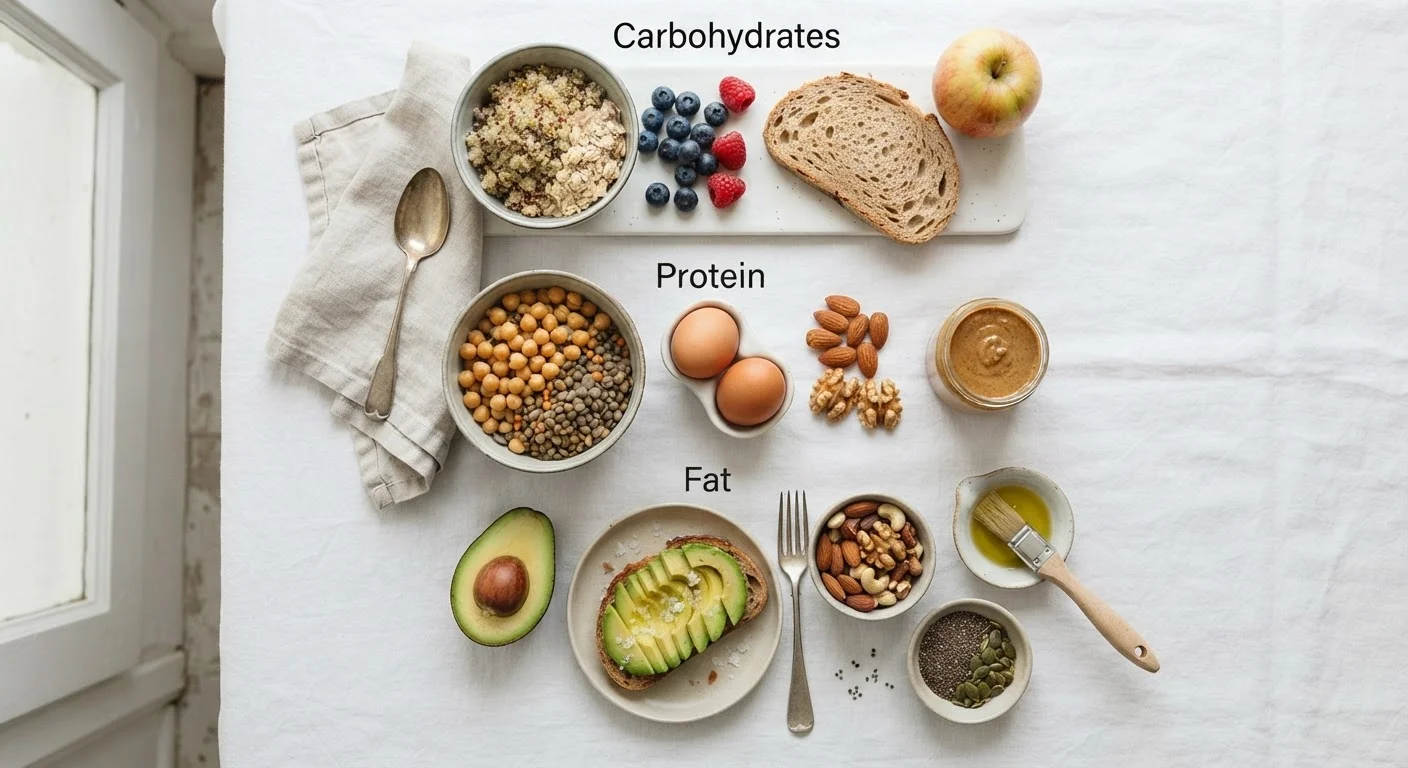
Carbohydrates: Your Body's First Fuel Choice
Carbohydrates are the body's primary and most efficient energy source. When you eat carbohydrates - whether from bread, fruit, beans, or vegetables - your digestive system breaks them down into glucose. That glucose circulates in the bloodstream and is used by cells for fuel, with the brain being one of the largest consumers.
Not all carbohydrates work the same way. Simple carbohydrates (like table sugar and refined grains) digest quickly and raise blood glucose rapidly. Complex carbohydrates (like whole grains, legumes, and most vegetables) digest more slowly thanks to their fiber content, providing more sustained energy and better blood sugar stability.
Fiber - technically a carbohydrate - deserves its own mention. It isn't digested for energy, but it supports gut health, helps you feel full, and is linked to reduced risk of several chronic conditions. Most Americans fall short of recommended fiber intake, making whole-food carbohydrate sources an important part of the diet.
Choose Your Carb Sources Wisely
Swapping refined grains and sugary foods for whole-food carbohydrate sources - like oats, legumes, sweet potatoes, and fresh fruit - is one of the most evidence-supported shifts you can make for long-term health. These foods deliver fiber, vitamins, and minerals alongside their carbohydrate content, making them more nutritionally complete. You don't need to eliminate refined carbohydrates entirely; context and overall dietary pattern matter more than any single food.
When evaluating your carbohydrate choices, the source matters. Refined white bread and a bowl of oatmeal both contain carbohydrates, but their effects on digestion, blood sugar, and satiety are quite different. See our guide to reading nutrition labels to learn how to spot added sugars and fiber content.
Protein: The Body's Building Material
Protein is the structural backbone of nearly every tissue in your body. Muscles, skin, hair, enzymes, hormones, and immune antibodies are all built from proteins. When you eat protein-containing foods, digestion breaks them down into amino acids - the individual units your body then reassembles into whatever structures it needs.
Of the 20 amino acids involved in human biology, nine are considered essential, meaning your body cannot manufacture them and must obtain them through food. Animal proteins (meat, fish, dairy, eggs) typically contain all nine essential amino acids in adequate proportions, earning the label "complete proteins." Many plant proteins are lower in one or more essential amino acids, but eating a varied diet across plant sources throughout the day covers your needs effectively.
Protein also plays a role in satiety - it tends to be more filling per calorie than carbohydrates, which is one reason higher-protein meals are often associated with reduced overall food intake. It also supports muscle preservation, which becomes especially important as people age.
For most healthy adults, dietary protein needs vary based on body size, activity level, and life stage. A registered dietitian can help determine what's appropriate for your individual circumstances rather than a one-size-fits-all number.
Dietary Fat: Far More Than Just Calories
Fat has a complicated reputation, but the science is clear that dietary fat is essential - not optional. It serves several critical functions that carbohydrates and protein simply cannot replicate.
9 kcal/g
Energy density of dietary fat
Fat provides more than twice the calories per gram of carbohydrates or protein, making it the most energy-dense macronutrient.
4 vitamins
Fat-soluble vitamins requiring dietary fat for absorption
Vitamins A, D, E, and K cannot be properly absorbed without adequate dietary fat present during digestion, according to established nutritional science.
9
Essential amino acids humans must get from food
The human body cannot synthesize these nine amino acids on its own, making dietary protein a daily nutritional requirement for all people.
First, fat is required for absorbing fat-soluble vitamins: A, D, E, and K. Without adequate dietary fat, these vitamins pass through the digestive system largely unused, even if your diet is rich in them. Second, fat is a key structural component of every cell membrane in your body. Third, dietary fat is necessary for producing steroid hormones - including estrogen, testosterone, and cortisol - that regulate everything from mood to metabolism.
The type of fat matters significantly. Unsaturated fats - found in olive oil, avocados, nuts, seeds, and fatty fish - are broadly associated with cardiovascular health. Saturated fats, found mostly in animal products, are generally recommended in moderation. Trans fats, created through industrial hydrogenation of vegetable oils, are widely considered harmful and have been largely phased out of the US food supply, though trace amounts remain in some processed foods.
The idea that eating fat automatically causes body fat accumulation is a common misconception. Our article on debunked nutrition myths addresses this and other widespread misunderstandings about dietary fat.
Why Balance Matters - and Why Eliminating Any Macro Backfires
Popular diets often demonize one macronutrient - very low-carb plans cut carbohydrates dramatically, while low-fat diets restrict dietary fat. While some of these approaches work for specific individuals in specific contexts, cutting out entire food groups usually creates nutritional trade-offs that aren't always obvious in the short term.
For instance, very low-fat diets can compromise fat-soluble vitamin absorption and hormone function. Very low-carbohydrate diets can be difficult to sustain long-term and may reduce fiber intake. The research on ultra-restrictive approaches is mixed, and most established dietary guidelines from public health organizations emphasize variety, moderation, and whole-food sources across all three macronutrients rather than elimination.
Understanding what each macronutrient does is the first step toward making food choices that serve your body rather than simply following a trend. For a fuller picture of the nutrients your body needs beyond the "big three," explore our plain-language guide to vitamins and minerals.
This article provides general nutrition information for educational purposes only and is not a substitute for personalized advice from a registered dietitian or qualified healthcare professional.
Frequently Asked Questions
Not necessarily. Many people eat well without ever counting grams of carbs, protein, or fat. Understanding what each macronutrient does can help you make more informed food choices, but rigid tracking is not required for a balanced diet. A registered dietitian can help you decide if tracking is useful for your specific goals.
Fat provides the most calories per gram (9 calories) compared to carbohydrates and protein (4 calories each). However, carbohydrates are the body's quickest and most readily used energy source, particularly during physical activity and for fueling the brain.
Dietary fat is an essential nutrient, not something to avoid entirely. The type of fat matters: unsaturated fats found in foods like olive oil, nuts, and fish are associated with heart health, while heavily processed trans fats are widely considered harmful. Saturated fat falls somewhere in between, and current guidance generally favors moderation.
Yes. Plant-based foods such as legumes, tofu, tempeh, edamame, quinoa, and dairy or eggs (for vegetarians) can collectively supply all the essential amino acids your body needs. Variety across plant protein sources is important to cover the full range of amino acids.
Carbohydrates alone do not cause weight gain. Overall calorie intake relative to energy expenditure is the primary factor. Refined carbohydrates and added sugars can contribute to excess calorie intake, but whole-food carbohydrate sources like vegetables, legumes, and whole grains are associated with positive health outcomes.
Macronutrients are consumed in large amounts and are the body's main source of energy and structural material. Micronutrients - vitamins and minerals - are needed in much smaller quantities but are equally essential for metabolic processes, immune function, and cellular health. See our <a href="/health-wellness/nutrition-diet/understanding-micronutrients-a-plain-language-reference-to-vitamins-and-minerals">plain-language micronutrient guide</a> for a deeper look.
The content on this site is provided for informational purposes only and should not be considered a substitute for professional advice. While we strive to provide accurate and up-to-date information, we make no guarantees regarding its completeness or accuracy. Always consult a qualified professional for advice specific to your circumstances before making any decisions.