

Summary
18 items · 15-30 minutes
Why These Three Nutrients Get So Much Attention
Sodium, added sugar, and saturated fat appear repeatedly in public health guidance - not because they are inherently toxic, but because Americans tend to consume them well above recommended levels through packaged and processed foods. The U.S. Dietary Guidelines and major health organizations consistently link chronically high intake of these nutrients to elevated risk of heart disease, high blood pressure, and metabolic concerns.
Understanding how to identify excess in packaged foods doesn't require a nutrition degree. It requires knowing where to look and what the numbers actually mean. This checklist walks you through exactly that - product by product, label section by label section.
It's worth noting that no single food ruins a diet, just as no single food makes one perfect. If you're curious about why eliminating entire food groups often creates more problems than it solves, see our article on why cutting out entire food groups usually backfires.
Start with Serving Size
Checking Sodium
Checking Added Sugar
Checking Saturated Fat
Reading the Ingredient List
How to Use This Checklist
Work through these checks the next time you pick up a packaged product at the grocery store or audit your pantry at home. You don't need to apply every item to every product - focus on the groups most relevant to your health goals and the type of food you're evaluating.
Nutrition Facts Label
The primary source for per-serving sodium, added sugar, and saturated fat data on any FDA-regulated packaged food.
Ingredient List
Reveals the full range of sodium and sugar sources in a product, including those listed under alternative names.
Smartphone or calculator
Useful for multiplying per-serving values when you consume more than the stated serving size.
USDA FoodData Central (online database)
A free government resource for looking up detailed nutrient data on thousands of packaged and whole foods.
A quick note on thresholds: the Food and Drug Administration (FDA) defines 5% Daily Value (DV) or less as low for a nutrient, and 20% DV or more as high. These benchmarks are based on a 2,000-calorie daily diet and serve as practical reference points, not personal prescriptions. Your individual needs may differ - always consult a qualified healthcare professional for personalized guidance.
Many people are surprised to discover how much sodium and sugar appear in foods that don't taste salty or sweet. To separate fact from long-standing misconception, our companion piece on common nutrition myths that science has largely debunked offers useful context.
Serving Size Is the Foundation of Every Other Number
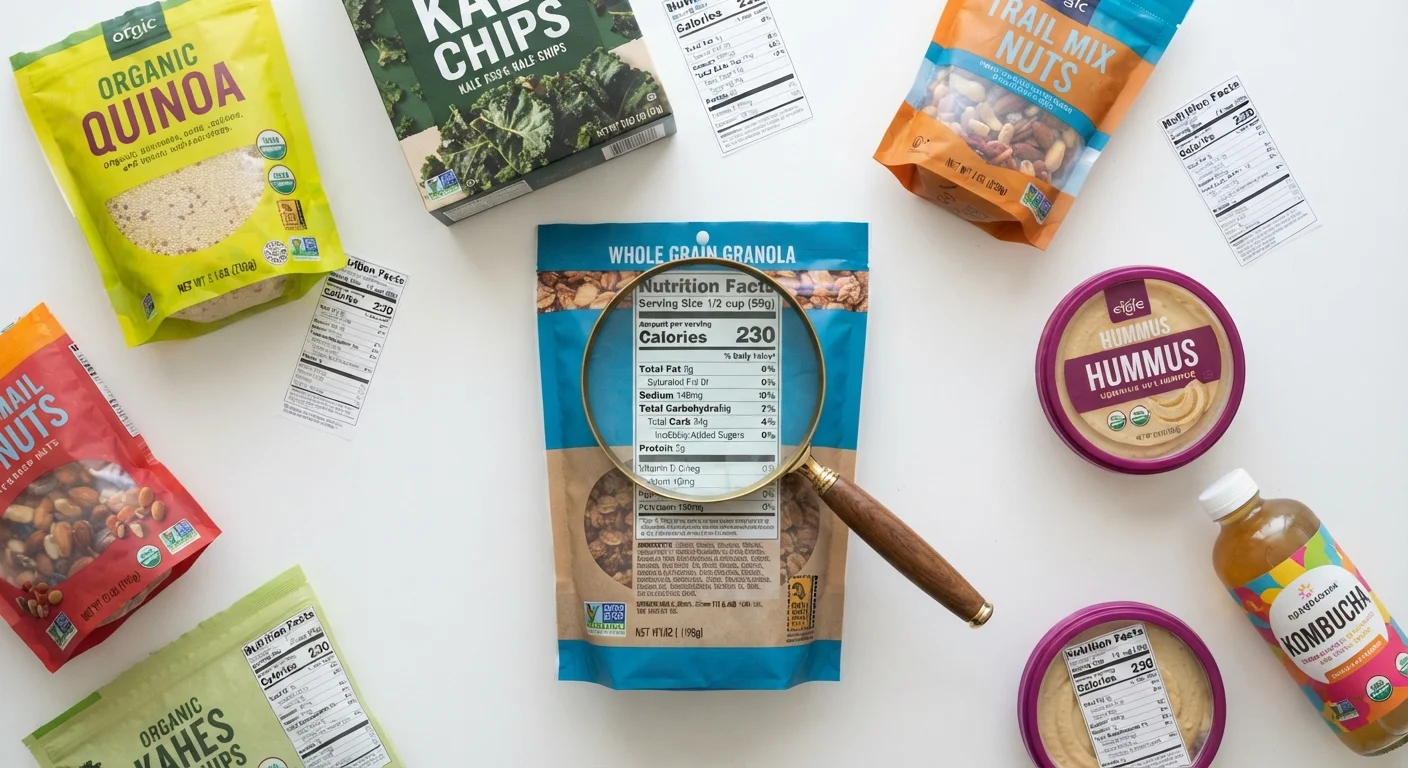
Every nutrient figure on the Nutrition Facts label - sodium, sugar, saturated fat - is calculated per serving, not per package. If a bag of chips lists two servings but you eat the whole bag, every number doubles. Always establish serving size first before drawing any conclusions from the label. This single step prevents the most common misreading of packaged food nutrition data.
Beyond the Label: Patterns That Matter
Spotting excess in one product is useful. Building a broader picture of your overall eating pattern is more meaningful. Packaged foods that are individually moderate in sodium, sugar, or saturated fat can collectively add up when eaten frequently across a day.
A practical habit: after shopping, compare two or three similar products side by side. Category norms vary widely - one brand of canned soup may contain 800mg of sodium per serving while another offers 350mg. The label check you do today builds the reference knowledge you carry into every future shopping trip.
One nutrient notably absent from this checklist - dietary fiber - is worth tracking alongside sodium, sugar, and saturated fat. Higher-fiber packaged foods tend to support better blood sugar response and satiety. Our guide on dietary fiber and why most Americans don't get enough covers what to look for.
This article is for general informational and educational purposes only and is not a substitute for professional medical or dietary advice. Consult a qualified healthcare provider or registered dietitian for guidance tailored to your individual health needs.
The content on this site is provided for informational purposes only and should not be considered a substitute for professional advice. While we strive to provide accurate and up-to-date information, we make no guarantees regarding its completeness or accuracy. Always consult a qualified professional for advice specific to your circumstances before making any decisions.