

What Dietary Fiber Actually Is
Dietary fiber is a type of carbohydrate found in plant foods that the human body cannot fully digest. Unlike starches and sugars, fiber passes largely intact through the stomach and small intestine. To understand how fiber fits alongside other nutrients, see our guide on what carbs, protein, and fat actually do in your body.
Fiber is typically divided into two categories:
- Soluble fiber dissolves in water, forming a gel-like substance in the digestive tract. It's found in oats, beans, apples, and citrus fruits. This type slows digestion and can help moderate blood sugar and cholesterol levels.
- Insoluble fiber does not dissolve in water. It adds bulk to stool and supports regular bowel movements. Whole wheat, nuts, and most vegetables are good sources.
Most fiber-rich foods contain a mix of both types, so focusing on overall fiber intake from whole foods is more practical than tracking each type separately.
Why Fiber Matters for Your Health
Research consistently links higher fiber intake to several meaningful health benefits. These are not marginal effects - they represent some of the clearest diet-disease relationships in nutritional science.
Digestive Health
Insoluble fiber adds bulk and moisture to stool, reducing the likelihood of constipation. Soluble fiber feeds beneficial gut bacteria, contributing to a healthier gut microbiome - the community of microorganisms that plays a broad role in immune function and inflammation.
Blood Sugar Regulation
Soluble fiber slows the absorption of sugar into the bloodstream, which helps prevent sharp spikes in blood glucose after meals. This effect is particularly relevant for people managing or trying to prevent type 2 diabetes, though anyone can benefit from steadier energy levels throughout the day.
Heart Health
Soluble fiber - especially from oats and legumes - has been shown to modestly reduce LDL (low-density lipoprotein) cholesterol, commonly called "bad" cholesterol. Over time, this contributes to a lower risk of cardiovascular disease.
Weight and Satiety
High-fiber foods tend to be more filling because they take longer to eat, slow digestion, and add volume without adding many calories. This can support a healthy body weight without requiring strict calorie counting.
~15 g
Average daily fiber intake for U.S. adults
National nutrition surveys consistently show Americans consume roughly half the recommended daily amount of dietary fiber.
25-38 g
Recommended daily fiber intake for adults
The Dietary Guidelines for Americans set targets of approximately 25 g for women and 38 g for men per day.
90%+
Americans falling short of fiber targets
Federal dietary guidance identifies fiber as a nutrient of public health concern due to widespread under-consumption across the U.S. population.
How Much Fiber Do You Need?
The Dietary Guidelines for Americans recommend approximately 14 grams of fiber per 1,000 calories consumed - which works out to around 25 grams per day for adult women and 38 grams per day for adult men. Needs decrease slightly after age 50.
Despite these clear targets, national nutrition surveys suggest the average American adult consumes only around 15-16 grams daily - roughly half the recommended amount. This gap is significant enough that fiber is classified as a public health concern in federal dietary guidelines.
Children also need fiber, with amounts varying by age. People who are pregnant or managing specific health conditions should discuss individualized intake goals with a registered dietitian or healthcare provider.
This article provides general nutrition education, not personalized medical or dietary advice. Consult a qualified healthcare professional for guidance specific to your health needs.
The Best Food Sources of Fiber
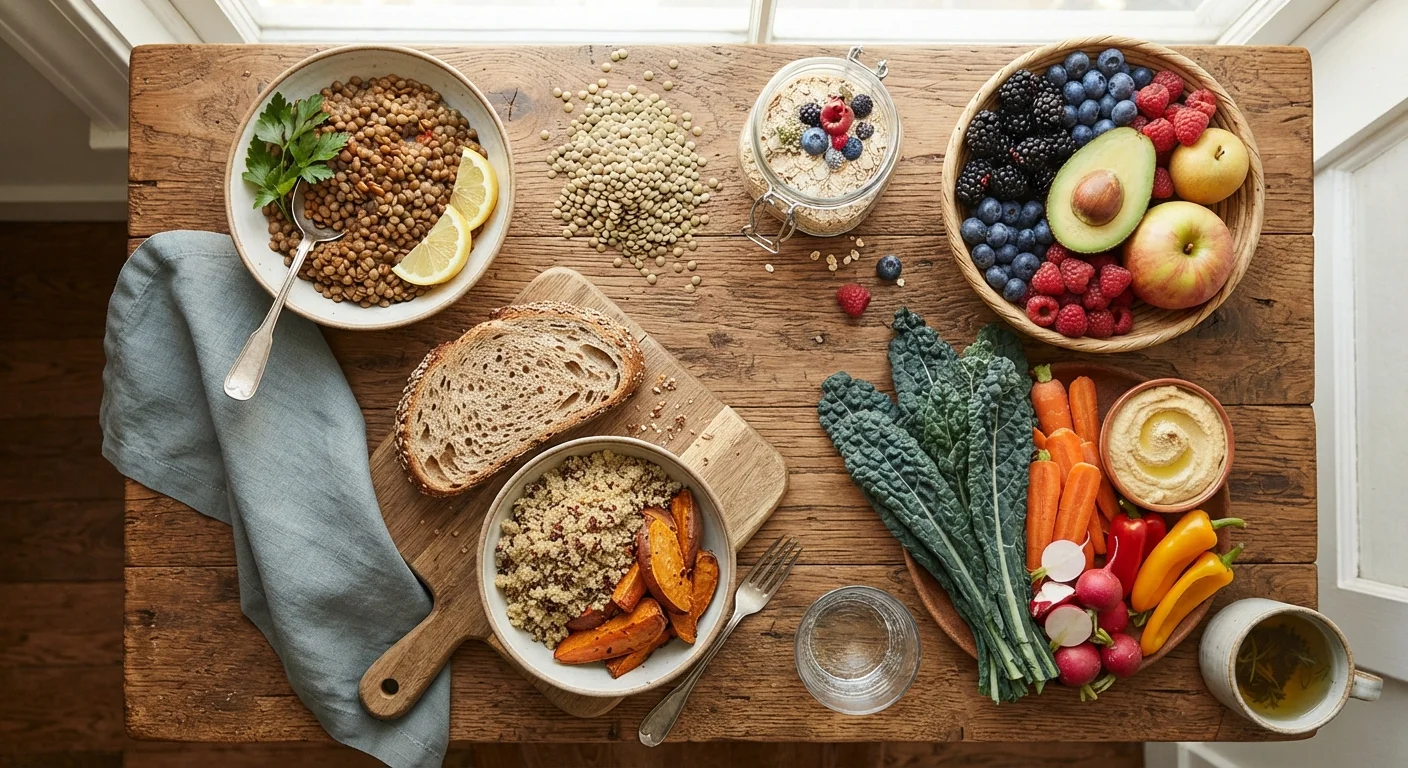
Fiber is found exclusively in plant foods. Meat, fish, dairy, and eggs contain none. Here are the categories that contribute most to daily intake:
| Food | Serving Size | Approximate Fiber |
|---|---|---|
| Lentils (cooked) | ½ cup | 8 g |
| Black beans (cooked) | ½ cup | 7.5 g |
| Oat bran (cooked) | ½ cup | 6 g |
| Avocado | ½ medium | 5 g |
| Pear (with skin) | 1 medium | 5.5 g |
| Whole wheat bread | 1 slice | 2-3 g |
| Broccoli (cooked) | ½ cup | 2.6 g |
Legumes and beans are consistently the most fiber-dense foods by serving. Fruits and vegetables with edible skins - apples, pears, potatoes - deliver more fiber than their peeled versions. Choosing whole grains over refined grains is one of the simplest swaps for increasing daily intake. When reading packaged food labels, look for the fiber grams per serving - our guide to reading a nutrition label without getting confused walks you through each section step by step.
How to Add More Fiber Without Discomfort
Jumping from a low-fiber diet to a high-fiber one too quickly is a common mistake. A sudden increase can cause bloating, gas, and cramping as gut bacteria adjust. The solution is a gradual, steady increase over several weeks.
Increase your fiber intake by no more than 3-5 grams per week, and pair each increase with an extra glass of water daily. This gives your gut microbiome time to adapt without the bloating that derails most people's efforts.
The discomfort many people associate with high-fiber foods is usually a function of speed, not the fiber itself. A gradual ramp-up is well-supported by gastroenterology guidance.
Don't rely on a single fiber-rich food - rotate your sources across legumes, whole grains, fruits, and vegetables throughout the week. Different fibers feed different strains of gut bacteria, which broadens your microbiome's diversity.
Research on gut microbiome health suggests that dietary variety, not just quantity, drives microbial richness - a marker associated with better overall health outcomes.
Practical Strategies
- Start with breakfast. Swapping refined cereal for oatmeal or adding berries to yogurt adds several grams with minimal effort.
- Keep the skins on. Leaving the peel on fruits and vegetables like apples, cucumbers, and potatoes preserves much of their fiber content.
- Add legumes to familiar meals. Stirring canned beans into soup, chili, or pasta sauces is one of the most efficient ways to increase fiber without overhauling your diet.
- Choose whole grains. Look for "whole wheat" or "whole grain" as the first ingredient on bread, pasta, and cereal labels. Be cautious of nutrition label claims that can mislead - "multigrain" does not automatically mean high fiber.
- Drink plenty of water. Fiber absorbs water as it moves through the digestive tract. Inadequate hydration alongside a high-fiber diet can worsen constipation rather than relieve it.
Fiber supplements (such as psyllium husk) can help some people bridge a gap, but whole foods provide additional vitamins, minerals, and phytonutrients that supplements don't replicate. If you're considering supplements, discuss this with a healthcare provider first - especially if you take medications, since fiber can affect how some drugs are absorbed.
It's also worth noting that dramatically cutting out whole food groups in pursuit of a trendy diet can inadvertently slash fiber intake. Our article on why cutting out entire food groups usually backfires explores this dynamic in detail.
This content is intended for general informational purposes and does not constitute medical or dietary advice. Always consult a qualified healthcare professional before making significant changes to your diet, particularly if you have a digestive condition, diabetes, or other health concerns.
The content on this site is provided for informational purposes only and should not be considered a substitute for professional advice. While we strive to provide accurate and up-to-date information, we make no guarantees regarding its completeness or accuracy. Always consult a qualified professional for advice specific to your circumstances before making any decisions.