

Our Verdict
Dietary supplements occupy a legitimate but narrow role in good nutrition. They are most valuable when a confirmed deficiency exists, dietary restrictions make certain nutrients hard to obtain, or a clinician recommends them for a specific reason. For the general healthy adult eating a varied diet, the evidence supporting routine supplementation is limited, and some products carry real risks. Food first remains the most evidence-backed approach.
Best suited to individuals with confirmed nutritional deficiencies, specific dietary restrictions, or medical conditions identified by a healthcare provider - not as a general substitute for a balanced diet.
What Dietary Supplements Actually Are
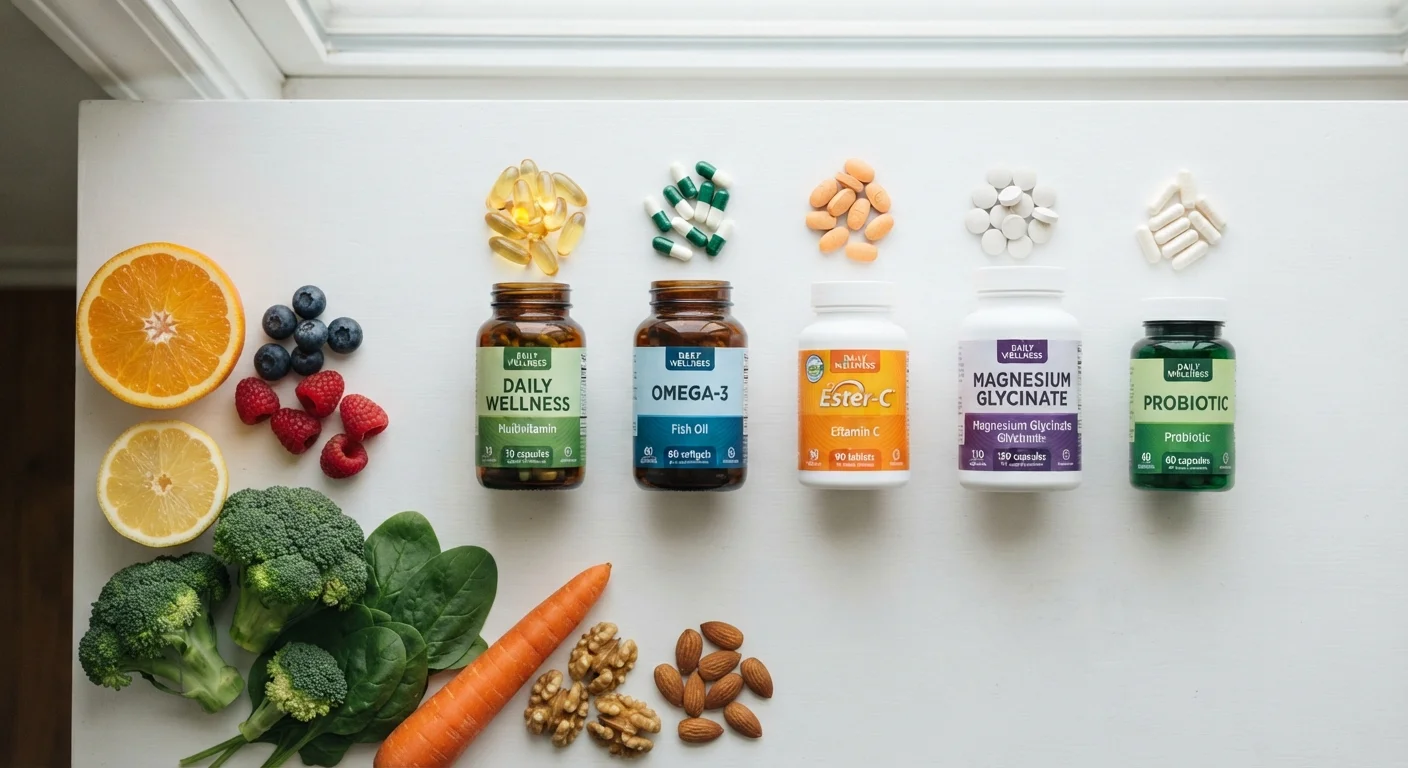
Dietary supplements are products intended to add nutritional value to the diet. They include vitamins, minerals, herbal extracts, amino acids, enzymes, and probiotics - sold in forms ranging from capsules and powders to gummies and liquids. In the United States, supplements are regulated by the Food and Drug Administration (FDA) under the Dietary Supplement Health and Education Act (DSHEA) of 1994, but they do not require FDA approval before reaching store shelves.
That regulatory distinction matters. Unlike prescription drugs, manufacturers are responsible for ensuring their products are safe and honestly labeled - the FDA steps in primarily after a problem is reported. For a fuller picture of the specific vitamins and minerals commonly found in these products, see our plain-language guide to vitamins and minerals.
The Case For Supplements
There are genuine, evidence-backed situations where supplements provide real benefit.
Corrects confirmed nutritional deficiencies effectively
When blood tests confirm low levels of vitamin D, iron, or B12, targeted supplementation is an evidence-supported intervention. Deficiency correction is among the most well-validated uses of supplements in clinical practice.
Supports groups with elevated or specialized needs
Pregnant women are widely advised to take folic acid to reduce neural tube defect risk; older adults often need supplemental vitamin D and calcium for bone health. These are recommendations grounded in established clinical guidance, not general wellness marketing.
Bridges gaps from restrictive or limited diets
People with food allergies, intolerances, or restrictive eating patterns may struggle to obtain every essential nutrient from food alone. In these cases, a targeted supplement can prevent deficiency-related health consequences.
Provides accessible nutrition insurance during illness or recovery
Certain medical conditions affect nutrient absorption - Crohn's disease, celiac disease, and gastric surgery are common examples. Supplements prescribed or recommended by a clinician can prevent serious deficiencies in these contexts.
Certain populations face structural nutritional challenges that diet alone may not resolve. People following plant-based eating patterns, for instance, often need supplemental vitamin B12 because it occurs almost exclusively in animal products. If you're exploring how different eating styles affect nutrient intake, our comparison of plant-based and omnivore diets covers this in depth.
The Case Against Supplements
Despite their popularity - roughly half of American adults report taking at least one supplement - the evidence for broad, routine use is far thinner than marketing suggests.
Limited pre-market safety and quality oversight
Unlike medications, supplements do not need to be proven safe or effective before being sold. Independent testing has repeatedly found products that contain less of an ingredient than labeled, or that include unlisted contaminants.
Can interact with medications or cause harm at high doses
Fat-soluble vitamins such as A, D, E, and K accumulate in the body and can reach toxic levels with excessive intake. Supplements like St. John's Wort are known to interfere with several prescription drugs, including antidepressants and blood thinners.
Rarely replicate the full benefit of whole foods
Large clinical trials of isolated antioxidant supplements - including beta-carotene and vitamin E - have not consistently reproduced the health benefits associated with eating antioxidant-rich foods. Nutrient synergy in whole foods is difficult to package into a pill.
Marketing claims often outpace the evidence
Supplement labels may carry structure/function claims (e.g., 'supports immune health') without those claims being evaluated or approved by the FDA. Consumers can easily confuse permitted marketing language with proven medical benefit.
Can create false confidence in poor dietary habits
Relying on supplements can lead some people to underinvest in dietary quality, assuming pills fill every gap. This mindset may obscure the cumulative value of a varied, food-first approach to nutrition.
Whole foods deliver nutrients alongside fiber, antioxidants, and phytochemicals that work synergistically in ways a capsule cannot replicate. Research consistently shows that nutrients obtained from food are associated with better health outcomes than the same nutrients in isolated supplement form. For practical guidance on getting more from your meals directly, our article on building a balanced plate is a straightforward starting point.
How to Make a Smarter Decision
The most important step before starting any supplement is getting tested. Blood work can confirm whether a deficiency actually exists - many people assume they are deficient based on symptoms alone, which can be misleading. A clinician can then recommend appropriate forms and amounts based on your individual results.
Third-Party Testing: What to Look For
Because FDA oversight of supplements is limited before sale, independent verification is one of the strongest quality signals available to consumers. Seals from USP (United States Pharmacopeia), NSF International, or ConsumerLab indicate a product has been tested for ingredient accuracy and the absence of harmful contaminants. These certifications do not confirm a health benefit, but they do confirm you're getting what the label claims.
It's also worth scrutinizing labels carefully. Look for products that have been tested by an independent third-party certifier such as USP, NSF International, or ConsumerLab. These organizations verify that a product contains what it claims, in the amounts stated, without harmful contaminants - providing a layer of quality assurance the FDA does not mandate before sale.
Finally, supplements should complement - not compensate for - an imbalanced diet. If eliminating food groups is part of your current routine, that approach itself may be creating the gaps you're trying to fill with pills. Our article on why cutting out entire food groups usually backfires explains the nutritional consequences in detail.
This article is for general informational and educational purposes only and does not constitute medical advice. Always consult a qualified healthcare professional before starting, stopping, or changing any supplement or medication.
The content on this site is provided for informational purposes only and should not be considered a substitute for professional advice. While we strive to provide accurate and up-to-date information, we make no guarantees regarding its completeness or accuracy. Always consult a qualified professional for advice specific to your circumstances before making any decisions.