

Start here
What 'Balanced' Actually Means
Core concept
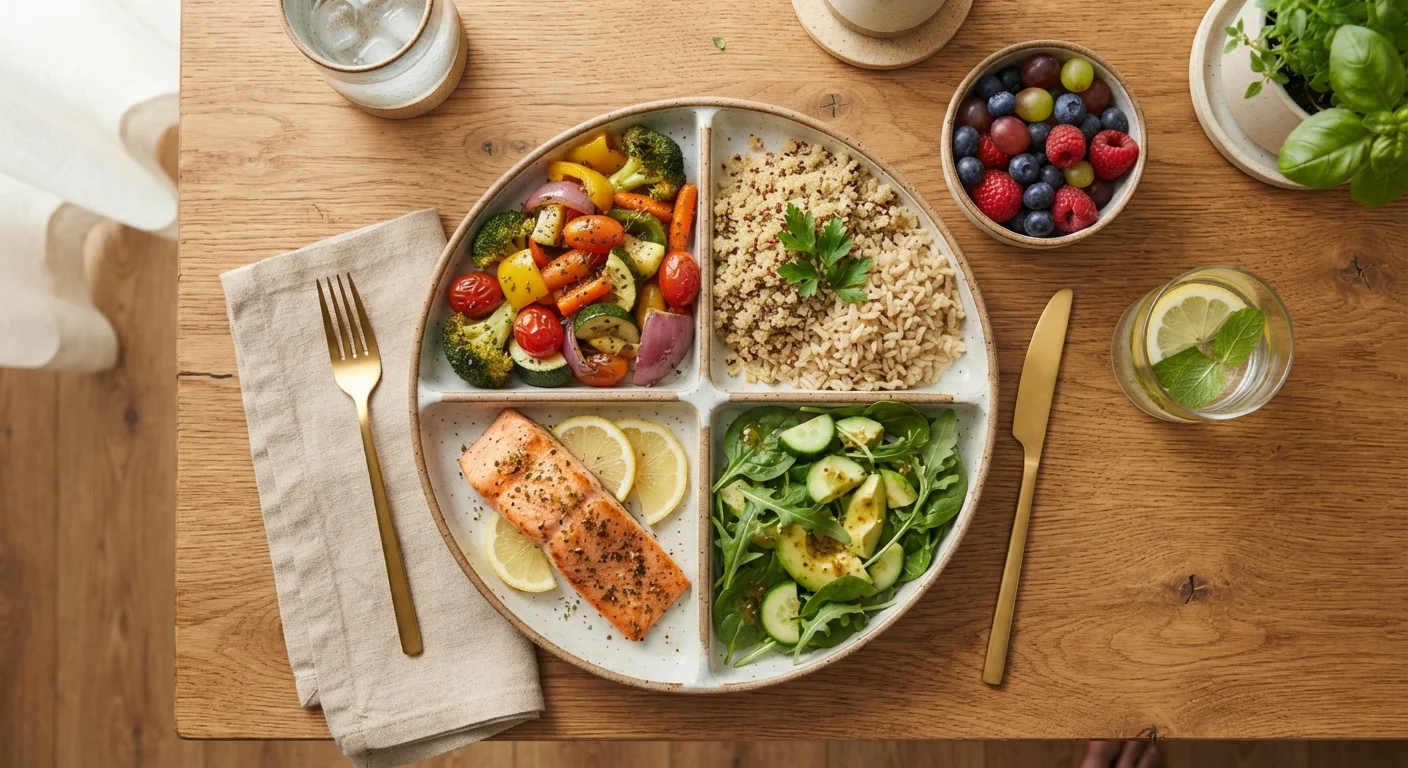
The Plate Method: A Visual Framework
Next
Choosing Foods Within Each Group
Apply it
Putting It Together at Every Meal
Clarify doubts
Common Questions and Misconceptions
What 'Balanced' Actually Means
"Eat a balanced diet" is advice most people have heard since childhood - but rarely explained in a way that translates to an actual grocery list or dinner plate. In practical terms, balance simply means that your meals, taken together over a day or week, provide a reasonable mix of the macronutrients your body uses for energy and the micronutrients it needs to function.
No single meal needs to be perfect. No food is inherently off-limits. The goal is variety and proportion over time, not flawless adherence to any one day's choices. This framing matters because it makes balanced eating achievable rather than aspirational - something you can apply to Tuesday's leftovers just as easily as a Sunday meal prep session.
If you've ever looked at structured eating frameworks and felt overwhelmed by the rules, our comparison of popular diet frameworks like Mediterranean, DASH, and low-carb shows what each actually emphasizes - and what they have in common is often simpler than the branding suggests.
Macronutrients
The three major nutrient categories your body needs in larger amounts: carbohydrates, protein, and fat. Each provides energy and serves distinct functions.
Micronutrients
Vitamins and minerals required in smaller amounts that support processes like immune function, bone health, and energy metabolism.
Whole grains
Grains that retain all three parts of the kernel - the bran, germ, and endosperm - providing more fiber and nutrients than refined grains like white flour or white rice.
Phytonutrients
Naturally occurring plant compounds that may support health. They're found in vegetables, fruits, legumes, and whole grains, and are not available in most supplements.
Plate method
A visual eating guide that uses plate sections - roughly half vegetables and fruit, one quarter protein, one quarter grains - to represent healthy meal proportions without counting calories.
The Plate Method: A Visual Framework
The plate method is a practical tool developed and used in mainstream nutrition education. Instead of tracking grams or calculating percentages, you use the physical space on your plate as a rough guide to proportions.
- Half the plate: vegetables and fruit. Non-starchy vegetables take priority here - leafy greens, peppers, carrots, broccoli, cucumbers. Fruit fits in this half too, though most people find it easier to include as a side or snack.
- One quarter: protein. This can be animal-based (chicken, fish, eggs, dairy) or plant-based (beans, lentils, tofu, tempeh). For a deeper look at how different diets handle this, see our protein sources reference.
- One quarter: whole grains or starchy vegetables. Brown rice, whole-wheat bread, oats, quinoa, sweet potatoes, or corn all qualify. These provide sustained energy and fiber.
A small amount of healthy fat - olive oil used in cooking, avocado sliced on the side, or a handful of nuts - rounds out the meal without needing its own dedicated plate section.
Choosing Foods Within Each Group
The plate method tells you how much of each category to include; your actual food choices within each category determine the nutritional depth of your meal.
Vegetables and Fruit
Variety signals nutritional diversity. Different colors in produce generally correspond to different vitamins and plant compounds. Frozen vegetables are nutritionally comparable to fresh and often more affordable and convenient.
Protein
Lean and minimally processed sources - fish, poultry, eggs, legumes, plain Greek yogurt - tend to offer protein alongside fewer additives. Processed meats are worth limiting rather than eliminating entirely, according to mainstream dietary guidance.
Grains
Whole grains retain their bran and germ, which means more fiber, B vitamins, and minerals than refined versions. When choosing bread, pasta, or rice, "whole grain" or "whole wheat" as the first ingredient is a useful signal. For more on reading food packaging, our guide to nutrition labels breaks down what the numbers actually mean.
Understanding the vitamins and minerals present in these foods is easier with our plain-language micronutrient reference.
Putting It Together at Every Meal
The plate method works across different meal formats - it doesn't require a traditional protein-plus-sides dinner structure. A grain bowl, a burrito, a stir-fry, or a soup can all reflect balanced proportions when you consider the ingredients as a whole rather than their arrangement.
Flexible Meals Still Count
Mixed dishes like soups, stews, and casseroles don't have to be abandoned because they don't look like a divided plate. Just assess what's in the dish overall: does it include vegetables, a protein source, and a grain or starch? If yes, you're likely in reasonable balance. Small adjustments - adding a handful of greens or a side of beans - can close any gaps.
Breakfast is where many people stray furthest from balance, often defaulting to refined carbohydrates alone. Adding a protein source - eggs, nut butter, cottage cheese, or Greek yogurt - and a piece of fruit shifts the nutritional profile significantly without much extra effort.
If cost is a barrier, balanced eating doesn't require expensive ingredients. Our eating well on a budget guide outlines approaches that work with everyday supermarket staples. And if you're thinking about overall wellness beyond the plate, building consistent physical activity supports nutritional efforts - even a home workout routine with no equipment adds meaningful benefit.
Common Questions and Misconceptions
A few persistent myths tend to complicate what is actually a straightforward concept.
"Healthy eating is expensive."
Cost is a real barrier for many households, but it doesn't disqualify balance. Dried beans, lentils, oats, eggs, canned tomatoes, and frozen spinach are among the most affordable foods available - and they anchor a nutritionally solid plate.
"I have to give up foods I enjoy."
Balance doesn't mean elimination. Foods eaten occasionally and in smaller amounts don't undermine an overall healthy pattern. Restriction-heavy approaches tend to be harder to maintain than flexible ones, according to behavioral nutrition research.
"Supplements can make up for a poor diet."
Whole foods deliver nutrients in combinations and forms - alongside fiber and phytonutrients - that isolated supplements don't replicate. Our overview of the case for and against dietary supplements covers when supplementation genuinely helps and when it doesn't.
Nutrition intersects with broader wellbeing too. If you're working on overall lifestyle habits, building a daily mental health routine is a natural complement to nutritional changes.
This article is for general informational and educational purposes only and is not a substitute for professional medical or dietary advice. Individual nutritional needs vary. Consult a qualified healthcare provider or registered dietitian for guidance specific to your health situation.
Frequently Asked Questions
No. Calorie counting is one approach, but it isn't necessary for most people building basic healthy habits. Focusing on food group proportions and eating a variety of whole foods tends to be more sustainable and less stressful for everyday meals.
General guidance from nutrition frameworks suggests protein cover roughly a quarter of your plate. This can come from animal or plant sources - the key is consistency across meals rather than hitting an exact gram target at every sitting.
No - carbohydrates are a primary energy source and an important part of a balanced diet. The quality matters more than the quantity: whole grains, legumes, and vegetables provide carbohydrates alongside fiber and nutrients, unlike refined starches and added sugars.
Yes. Balanced eating doesn't require expensive specialty items. Beans, lentils, frozen vegetables, eggs, canned fish, and oats are affordable foods that cover multiple nutritional bases. See our <a href="/health-wellness/nutrition-diet/eating-well-on-a-budget-nutrition-principles-that-dont-require-a-specialty-grocery-store">guide to eating well on a budget</a> for practical strategies.
The plate method is a proportion guide, not a menu prescription. Rice bowls, stews, stir-fries, and mixed dishes can all reflect balanced proportions - just consider what ingredients are present across the whole dish rather than how they're arranged on the plate.
Whole foods are generally the preferred source of nutrients because they deliver fiber, phytonutrients, and other compounds that isolated supplements don't replicate. Supplements can play a role in specific situations, but the decision is best made with a healthcare provider.
The content on this site is provided for informational purposes only and should not be considered a substitute for professional advice. While we strive to provide accurate and up-to-date information, we make no guarantees regarding its completeness or accuracy. Always consult a qualified professional for advice specific to your circumstances before making any decisions.