

Our Verdict
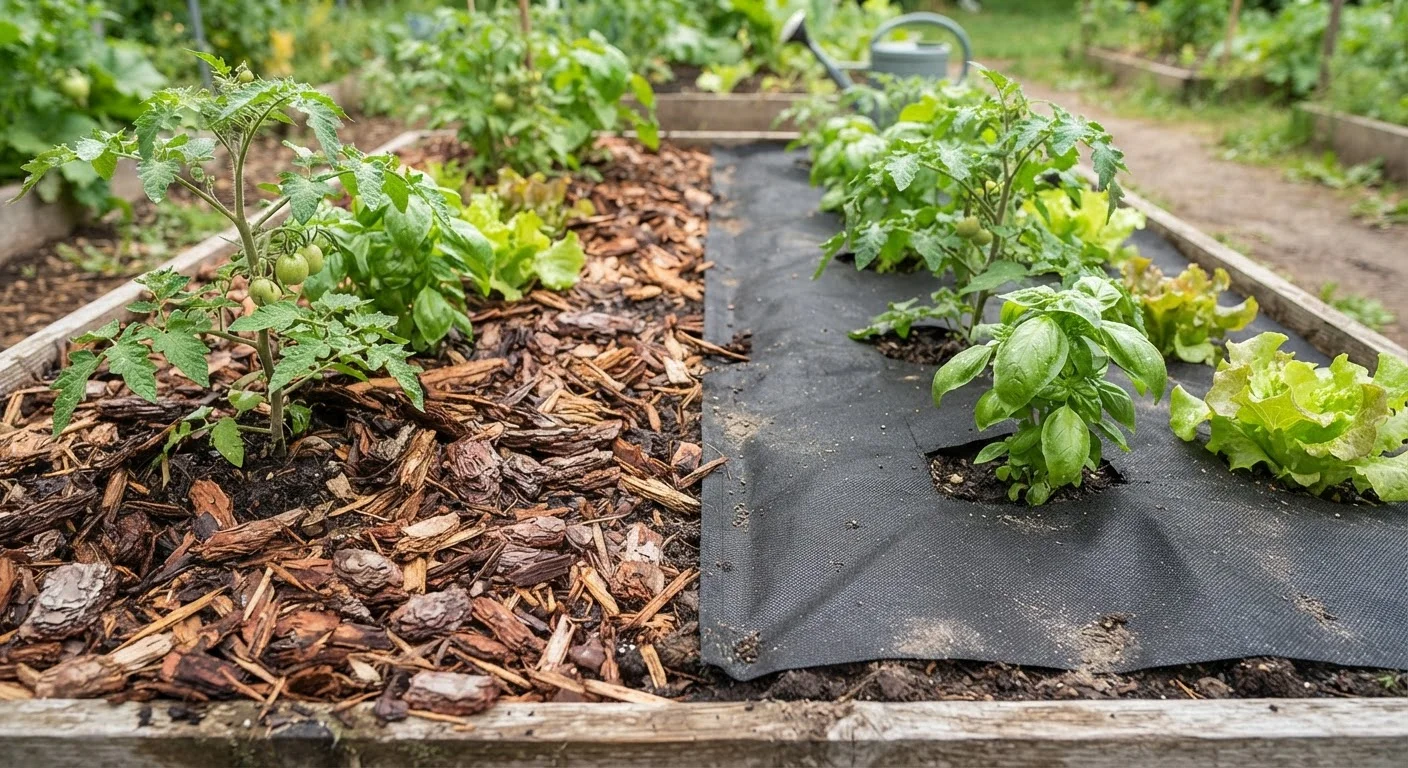
For most planted garden beds, organic mulch is the stronger long-term investment. It actively improves soil while suppressing weeds, supporting the microbial life plants depend on. Landscape fabric has a narrow but legitimate role in non-planting areas where permanence matters more than soil vitality.
| Best for | Recommended |
|---|---|
| Gardeners wanting healthier soil over multiple seasons | Organic Mulch |
| Permanent pathways, gravel beds, or hardscaping projects | Landscape Fabric |
| Low-maintenance annual weed suppression around shrubs | Organic Mulch |
| Short-term weed barriers during construction or site prep | Landscape Fabric |
What Each Material Actually Does
Both organic mulch and landscape fabric are installed on top of soil to reduce weed germination and retain moisture. That's where the similarities largely end.
Organic mulch - including wood chips, shredded bark, straw, compost, and leaf litter - is a natural, biodegradable layer. As it decomposes, it integrates with the soil beneath it, contributing organic matter and feeding the bacteria, fungi, earthworms, and other organisms that make soil fertile.
Landscape fabric (sometimes called weed barrier cloth) is a synthetic or semi-permeable woven or non-woven material staked to the ground. It physically blocks light from reaching weed seeds. Unlike mulch, it does not decompose into anything beneficial, and over time it creates a barrier between the soil and the elements that sustain it.
If you're also weighing your overall garden setup, see our comparison of raised beds vs. in-ground planting - your choice there may also influence which mulching approach makes the most sense.
How Organic Mulch Affects Soil Over Time
Organic mulch's greatest virtue is that it mimics what forests do naturally. Dead plant material falls, breaks down, and returns nutrients to the earth. In a garden bed, this cycle produces measurable benefits:
- Improved soil structure: As mulch decomposes, it adds organic matter that helps sandy soils retain moisture and loosens compacted clay soils.
- Microbial activity: The breakdown process feeds beneficial soil organisms - including mycorrhizal fungi that help plant roots absorb nutrients more efficiently.
- Temperature regulation: A 2-4 inch layer moderates soil temperature, keeping roots cooler in summer heat and buffering against early frosts.
- Gradual nutrition: Wood-based mulches release small amounts of nutrients as they break down, acting as a slow-release soil amendment.
The trade-off is that organic mulch requires replenishment - typically once a year, or when the layer thins below two inches. Fresh applications also need to avoid direct contact with plant stems, where trapped moisture can promote rot.
Match Your Mulch to the Season
In spring, apply mulch after the soil has had a chance to warm - mulching too early can delay soil warming and slow plant emergence. In fall, a fresh layer applied before the first hard freeze helps insulate root zones and gives soil organisms a head start on decomposition over winter.
How Landscape Fabric Affects Soil Over Time
Landscape fabric performs well in its first season. It reliably blocks light, and quality woven versions allow some water and air through. But multi-year use in planted beds creates a different picture.
- Compaction increases: Without organic matter cycling through, soil beneath fabric tends to become more compacted and less biologically active over time.
- Water penetration declines: As debris, soil particles, and algae clog the fabric's pores - typically within two to three years - water increasingly pools on top rather than reaching roots below.
- Weed pressure returns anyway: Wind-blown debris accumulates on the fabric's surface, creating a thin growing medium. Weeds root into it, and their roots intertwine with the fabric, making removal extremely tedious.
- Soil organisms decline: Earthworms and beneficial insects need to move between the surface and deeper soil. Fabric disrupts that movement, reducing populations that are critical for long-term fertility.
| Organic Mulch | Landscape Fabric | |
|---|---|---|
| Soil health over time | Improves - adds organic matter | Degrades - reduces biological activity |
| Weed suppression (year 1) | Good with proper depth | Very good |
| Weed suppression (year 3+) | Consistent with replenishment | Often fails as debris accumulates |
| Water infiltration | Consistent, improves over time | Declines as pores clog |
| Maintenance required | Annual top-up needed | Difficult removal when worn out |
| Best use case | Planted garden beds | Pathways and hardscaping |
| Environmental impact | Biodegradable, low waste | Synthetic, adds plastic waste |
When Landscape Fabric Has a Legitimate Role
Landscape fabric is not without merit - it's just misapplied in many gardens. It performs best in situations where soil health is not the goal:
- Gravel pathways and decorative stone beds: Fabric prevents gravel from sinking into soil and keeps weeds from pushing up through the surface layer.
- Short-term site preparation: Before laying hardscape, fabric can suppress vegetation during a construction window.
- Slopes prone to erosion: In some cases, fabric stabilizes soil while new plantings establish, though biodegradable erosion control matting is often a better option.
Where landscape fabric consistently underperforms is in traditional planted garden beds with perennials, shrubs, or vegetables. The fabric has to be cut to accommodate each plant, gaps allow weeds, and the long-term soil consequences outweigh the short-term weed reduction.
Practical Guidance for Your Garden
For most homeowners managing vegetable gardens, flower beds, or mixed shrub borders, organic mulch is the more sustainable and productive choice. Here's how to use it effectively:
- Apply a 2-4 inch layer after planting, keeping mulch at least two inches away from plant stems and tree trunks.
- Replenish annually in spring or fall, when the existing layer has thinned or fully decomposed.
- Choose the right type: wood chips and shredded bark suit ornamental beds and trees; straw works well in vegetable gardens; compost doubles as both mulch and soil amendment.
If you currently have landscape fabric in a planted bed and are noticing declining plant health or persistent weed problems, consider carefully removing it in fall or early spring. Expect some root disturbance, and plan to add a generous layer of compost to help the soil begin recovering. It may take one to two growing seasons for soil biology to rebound, but most gardeners find the results worth the effort.
The content on this site is provided for informational purposes only and should not be considered a substitute for professional advice. While we strive to provide accurate and up-to-date information, we make no guarantees regarding its completeness or accuracy. Always consult a qualified professional for advice specific to your circumstances before making any decisions.