

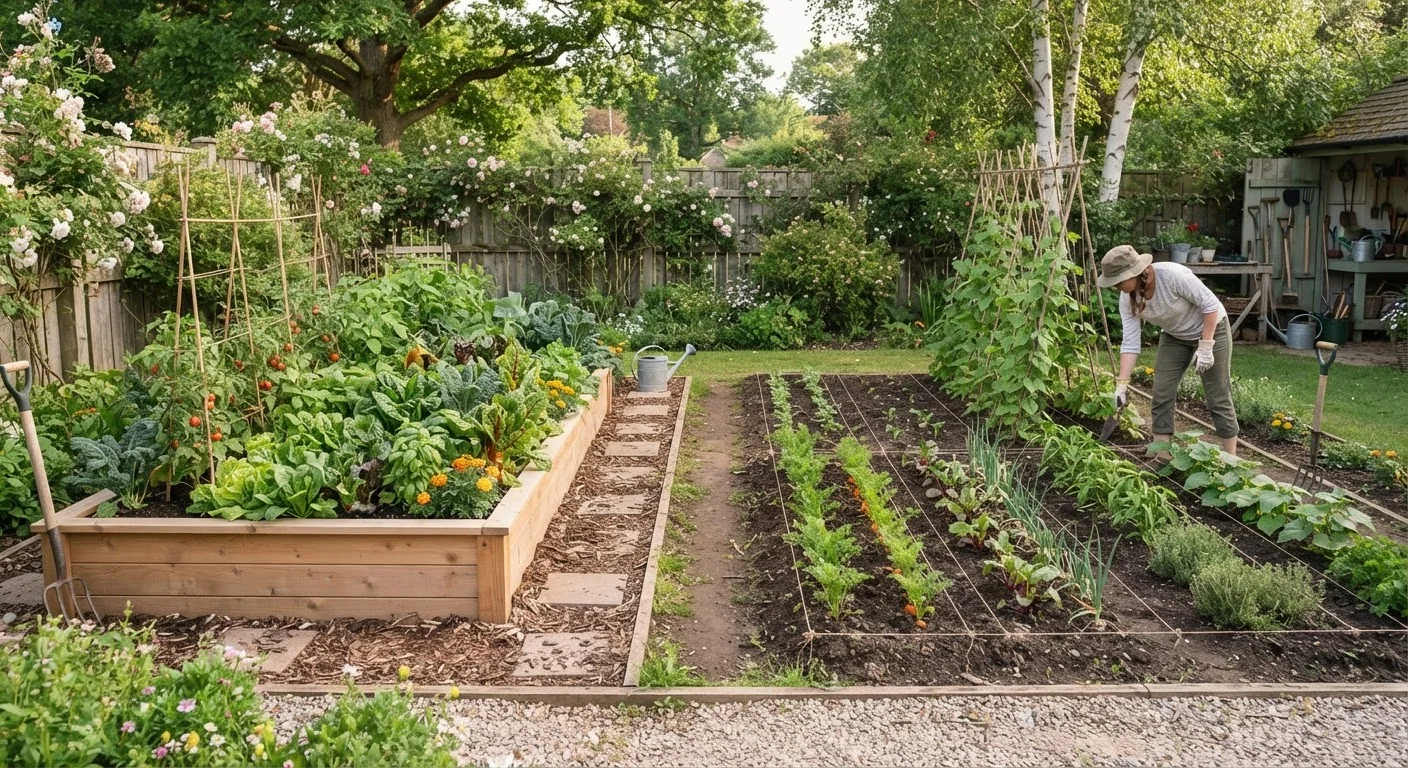
Option A
Raised Beds
The controlled, high-performance growing environment.
Best for: Gardeners dealing with poor native soil, limited mobility, or who want precise control over growing conditions.
Option B
In-Ground Planting
The low-cost, large-scale traditional approach.
Best for: Gardeners with healthy native soil, larger plots, and longer-term planting goals on a modest upfront budget.
The Core Trade-Off: Control vs. Scale
Choosing between raised beds and in-ground planting comes down to a fundamental question: do you need to control your growing environment, or do you need room to grow at low cost? Before selecting either approach, it helps to understand the basics of soil, sunlight, and water that affect every garden setup.
Raised beds are contained structures - typically wooden, metal, or composite frames - filled with a custom soil mix and placed above the native ground. In-ground planting works directly with the soil already in your yard, amended as needed. Both methods grow healthy food and flowers, but they perform very differently depending on your starting conditions.
| Criterion | Raised Beds | In-Ground Planting |
|---|---|---|
| Upfront cost | Moderate to high | Low |
| Soil quality control | Full control from day one | Depends on native soil |
| Drainage | Excellent by design | Varies by site |
| Spring warm-up speed | Faster - soil heats quickly | Slower in cold climates |
| Scalability | Limited by materials and cost | Easily expanded |
| Accessibility | High - less bending required | Requires kneeling or bending |
| Root depth for large crops | Restricted by frame height | Unlimited |
| Long-term soil ecosystem | Builds over time in fill | Richer native biology |
Drainage, Soil Quality, and Root Health
One of raised beds' biggest advantages is drainage. Because the growing medium is elevated and mixed specifically for porosity, water moves through efficiently - reducing the root rot and compaction problems common in clay-heavy yards. You also start with a blank slate: a quality fill mix (typically a blend of topsoil, compost, and coarse material like perlite or aged bark) means plants get ideal conditions from day one.
In-ground planting is different. Your results depend heavily on what's already underfoot. Loamy, well-structured soil with good organic content can outperform any raised bed over time - native soil hosts a richer microbial ecosystem and requires far less irrigation in dry spells because it retains moisture more steadily at depth. But compacted, rocky, or nutrient-depleted soil needs years of consistent amendment before it reaches its potential. Understanding the role of mulch and organic matter in long-term soil health is especially valuable for in-ground gardeners working to improve their plot over time.
Cost, Setup, and Long-Term Maintenance
Raised beds carry a higher upfront cost. Materials for even a basic 4×8-foot frame plus sufficient fill soil can run well over $100, and larger or multiple beds multiply that investment. In-ground plots, by contrast, require little more than a spade, compost, and seeds - making them the more accessible entry point for gardeners on a tight budget.
Over time, the picture balances somewhat. Raised beds need periodic topping off as organic fill compresses and breaks down. In-ground beds need ongoing soil amendment, mulching, and sometimes aeration - but these inputs often cost less per season and work with natural soil-building processes. For both setups, consistent habits like seasonal composting and thoughtful crop rotation matter enormously. See our guide to good garden habits experienced growers rely on for practices that keep either system productive.
6-8 in.
Minimum recommended raised bed depth for most vegetables
Most cooperative extension services recommend at least 6 inches of fill depth; root crops like carrots benefit from 12 inches or more.
2-4 weeks
Earlier planting window raised beds can provide in spring
Elevated soil warms faster than ground soil, potentially allowing earlier planting - an advantage noted by university extension gardening resources.
50%+
Of U.S. topsoil showing some degree of compaction or degradation
Soil compaction is one of the most common reasons home gardeners find in-ground planting difficult in suburban and developed lots.
What to Grow - and Where Each Setup Shines
Raised beds excel with compact, high-value crops: leafy greens, herbs, tomatoes, peppers, and root vegetables like carrots and beets all thrive in the loose, well-drained mix. The defined borders also make it easier to implement crop spacing and companion planting strategies that maximize yield in a small footprint.
In-ground planting handles large or sprawling crops far better. Corn, winter squash, pumpkins, and melons need significant horizontal space and root depth that raised bed walls naturally restrict. Perennial plants - asparagus, rhubarb, berry bushes - also suit in-ground placement, since they benefit from the moisture buffering and soil ecosystem that builds over years underground. If you're deciding between annuals and perennials for your plot, understanding how annuals and perennials differ will help you plan accordingly. Gardeners with no yard at all have a third option worth exploring: container gardening on a patio or balcony.
The content on this site is provided for informational purposes only and should not be considered a substitute for professional advice. While we strive to provide accurate and up-to-date information, we make no guarantees regarding its completeness or accuracy. Always consult a qualified professional for advice specific to your circumstances before making any decisions.