

Our Verdict
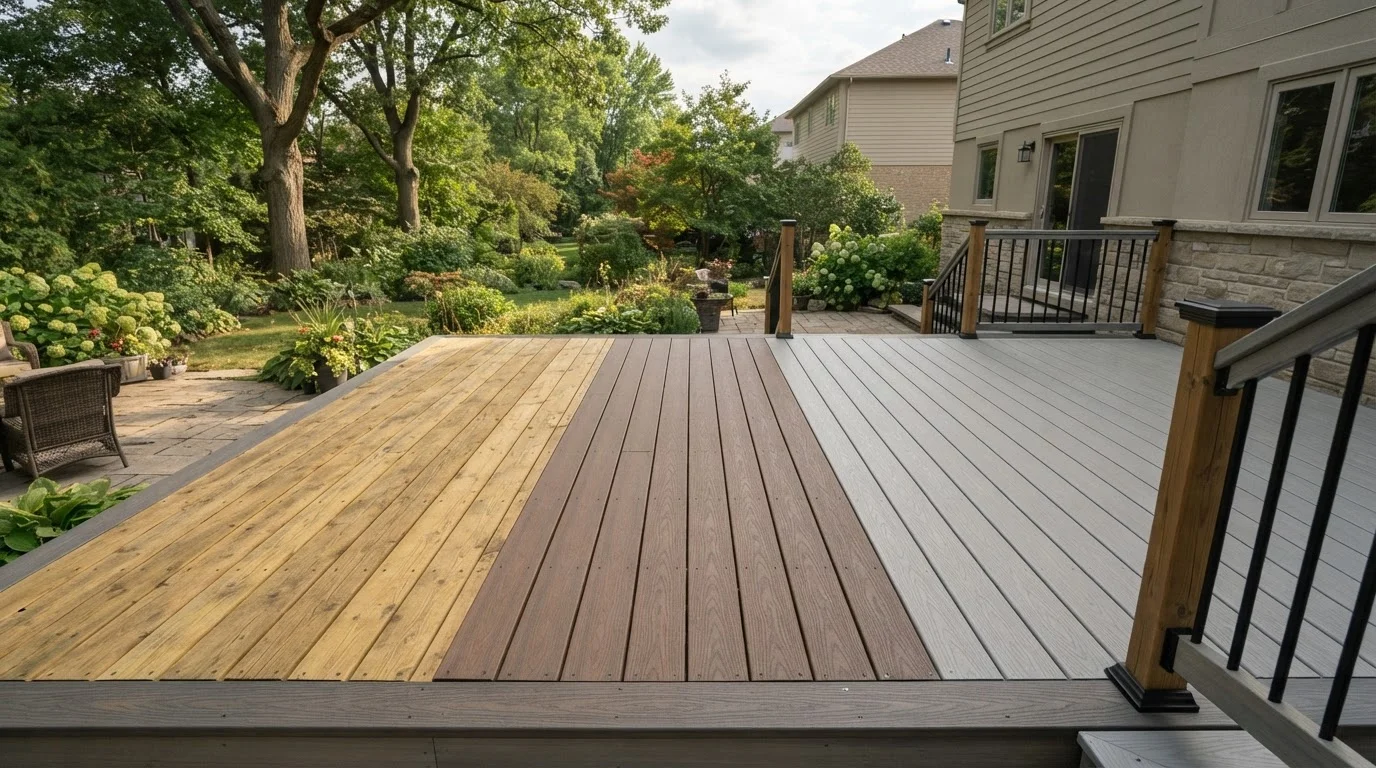
No single decking material wins across every category. Pressure-treated wood is the most budget-friendly starting point, composite strikes a middle ground between cost and low maintenance, and PVC suits climates with heavy moisture or homeowners who want to minimize upkeep entirely. Weigh your local climate, long-term budget, and maintenance tolerance before committing.
| Best for | Recommended |
|---|---|
| Cost-conscious homeowners comfortable with routine maintenance | Pressure-Treated Wood |
| Homeowners wanting a wood-like look with far less upkeep | Composite |
| High-moisture climates or low-maintenance lifestyles | PVC |
| Those prioritizing the longest lifespan with minimal structural repairs | PVC or Composite |
Why Decking Material Choice Matters More Than You Might Think
A deck is one of the most-used outdoor investments a homeowner can make - and unlike interior flooring, it faces UV exposure, moisture, freeze-thaw cycles, and foot traffic year-round. Just as choosing between hardwood and engineered options matters indoors (see our guide to engineered vs. solid hardwood flooring), the decking material you select outdoors determines how long your deck lasts, how much it costs over its lifetime, and how much work you'll do to keep it looking good.
The three materials dominating the residential deck market - pressure-treated wood, composite, and PVC - perform very differently. Understanding their real-world trade-offs gives you a clearer path to a decision that matches your budget, climate, and lifestyle.
Pressure-Treated Wood: The Familiar Starting Point
Pressure-treated (PT) lumber is southern yellow pine or similar softwood infused with chemical preservatives under pressure to resist rot, fungal decay, and insect damage. It's the most widely available decking material in the U.S. and typically the least expensive to purchase per board foot.
Strengths
- Lower upfront cost - PT wood generally costs significantly less per square foot than composite or PVC decking.
- Familiar to contractors - Most builders and experienced DIYers know how to work with it using standard tools.
- Structural versatility - It's also widely used for deck framing, posts, and joists.
Limitations
- New PT lumber contains moisture and tends to warp, check (develop surface cracks), or shrink as it dries - boards should be allowed to cure before finishing.
- Regular maintenance is essential: cleaning, sealing, or staining every 1-3 years to prevent cracking, graying, and splintering.
- Older PT formulations used arsenic-based preservatives (CCA); modern lumber uses copper-based alternatives (ACQ, CA), which are considered safer but can corrode certain metals - use appropriately rated fasteners.
Use the Right Fasteners with PT Lumber
Modern pressure-treated wood uses copper-based preservatives that can corrode standard steel fasteners, leading to staining and structural weakening over time. Always use hot-dipped galvanized, stainless steel, or fasteners specifically rated for use with ACQ or CA treated lumber. Check product labels and local code requirements before purchasing hardware.
Composite Decking: The Low-Maintenance Middle Ground
Composite decking is manufactured from a blend of wood fiber (often recycled) and plastic, typically polyethylene or polypropylene. Many products feature a protective polymer cap layer that resists staining, fading, and moisture infiltration.
Strengths
- Significantly lower maintenance - No staining or sealing required; periodic cleaning with soap and water is generally sufficient.
- Consistent appearance - Resists the graying and splintering common with untreated wood.
- Eco-friendly options - Many composites incorporate post-consumer recycled content.
Limitations
- Higher upfront material cost than PT wood, though long-term maintenance savings can narrow this gap over time.
- Can retain heat in direct sun - surfaces may become uncomfortable to walk on barefoot in hot climates.
- Capped composites perform better than uncapped versions in wet climates; check product specs carefully.
- Not suitable for structural framing - composite is a surface decking product only.
PVC Decking: The Fully Synthetic Option
PVC (polyvinyl chloride) decking contains no wood fiber - it's 100% plastic. That makes it the most moisture-resistant option of the three and virtually immune to rot, mold, and insects.
Strengths
- Exceptional moisture resistance - Ideal for docks, poolside decks, or regions with high rainfall and humidity.
- Minimal maintenance - Cleaning is straightforward; no sealing, staining, or sanding required.
- Resists staining and scratching - Many PVC products hold up well to heavy use.
Limitations
- The highest upfront material cost of the three options.
- Like composite, PVC can get hot underfoot in direct sun - look for lighter colors if this is a concern.
- Expands and contracts more than wood with temperature changes, requiring careful installation with proper gapping.
- Some homeowners find the appearance less natural-looking compared to wood-fiber composites.
| Pressure-Treated Wood | Composite | PVC | |
|---|---|---|---|
| Upfront Material Cost | Lowest | Mid-range | Highest |
| Maintenance Required | High (seal/stain every 1-3 yrs) | Low (periodic cleaning) | Very low (cleaning only) |
| Moisture Resistance | Moderate (with treatment) | Good (capped products) | Excellent |
| Heat Retention in Sun | Moderate | Can run hot | Can run hot |
| Typical Lifespan | 15-30 years (maintained) | 25-30+ years | 30-50 years |
| DIY-Friendly | Very (standard tools) | Moderate | Moderate (gapping critical) |
| Environmental Profile | Natural resource, treated | Often uses recycled content | Fully synthetic plastic |
Making the Right Call for Your Home
Before finalizing your choice, consider three practical factors:
- Climate - High humidity, frequent rain, or coastal salt air favors PVC or capped composite over untreated wood. Drier inland climates are more forgiving for PT wood.
- Total cost of ownership - PT wood's lower purchase price can be offset over 10-15 years by stain, sealant, and labor costs. Get a realistic multi-year budget picture for each option.
- Permits and local codes - Deck construction almost always requires a building permit and must meet local code requirements for footings, framing, ledger attachment, and railings. Verify requirements with your local building department before starting any project.
For structural elements - posts, beams, joists, and ledger boards - pressure-treated lumber remains the standard regardless of which surface decking you choose. Always consult a licensed contractor if you're unsure about the structural or permitting side of a deck project.
The content on this site is provided for informational purposes only and should not be considered a substitute for professional advice. While we strive to provide accurate and up-to-date information, we make no guarantees regarding its completeness or accuracy. Always consult a qualified professional for advice specific to your circumstances before making any decisions.