

Our Verdict
No single finish works best in every room. The right choice depends on how much traffic a surface sees, how much moisture it encounters, and how well the underlying wall surface has been prepared. For most homeowners, eggshell covers the widest range of general living spaces, while satin handles high-use and moisture-prone rooms reliably.
| Best for | Recommended |
|---|---|
| Ceilings and low-traffic formal rooms | Matte |
| Bedrooms, living rooms, and dining rooms | Eggshell |
| Kitchens, bathrooms, hallways, and kids' rooms | Satin |
| Trim, doors, cabinets, and high-contact surfaces | Gloss |
Why Paint Sheen Matters More Than Most Homeowners Realize
Most people choose interior paint color first and sheen level almost as an afterthought. That's a mistake. The finish - also called sheen - determines how light reflects off your walls, how durable the surface is, and how easily you can clean off smudges, grease, and scuff marks. A living room painted in matte may look stunning the day it dries but show every handprint within a week. A bathroom painted in flat finish may peel within months.
Paint sheens are ranked by the percentage of light they reflect, which is measured as gloss units (GUs). The higher the GUs, the shinier the surface. Each finish level comes with a trade-off: more sheen typically means better durability and washability, but it also means the paint is less forgiving of surface imperfections like nail holes, uneven texture, or old repairs.
Before you pick up a brush or roller, it helps to understand what each finish is actually designed to do. Just as matching materials to conditions matters in flooring decisions - see our guide to engineered vs. solid hardwood - the same principle applies to paint sheens.
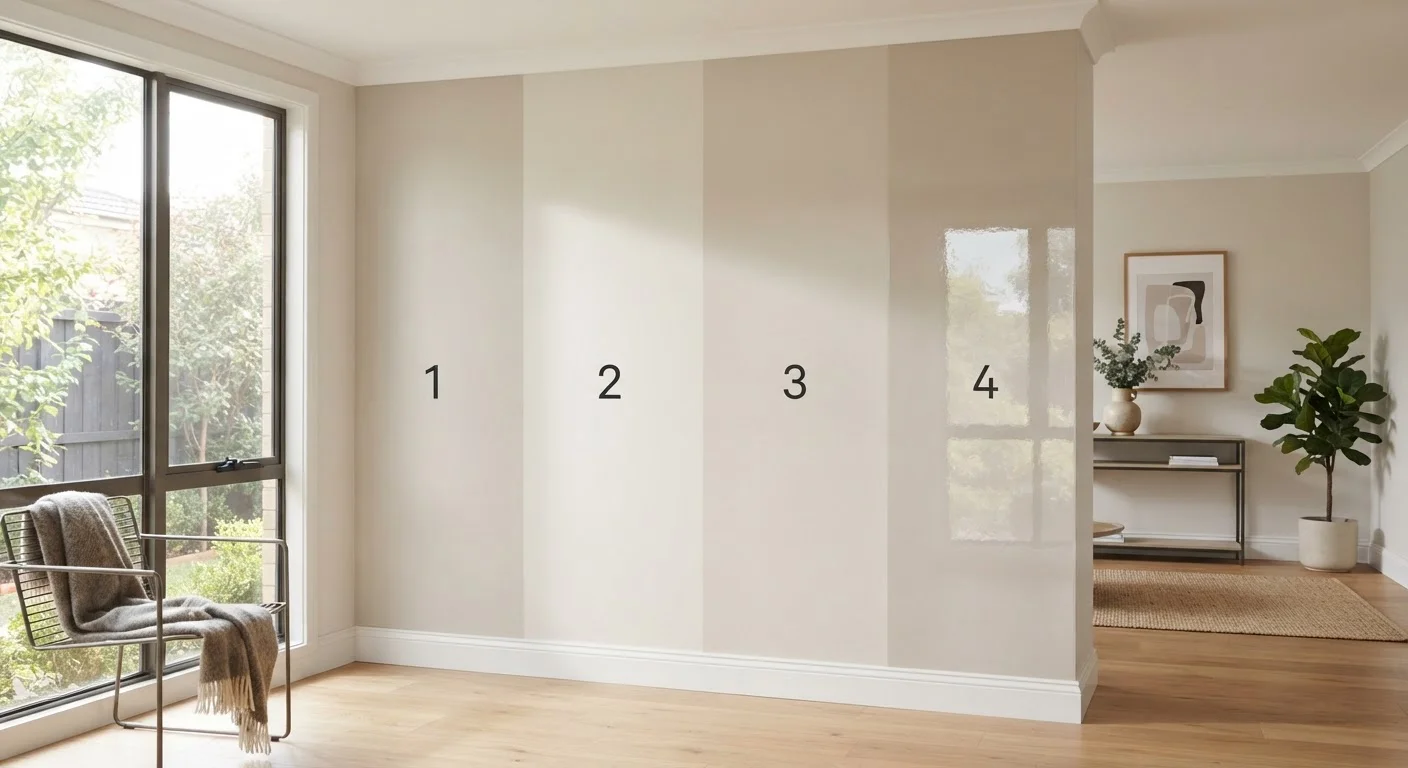
Matte, Eggshell, Satin, and Gloss: What Sets Each One Apart
Here's a closer look at how each finish performs in real-world conditions:
Matte (Flat)
Matte finishes reflect the least light and produce a smooth, chalky appearance that's excellent at concealing wall imperfections. They're popular on ceilings and in formal rooms that rarely see sticky fingers or scuffs. The downside is durability: repeated scrubbing can remove the paint itself, so matte surfaces should be spot-cleaned carefully rather than wiped aggressively.
Eggshell
Eggshell has a very low sheen - roughly resembling the surface of an actual eggshell - that still manages to hide minor wall flaws while tolerating occasional cleaning. It's widely considered a versatile middle-ground finish appropriate for most living spaces. It won't hold up in steam-heavy environments but performs reliably in bedrooms and living rooms.
Satin
Satin reflects noticeably more light than eggshell and offers a smoother, slightly velvety appearance. It's resistant to moisture and can handle repeated scrubbing - qualities that make it the workhorse finish for kitchens, bathrooms, kids' bedrooms, and high-traffic hallways. Satin does highlight surface imperfections more than eggshell, so proper wall prep is important.
Gloss (Semi-Gloss and High-Gloss)
Gloss finishes are the most reflective and the most durable. Semi-gloss is a standard choice for trim, baseboards, doors, and window frames. High-gloss - the shiniest option - is best reserved for cabinets and furniture-grade surfaces. Both gloss levels are extremely washable but mercilessly reveal every dent, seam, and imperfection, making thorough surface preparation non-negotiable.
| Matte | Eggshell | Satin | Gloss | |
|---|---|---|---|---|
| Sheen level | None / flat | Very low | Medium | High |
| Hides imperfections | Excellent | Good | Fair | Poor |
| Washability | Low | Moderate | Good | Excellent |
| Moisture resistance | Poor | Low | Good | Excellent |
| Best surfaces | Ceilings, formal rooms | Living rooms, bedrooms | Kitchens, bathrooms, hallways | Trim, doors, cabinets |
| Surface prep required | Minimal | Moderate | Thorough | Meticulous |
Matching Finish to Room: A Practical Room-by-Room Guide
Understanding the theory is one thing - applying it is another. Here's how to think through each major room in your home:
- Ceilings: Flat or matte is almost always the right call. Ceilings rarely get touched, and the non-reflective surface prevents harsh glare from overhead lighting.
- Living rooms and dining rooms: Eggshell strikes the ideal balance - attractive sheen, easy enough to spot-clean, and forgiving of normal wall texture.
- Bedrooms: Eggshell again works well for most bedrooms. If you're painting a nursery or a child's room, consider upgrading to satin for easier cleanup.
- Kitchens: Satin is the minimum recommended sheen. Cooking produces grease, steam, and splatter, and you'll want a surface you can wipe down regularly without damaging the paint film.
- Bathrooms: Satin handles humidity well. In very small or poorly ventilated bathrooms, semi-gloss is worth considering for extra moisture resistance.
- Hallways and entryways: Satin is a smart choice. These areas see heavy foot traffic, backpack scrapes, and muddy hands - durability matters more than concealment.
- Trim, baseboards, and doors: Semi-gloss is the industry standard. It holds up to contact and cleaning while providing a crisp, finished look that contrasts pleasingly with wall sheens.
Test Your Sheen Before Committing
Paint a sample swatch of each finish you're considering on the actual wall and observe it at different times of day, under natural and artificial light. Sheen levels look dramatically different in morning sun versus evening lamplight. This simple step can prevent a costly repaint and helps you see how much the finish will highlight or hide your wall's texture before you commit to a full room.
Surface Prep and Application Tips for Each Finish
A few practical notes before you begin painting:
Prep matters more as sheen increases. High-sheen finishes will show every crack, screw dimple, or patching seam. Fill and sand problem areas thoroughly, then prime repaired spots before applying satin or gloss. For matte finishes, you have more room to work with, but prep is still worth doing right.
Use the right roller nap. Smooth surfaces (like trim and cabinetry) call for a short nap (3/16" to 1/4") for gloss finishes. Slightly textured walls take a 3/8" nap for eggshell and satin. Using too thick a nap on a gloss surface leaves stippling patterns that are clearly visible once the paint cures.
Don't mix sheens on the same wall. Even touching up a matte wall with a slightly shinier paint - even the same color - can leave visible patches that are nearly impossible to blend. Always keep a note of the exact sheen level used in each room, along with the paint color code, for future touch-ups.
Allow full cure time before cleaning. Paint may feel dry to the touch within hours, but most latex paints need 2-4 weeks to fully cure and reach maximum washability. Avoid scrubbing freshly painted walls, regardless of sheen level.
The content on this site is provided for informational purposes only and should not be considered a substitute for professional advice. While we strive to provide accurate and up-to-date information, we make no guarantees regarding its completeness or accuracy. Always consult a qualified professional for advice specific to your circumstances before making any decisions.