

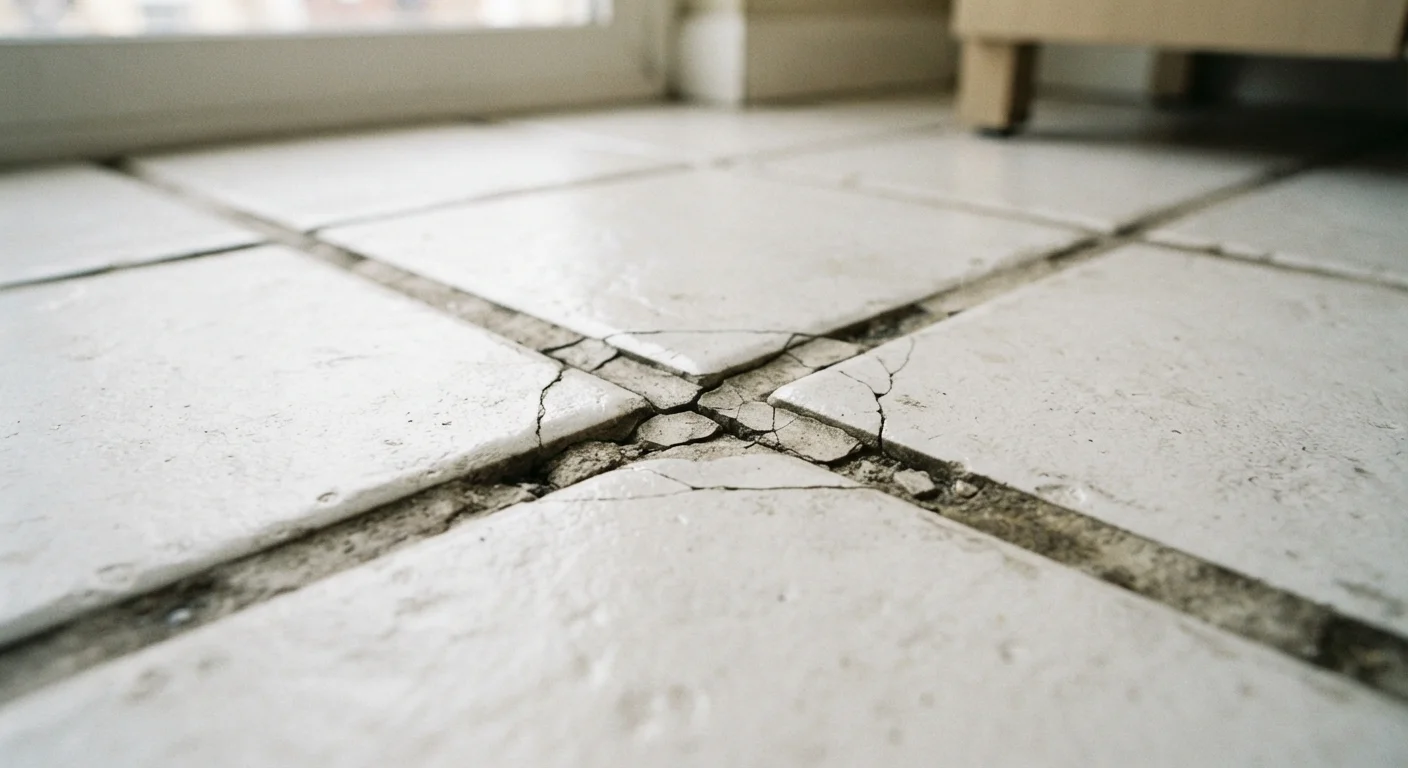
Why Grout Cracks Keep Coming Back
If you've patched cracked grout only to watch it split open again within weeks or months, you're not dealing with a grout problem - you're dealing with a diagnostic problem. Grout is a rigid material. When the surface beneath it moves, expands, or flexes, grout loses the battle every time. Understanding why cracking happens is the only path to a lasting fix.
The most common culprits fall into a few predictable categories: inadequate substrate support, missing or improperly placed expansion joints, incorrect grout selection, and poor original installation. Each one causes a distinct cracking pattern, and recognizing those patterns can tell you a lot about what's actually going on under your tile.
Tiling over a substrate with too much flex or deflection.
Why it happens: Subfloors - especially those made of OSB or thinner plywood - can have more give than tile installation requires. Homeowners and even some contractors skip a stiffness assessment before laying tile.
Omitting movement (expansion) joints at changes in plane and large field areas.
Why it happens: Expansion joints break up rigid tile fields to absorb natural building movement, but they're often skipped because they require planning and add cost. Many DIYers are simply unaware they're needed.
Using the wrong type of grout for the tile size, joint width, or location.
Why it happens: Grout selection is often made purely on color. Unsanded grout in a wide joint doesn't have the body to stay intact, while sanded grout in a very narrow joint can crack the tile edge.
Applying grout before the thinset mortar has fully cured.
Why it happens: Tiling projects often feel "done" once tiles are set, and the urge to grout quickly is strong. In reality, thinset needs adequate time - typically 24 to 48 hours depending on product and conditions - to cure properly.
Regrouting over existing cracked grout without removing the old material.
Why it happens: It's tempting to press new grout into existing cracks as a quick patch. This seems faster and requires less effort than full removal.
When to DIY and When to Call a Pro
Minor surface cracks in stable, well-supported tile - especially in low-traffic areas - are often manageable as a DIY repair. Remove the damaged grout with an oscillating tool or grout saw, clean the joint thoroughly, and apply a matching grout or caulk product suited to the joint width and location. Always use sanded grout for joints wider than 1/8 inch and unsanded grout for narrower joints.
Don't Ignore Hollow or Cracked Tiles
If tapping tiles produces a hollow sound, or if the tiles themselves are cracking - not just the grout - the problem is almost certainly deeper than the surface. These signs point to substrate failure, inadequate adhesive coverage, or significant deflection. Continuing to regrout in this situation is not a fix. A qualified tile contractor should inspect the installation before you invest further effort or money.
However, if tiles are cracking (not just grout), if grout cracks follow a consistent pattern across a large area, or if the floor feels hollow or spongy when you walk on it, those are signs of substrate failure or structural deflection. These scenarios typically require a licensed tile contractor to assess and remediate - attempting to regrout without addressing the root cause will waste your time and money. For structural concerns or work that involves removing large sections of tile, permits or inspections may be required depending on your local building codes; verify requirements with your municipality before beginning.
Maintaining your home's overall structure also matters. Water intrusion from poorly maintained gutters, for example, can eventually affect subfloor integrity. See our guide on gutter maintenance to understand how neglected exterior drainage can ripple into interior problems over time.
The content on this site is provided for informational purposes only and should not be considered a substitute for professional advice. While we strive to provide accurate and up-to-date information, we make no guarantees regarding its completeness or accuracy. Always consult a qualified professional for advice specific to your circumstances before making any decisions.