

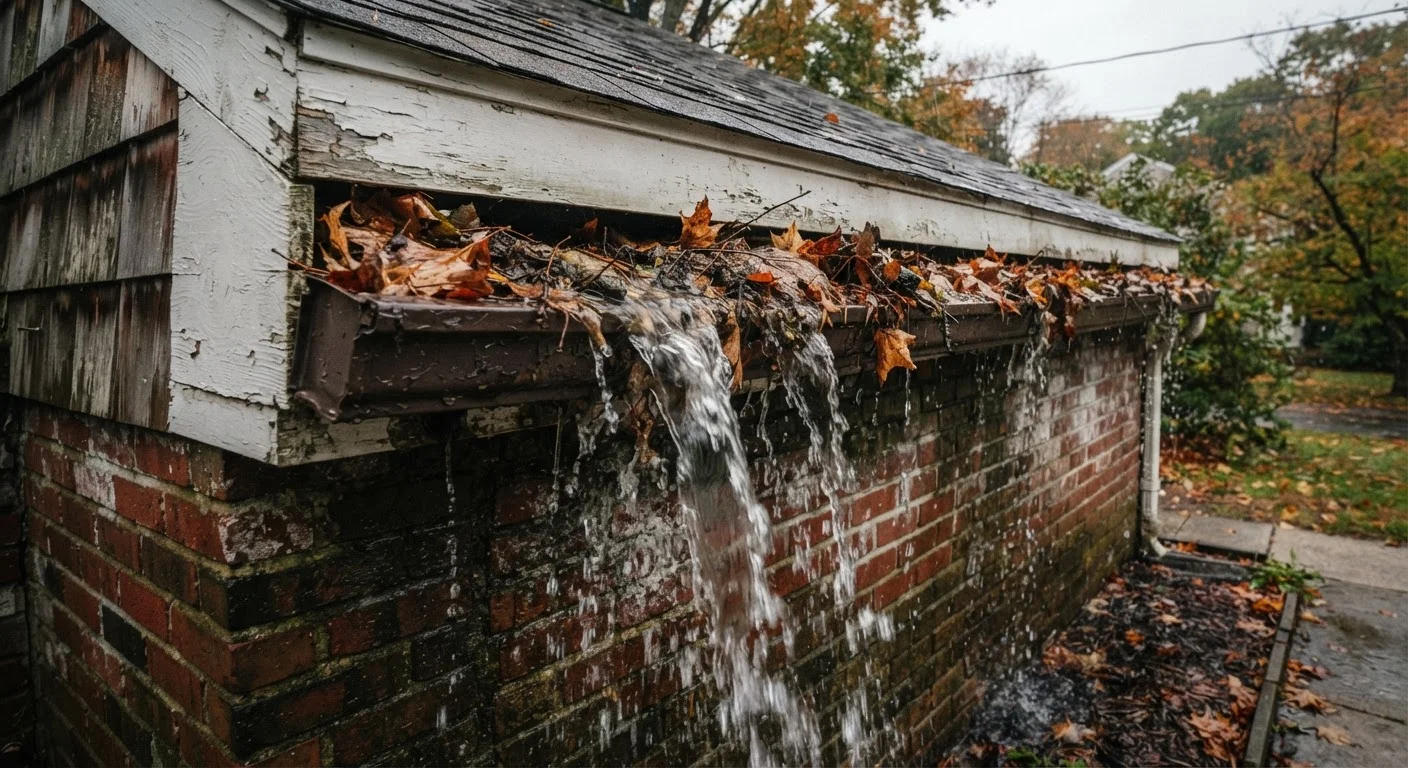
What Gutters Actually Do - and What Happens When They Fail
Gutters exist to do one critical job: move rainwater and snowmelt away from your home's foundation, siding, and roof deck. When they work properly, they're invisible infrastructure. When they fail, the consequences show up in some of the most expensive repair bills a homeowner can face - foundation settling, basement flooding, fascia rot, and even interior mold.
The problem is that gutter failure rarely looks dramatic at first. Water backs up quietly, seeps under shingles, or pools along the foundation line. By the time you notice peeling paint or a musty basement, the damage has often been accumulating for months. As the pattern of deferred home maintenance shows, small neglected repairs compound quickly into major expenses.
Understanding the specific mistakes homeowners make - and why - puts you in a much stronger position to avoid them.
The Most Costly Gutter Mistakes Homeowners Make
The errors below aren't rare. They happen on homes across the country every season, and each one carries a predictable - and preventable - price tag.
Cleaning gutters only once a year - or skipping it entirely.
Why it happens: Many homeowners assume gutters are a set-it-and-forget-it system, or they clean them once and consider the job done for the year.
Ignoring sagging sections and separated joints.
Why it happens: Small structural issues look minor and easy to postpone, especially when the gutter appears to still be holding water.
Letting downspouts discharge water too close to the foundation.
Why it happens: Downspouts are often installed with short splash blocks that look adequate but don't move water far enough from the house.
Assuming gutter guards eliminate the need for maintenance.
Why it happens: Gutter guards are marketed as a maintenance-free solution, so homeowners stop inspecting after installation.
Overlooking interior signs of gutter failure.
Why it happens: Homeowners focus on the gutters themselves and miss the indoor symptoms - peeling paint near eaves, water stains on ceilings, or musty basement odors - that indicate longstanding overflow.
If you've noticed granules accumulating in your gutters or along the drip edge, that's a warning sign worth acting on. Our guide to reading your roof's warning signs explains what different types of buildup signal about your roof's condition.
Keeping Gutters Functional: A Practical Maintenance Framework
Staying ahead of gutter problems doesn't require specialized skills - just consistent attention and a basic understanding of what to look for.
$10,000+
Average foundation repair cost from water damage
Foundation repair costs vary widely, but water-related foundation damage commonly runs into five figures according to home repair industry estimates.
$150-$300
Typical professional gutter cleaning cost
For an average single-story home, professional cleaning generally falls in this range - a fraction of the damage costs it prevents.
Twice-yearly cleaning is the baseline. Clear gutters in late fall after leaves have dropped, and again in spring after tree seeds and debris have accumulated. Homes surrounded by pine trees or other heavy shedders may need cleaning three or four times per year.
Inspect while you clean. Look for sections that sag, joints that have separated, or areas where paint on the fascia is bubbling - all signs that water has been sitting or seeping where it shouldn't. Tightening a loose spike or re-sealing a joint is a straightforward repair; replacing a rotted fascia board is not.
Check your downspout discharge points. Extensions should carry water at least four to six feet from the foundation. If water is depositing near the house, regrade the soil or add a longer extension. This is one of the easiest fixes with the most significant impact on foundation health.
Persistent drafts and moisture intrusion often compound each other. If you're already working on exterior maintenance, sealing windows and doors is another high-return task that protects against water and energy loss simultaneously.
Finally, consider a professional gutter inspection every two to three years. A trained eye can spot pitch problems and hidden corrosion that aren't obvious from ground level - and catching a failing section early costs a fraction of what water damage remediation does. The principle applies broadly: deferred home maintenance rarely stays cheap.
The content on this site is provided for informational purposes only and should not be considered a substitute for professional advice. While we strive to provide accurate and up-to-date information, we make no guarantees regarding its completeness or accuracy. Always consult a qualified professional for advice specific to your circumstances before making any decisions.