

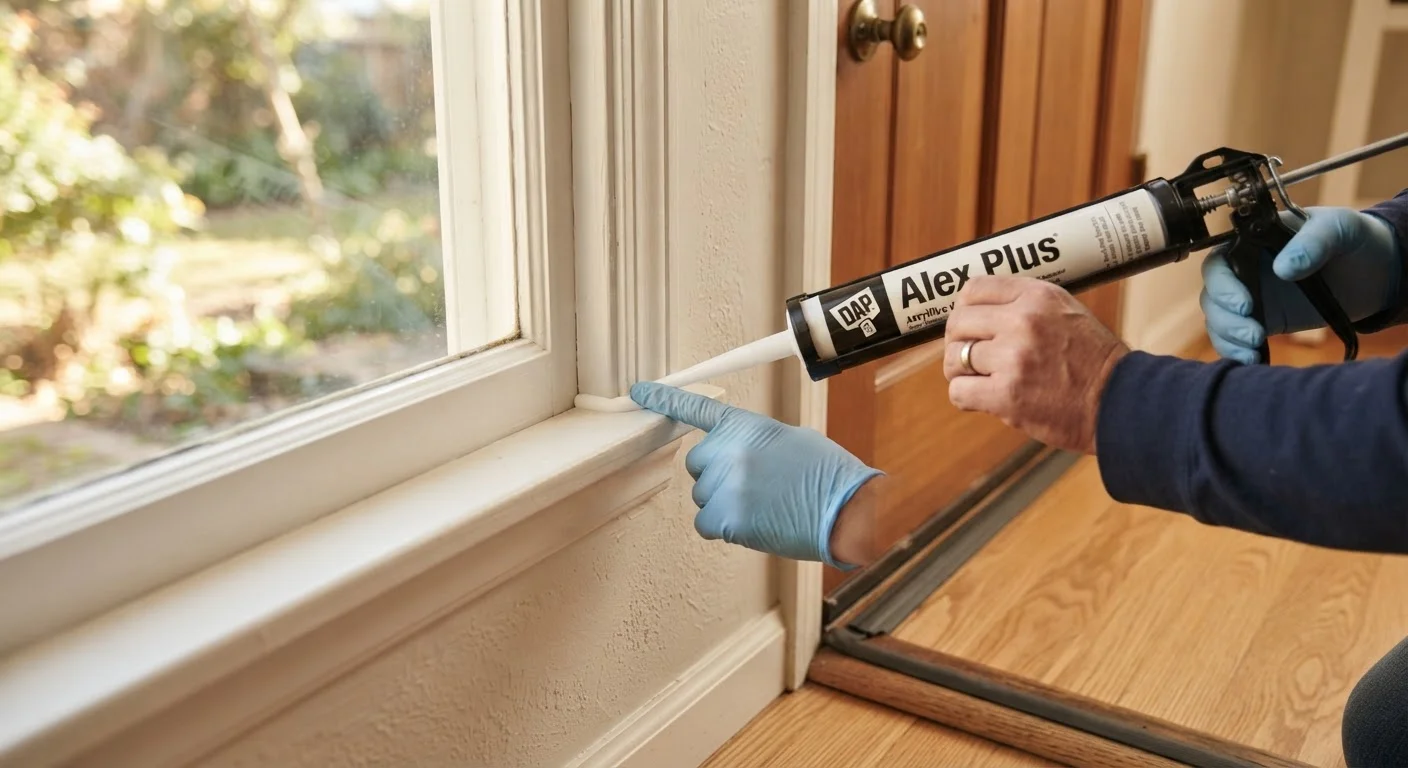
Option A
Caulk
The permanent, rigid seal for stationary gaps.
Best for: Best for sealing fixed cracks and gaps between surfaces that don't move, such as window frames, door casings, and baseboards.
Option B
Weatherstripping
The flexible, compressible seal for moving parts.
Best for: Best for sealing the perimeter of doors and operable windows that open and close regularly.
Why the Distinction Matters
Both caulk and weatherstripping are air-sealing materials, and both can reduce drafts, lower energy bills, and keep moisture from sneaking into your home. But they are engineered for fundamentally different jobs - and applying one where the other belongs is one of the most common mistakes homeowners make during routine maintenance.
The core principle is simple: caulk belongs on surfaces that don't move; weatherstripping belongs on surfaces that do. Ignore this rule and you'll find yourself redoing the job within a season. Caulk applied to a door stop will crack the first time the door slams. Weatherstripping applied as a gap filler on a window frame won't bond and will peel away quickly.
Understanding where each material belongs also helps you prioritize your time. A thorough inspection of your home's exterior and interior thresholds will reveal which problem you're actually dealing with - a cracked joint or a leaky, movable edge.
Caulk: Where, When, and What Type
Caulk is a flexible sealant - typically silicone, latex, or a hybrid - that is applied into a gap, adheres to both bordering surfaces, and cures into a semi-rigid bead. It handles minor movement from thermal expansion but is not designed for repeated mechanical stress.
Where caulk belongs:
- Between window or door frames and exterior siding or interior drywall
- Along baseboards where trim meets the floor or wall
- Around plumbing penetrations, pipes, and electrical conduit entering exterior walls
- Along the seam where a door threshold meets the flooring or subfloor (the fixed base, not the door itself)
For exterior applications, paintable silicone or siliconized latex caulk is the most durable choice. Pure latex caulk is easier to clean up but less weather-resistant. Always clean and dry the surface before applying caulk, and avoid applying it in temperatures below 40°F unless the product is specifically rated for cold-weather use.
See our guide to caulking windows and doors for step-by-step application advice.
| Criterion | Caulk | Weatherstripping |
|---|---|---|
| Primary purpose | Seal fixed, stationary gaps | Seal movable edges (doors, windows) |
| Handles repeated movement | No - cracks under stress | Yes - designed to compress and rebound |
| Common materials | Silicone, latex, polyurethane | Foam, rubber, vinyl, spring bronze |
| Typical locations | Frames, casings, siding joints, pipe penetrations | Door stops, sash edges, door bottoms |
| DIY difficulty | Low to moderate | Low to moderate |
| Lifespan (with proper installation) | 5-20 years depending on material | 1-10 years depending on type and use |
| Inspection frequency | Annually | Annually or after heavy use seasons |
Weatherstripping: Types and Placement
Weatherstripping is installed along the edges of movable components - doors and operable windows - to form a compression seal each time they close. Because it flexes and rebounds with every use, it's made from materials like foam tape, felt, rubber, vinyl, or metal (such as spring bronze).
Weatherstripping types and their best uses:
- Foam tape: Easy to install, affordable, and good for irregular gaps. Best for low-traffic windows and the tops or sides of infrequently used doors.
- V-strip (tension seal): Durable spring-bronze or plastic strip that fits into the channel of a window sash or the hinge side of a door. Long-lasting and low-profile.
- Door sweeps: Installed on the bottom edge of a door to seal the gap between the door and threshold. Available in brush, rubber, and vinyl versions.
- Bulb or compression seals: Rubber or vinyl tubing that compresses when the door closes. Ideal for the door stop (the narrow strip the door presses against).
When installing weatherstripping, test the fit before finalizing - the door or window should close completely without binding, and the seal should compress evenly with no gaps. Replace weatherstripping that's visibly torn, compressed flat, or no longer springs back.
A Practical Inspection Routine
Before buying materials, walk through your home and classify each problem area. For each window and door, ask: Does this surface move when the window or door operates? If yes, weatherstripping. If no, caulk.
For doors, check four zones: the two side jambs, the top (head) jamb, and the bottom sweep. The jambs and head typically need weatherstripping. The fixed threshold beneath the door may need caulk where it meets the floor.
For windows, check the fixed frame where it meets surrounding trim or siding (caulk territory) and the sash edges where the panes slide or swing open (weatherstripping territory).
Don't Overlook Interior Air Sealing
Much of a home's air leakage happens at interior penetrations - around electrical outlets on exterior walls, along the top plates of framed walls in the attic, and where plumbing enters from below. While these spots won't benefit from weatherstripping, fire-rated caulk or foam sealant (following manufacturer safety guidance) applied in these areas can meaningfully reduce overall air infiltration. Check local building codes before sealing in attic spaces, as ventilation requirements vary.
Plan to inspect both systems at least once a year - ideally in early fall before heating season begins. Hold a lit stick of incense or a smoke pencil near suspect edges on a windy day to locate air movement quickly. Addressing even a few failed seals can make a noticeable difference in comfort and utility costs over a heating or cooling season.
The content on this site is provided for informational purposes only and should not be considered a substitute for professional advice. While we strive to provide accurate and up-to-date information, we make no guarantees regarding its completeness or accuracy. Always consult a qualified professional for advice specific to your circumstances before making any decisions.