

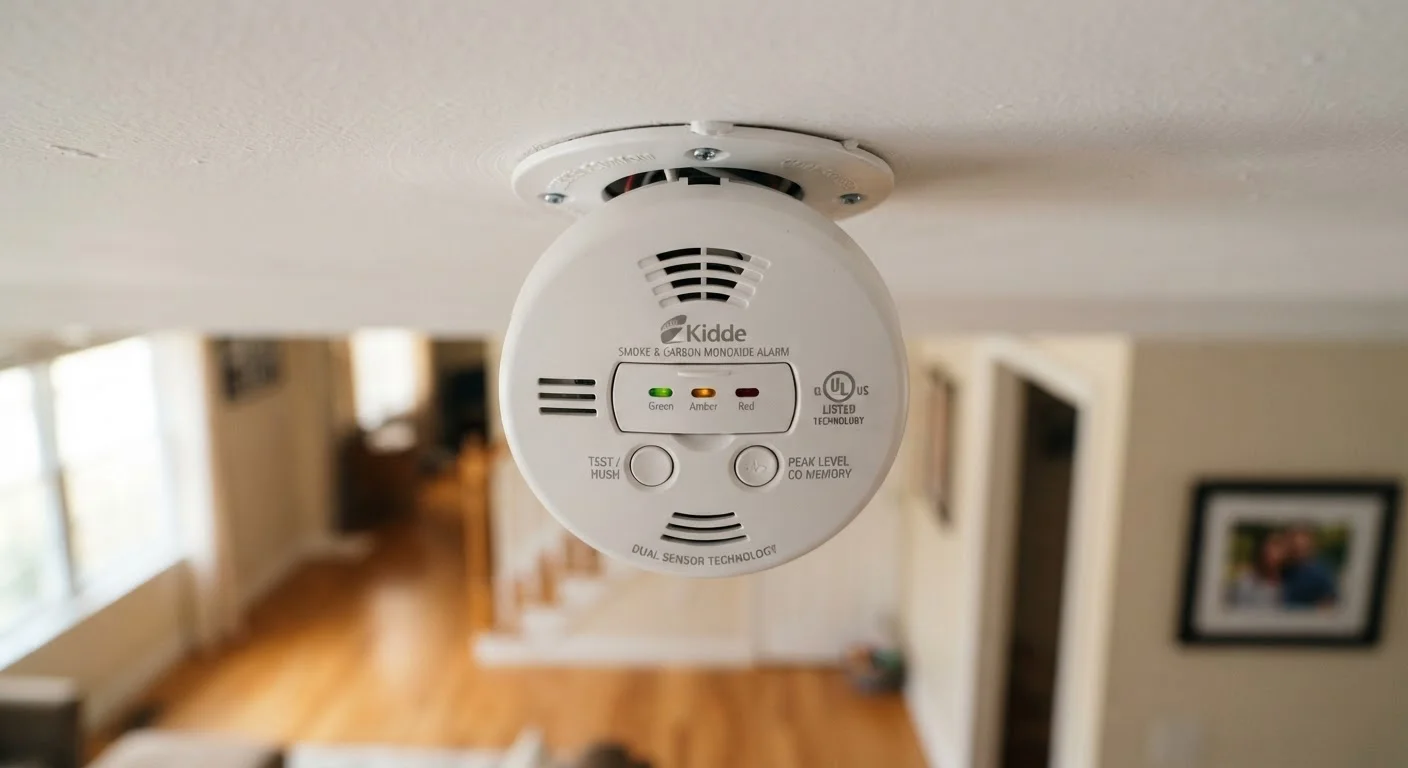
What the Label Is Required to Tell You - and What It Isn't
Every smoke and CO detector sold in the U.S. carries a UL listing and a manufacture date, but the label won't explain how quickly a ten-year-old ionization sensor degrades, or why two detectors of different technologies respond to the same fire at very different speeds. Understanding those gaps is where practical safety actually begins.
The two core smoke detection technologies work differently. Ionization detectors react faster to fast-flaming fires - the kind that engulf a room within minutes. Photoelectric detectors respond earlier to slow, smoldering fires, which often produce toxic smoke before visible flames appear. Many fire safety professionals suggest that dual-sensor detectors - which combine both technologies in one unit - offer broader protection. Your label will specify which type you have, but it won't tell you which fire scenarios your home's layout makes most likely.
| Smoke detector lifespan | 10 years from manufacture date (NFPA 72, National Fire Alarm and Signaling Code) |
| CO detector lifespan | 5-7 years (varies by model) (Manufacturer specifications and UL standards) |
| Recommended test frequency | At least once per month (U.S. Fire Administration guidance) |
| Battery replacement interval | Once per year (or as chirping indicates) (NFPA recommendation) |
| Minimum detectors per floor | One per level, including basement (NFPA 72) |
| CO detector bedroom placement | Outside each sleeping area (NFPA 720) |
Placement: The Most Commonly Misunderstood Requirement
The general rule - one detector per level - is widely known but frequently misapplied. Here's what the guidelines actually specify:
- Smoke detectors should be installed on the ceiling or on a wall no more than 12 inches from the ceiling, in every sleeping room, outside each sleeping area, and on every level including the basement.
- Carbon monoxide detectors must be placed outside each sleeping area. Because CO disperses evenly throughout room air (unlike smoke, which rises), placement height is more flexible - though ceiling placement near sleeping areas is common.
- Kitchens and garages: Keep smoke detectors at least 10 feet from cooking appliances to reduce nuisance alarms. Never install CO detectors in garages - combustion exhaust from vehicles will repeatedly trigger them and may desensitize occupants to real alerts.
Combination Units Still Follow Two Sets of Rules
A detector labeled '2-in-1' is convenient, but it doesn't combine the placement rules for smoke and CO detection into one. Smoke detectors belong on ceilings (smoke rises); CO detectors can be placed at various heights because CO disperses throughout a room. When in doubt, follow the more conservative placement guideline - ceiling-mount - and confirm with the manufacturer's instructions for that specific unit.
Interconnecting your detectors - either through wiring or wireless linking - means an alarm in the basement wakes everyone upstairs. This is especially important in larger homes where a distant alarm might not be heard through closed bedroom doors. See our seasonal home inspection guide for a practical checklist approach to verifying coverage twice a year.
Expiration, Testing, and the Gaps Most Homeowners Miss
Detectors expire - and most homeowners don't know it until the unit starts chirping its end-of-life signal, which is different from a low-battery chirp. Check the manufacture date stamped on the back of each unit:
- Smoke detectors: Replace no later than 10 years from the manufacture date, per NFPA 72.
- CO detectors: Replace every 5-7 years, depending on the model. The electrochemical sensing cells degrade and may underreport CO concentrations well before visible signs of failure appear.
Testing frequency matters as much as replacement. Press the test button on each detector at least once a month. The test button confirms the alarm circuit and speaker work - it does not verify that the sensor itself is still accurately detecting smoke particles or CO. That's why replacement on schedule is non-negotiable.
Battery-powered units need fresh batteries at least once a year. Sealed-battery units that advertise 10-year battery life still need full replacement at the end of the detector's service life - the battery and the sensor age together. Keep a written log of installation dates for every detector in your home, or photograph the manufacture date label when you install each unit.
For a broader view of home maintenance tasks that tend to fall through the cracks - similar to overlooked detector maintenance - home inspection findings for buyers covers issues that often surface only after something goes wrong.
The content on this site is provided for informational purposes only and should not be considered a substitute for professional advice. While we strive to provide accurate and up-to-date information, we make no guarantees regarding its completeness or accuracy. Always consult a qualified professional for advice specific to your circumstances before making any decisions.