

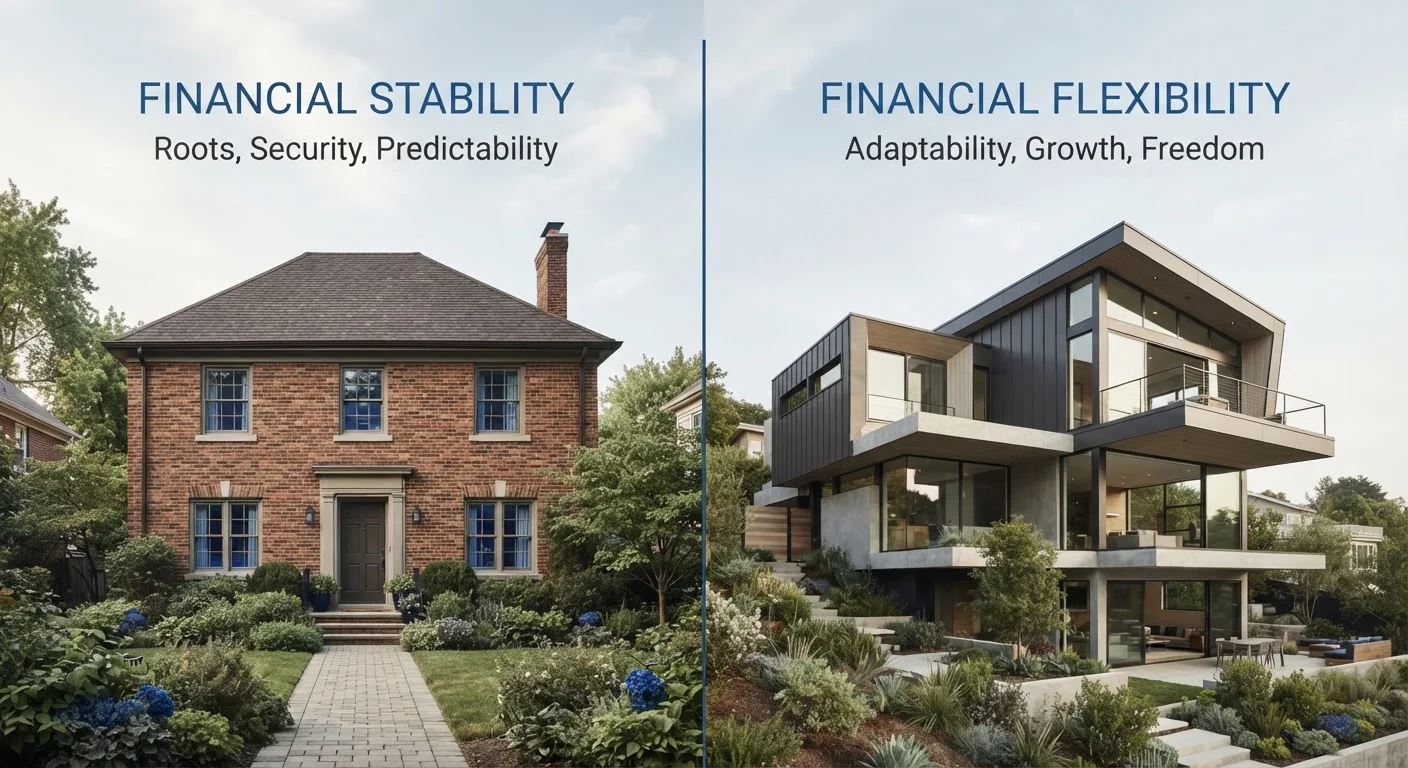
Option A
Fixed-Rate Mortgage
The predictable, long-term stability choice.
Best for: Buyers who plan to stay in their home for many years and want consistent monthly payments regardless of market conditions.
Option B
Adjustable-Rate Mortgage (ARM)
The flexible, short-term savings alternative.
Best for: Buyers who expect to sell or refinance within a few years and want to take advantage of a lower initial interest rate.
How Each Mortgage Structure Actually Works
A fixed-rate mortgage charges the same interest rate for the life of the loan. Whether your term is 15 or 30 years, your principal-and-interest payment stays constant from the first month to the last. The predictability is the product's defining feature - and its primary appeal.
An adjustable-rate mortgage (ARM) - sometimes called a variable-rate mortgage - starts with a fixed introductory rate for a set number of years (commonly 5, 7, or 10), then adjusts at scheduled intervals based on a benchmark index, such as the Secured Overnight Financing Rate (SOFR). The adjustment is capped by rules built into the loan: periodic caps limit how much the rate can move at each adjustment, and lifetime caps set a ceiling on how high the rate can ever go.
ARMs are typically named to reflect their structure. A 5/1 ARM has a fixed rate for five years, then adjusts once per year. A 7/6 ARM fixes the rate for seven years, then adjusts every six months. Understanding this naming convention is essential before comparing loan offers. For a broader look at how rate environments shape buyer decisions, see how mortgage rates influence home prices.
| Criterion | Fixed-Rate Mortgage | Adjustable-Rate Mortgage (ARM) |
|---|---|---|
| Interest Rate | Locked for entire loan term | Fixed intro period, then periodic adjustments |
| Initial Rate Level | Typically higher at origination | Typically lower during intro period |
| Payment Predictability | Completely stable P&I payment | Stable then variable after intro period |
| Rate Risk | None after closing | Rate can rise after adjustment begins |
| Common Loan Terms | 15-year, 30-year | 5/1, 7/1, 7/6, 10/1 structures |
| Best Ownership Timeline | 7+ years | Under 7 years |
| Refinancing Need | Only if rates drop significantly | Often advisable before first adjustment |
The Core Trade-Off: Certainty vs. Initial Cost Savings
The fixed-rate mortgage's strength is also its limitation. You gain certainty, but if market rates fall substantially after you close, you're locked into a higher rate unless you refinance - which involves closing costs and qualifying all over again.
ARMs typically open with a rate meaningfully below comparable fixed-rate loans, which translates to lower monthly payments during the introductory period. That gap can represent thousands of dollars in savings if you exit the loan before the first adjustment. However, once the introductory period ends, your payments become unpredictable. Caps protect you from extreme swings, but a rate that climbs several percentage points over a few adjustment cycles can significantly increase your monthly obligation.
~30 yrs
Average fixed-rate mortgage term in the US
The 30-year fixed-rate mortgage remains the most widely used home loan structure among American borrowers, according to Freddie Mac data.
Capped
ARM rate adjustments are limited by caps
Federal regulations require ARMs to include periodic and lifetime rate caps, limiting how much a lender can increase the rate at each adjustment and overall.
5-7 yrs
Typical US homeowner tenure before selling
The National Association of Realtors has historically reported median home tenure in the range of 5 to 10 years, making the ARM's introductory window relevant for many buyers.
The right framing is not which product is cheaper in the abstract, but which structure aligns with your actual timeline and risk tolerance. If you are still deciding whether homeownership makes sense at all right now, the analysis in renting vs. buying a home covers the broader trade-offs worth considering first.
Timeline Is the Deciding Factor
Most financial professionals frame the ARM-vs.-fixed decision primarily around how long you expect to hold the loan. If you are reasonably confident you will sell the home or refinance before the ARM's fixed period expires, you capture the lower rate without bearing the adjustment risk. If your timeline is uncertain or long, the fixed-rate's stability typically outweighs the initial savings.
Life rarely follows a plan, though. Job changes, family circumstances, and market conditions all affect how long people stay in homes. Buyers who assume a short timeline should honestly assess how locked-in that plan really is - and consider what happens financially if they stay longer than expected.
First-time buyers often underestimate how many mortgage assumptions carry hidden complexity. The common mortgage myths that trip up first-time buyers are worth reviewing before finalizing any loan structure decision.
This article is for general informational and educational purposes only and does not constitute personalized financial, mortgage, or legal advice. Consult a licensed mortgage professional or financial adviser to evaluate options based on your individual circumstances.
The content on this site is provided for informational purposes only and should not be considered a substitute for professional advice. While we strive to provide accurate and up-to-date information, we make no guarantees regarding its completeness or accuracy. Always consult a qualified professional for advice specific to your circumstances before making any decisions.