

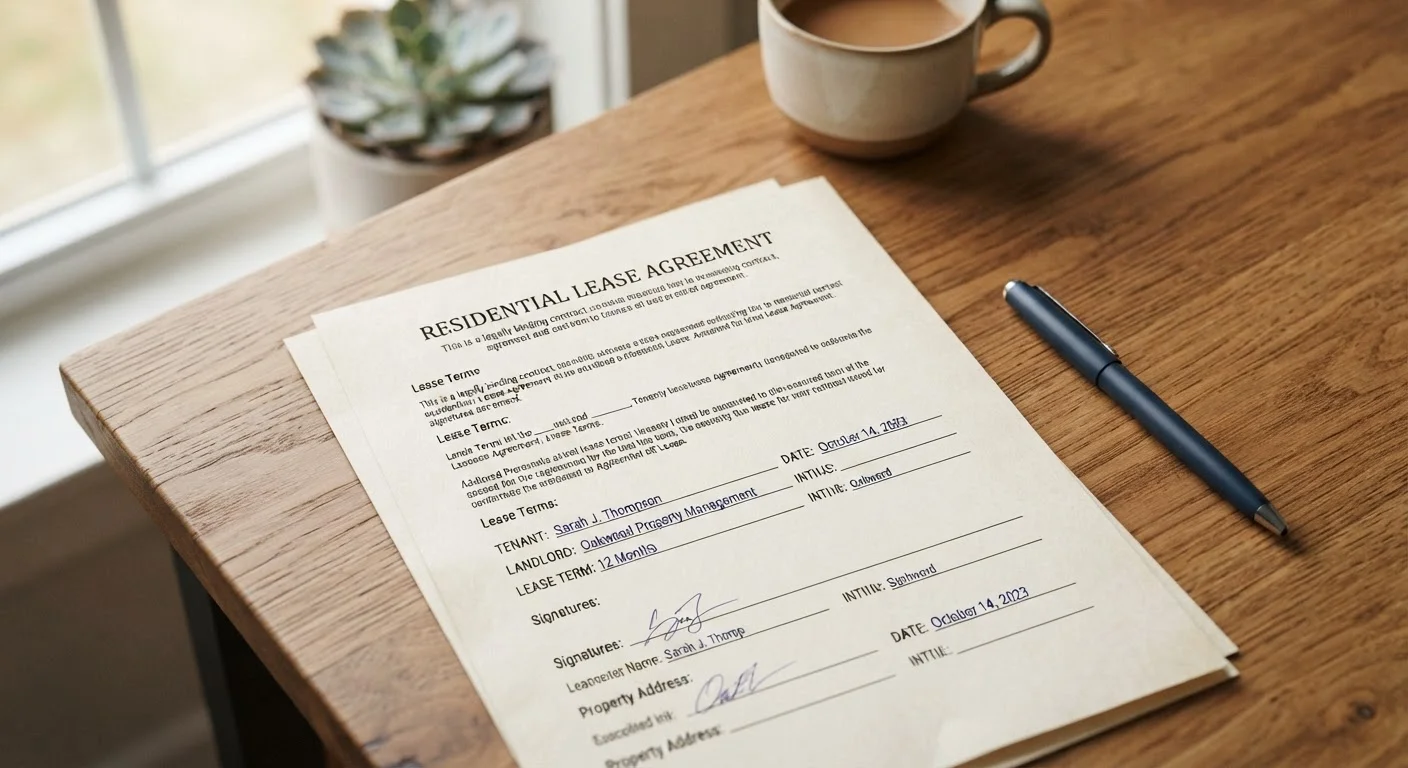
Why Lease Language Matters More Than Most Renters Realize
Most renters skim a lease, initial each page, and sign - often under time pressure from a competitive rental market. That's a risky approach. A lease agreement is a legally enforceable contract, and the clauses buried in the middle pages can determine whether you lose your security deposit, face unexpected fees, or find yourself legally obligated to pay rent on an apartment you've already vacated.
The good news is that once you know what the key sections are and what they actually mean, reviewing a lease becomes far less intimidating. The most consequential clauses tend to cluster around the same core topics in almost every standard residential lease.
For a broader reference on terminology you may encounter, the tenant glossary covers definitions from holdover tenancy to the implied warranty of habitability.
The Clauses That Affect Your Money Most Directly
Rent amount, due date, and grace period. The lease should state your monthly rent precisely, when it is due, and whether a grace period exists before a late fee applies. Note that grace periods are not guaranteed - some states require them by law, others do not.
Security deposit. This section specifies how much you owe upfront, what the deposit can be used for (typically unpaid rent and damage beyond normal wear and tear), and how long the landlord has after move-out to return it or provide an itemized deduction statement. State law controls the maximum deposit amount and the return deadline - common timelines range from 14 to 30 days depending on the state.
Late fees and returned-check fees. Leases routinely include flat-dollar or percentage-based penalties for late payment. Review whether the fee is triggered the day after the due date or after a grace period, and confirm it's within the limits your state permits.
30-45 days
Typical notice required to vacate before lease end
Most standard residential leases in the US require tenants to provide written notice 30 to 45 days before the lease term ends, though some require up to 60 days.
2 months
Common maximum security deposit limit
Many states cap residential security deposits at one to two months' rent, though limits vary widely; some states impose no statutory cap.
14-30 days
Typical window for landlords to return deposits
State laws generally require landlords to return a security deposit or provide an itemized deduction statement within 14 to 30 days of a tenant's move-out date.
Lease term and early termination. The lease should define its start and end date clearly. If you need to leave before that date, the consequences - often two months' rent or forfeiture of your deposit - are typically spelled out in an early termination clause. Understanding this section before a life change forces your hand is essential. See our article on breaking a lease early for a full breakdown of your options and exposure.
Maintenance, Repairs, and Habitability
Most leases divide maintenance responsibilities between landlord and tenant. Landlords are legally obligated in all states to maintain rental units in a habitable condition - functional heating, plumbing, and structural integrity are baseline requirements that no lease clause can waive away.
Common tenant responsibilities spelled out in leases include replacing light bulbs, keeping the unit clean, and promptly reporting damage. Failing to report a small leak that later causes significant water damage, for example, could expose you to liability if the lease required timely notification.
Watch for clauses that attempt to shift major repair costs to tenants - such as HVAC servicing or appliance replacement. Depending on your state, such provisions may be unenforceable, but you should raise them with a local tenant's rights organization or attorney if you see them before signing.
Rules, Restrictions, and Renewal Terms
Occupancy and subletting. Leases typically name the approved occupants and prohibit unauthorized subletting. If you plan to sublet or have a partner move in, verify the lease's requirements and get written landlord approval before acting - violations can be grounds for eviction.
Pet policy. Even in pet-friendly buildings, the lease may restrict species, breeds, or weight. It may also require a separate refundable pet deposit or a non-refundable pet fee. These are distinct charges - clarify which applies to your situation.
Renewal and notice requirements. This is among the most overlooked sections. Many leases require you to give written notice - commonly 30 to 60 days - of your intent to vacate before the lease end date. Miss the deadline, and you may be automatically renewed into another term or converted to month-to-month tenancy at a higher rate. Understanding this distinction is key; the comparison between month-to-month and fixed-term lease arrangements explains the practical tradeoffs of each.
Request Everything in Writing Before You Sign
If a landlord makes a verbal promise - to repaint a room, repair an appliance, or waive a fee - ask for it in a signed addendum attached to the lease. Courts and arbitrators generally cannot enforce promises that exist only in conversation. A brief email exchange confirming the agreement, while less airtight than a signed addendum, is better than nothing.
This article provides general educational information about lease agreements and is not a substitute for legal advice. Tenant rights vary significantly by state and locality. If you have specific concerns about a lease you have been asked to sign, consider consulting a licensed attorney or local tenant's rights organization.
Frequently Asked Questions
Generally, no. Once both parties sign, the lease terms are fixed for the agreed period. A landlord can propose changes at renewal time, but mid-lease modifications typically require written consent from the tenant.
An illegal clause is typically unenforceable, even if you signed the lease. For example, if your state caps security deposits at two months' rent, a clause demanding three months' worth cannot be enforced. State landlord-tenant law generally takes precedence over lease language.
Verbal promises are very difficult to enforce and are generally not treated as part of the lease contract. If a landlord agrees to repaint, replace appliances, or waive a fee, get it in writing and attached to the lease before you sign.
A renewal clause describes what happens when the lease term ends - whether it automatically converts to a month-to-month tenancy, renews for another fixed term, or requires you to give notice of intent to stay or leave. Missing the notice deadline in this clause is a common and costly mistake.
Yes, lease terms are often negotiable - particularly in a softer rental market. Common negotiation points include the monthly rent amount, pet policies, parking fees, and minor maintenance responsibilities. Always document any agreed changes in writing.
If you have roommates and the lease includes joint and several liability language, each tenant is individually responsible for the full rent - not just their share. If one roommate stops paying, the landlord can seek the entire balance from any one of the other tenants.
The content on this site is provided for informational purposes only and should not be considered a substitute for professional advice. While we strive to provide accurate and up-to-date information, we make no guarantees regarding its completeness or accuracy. Always consult a qualified professional for advice specific to your circumstances before making any decisions.