

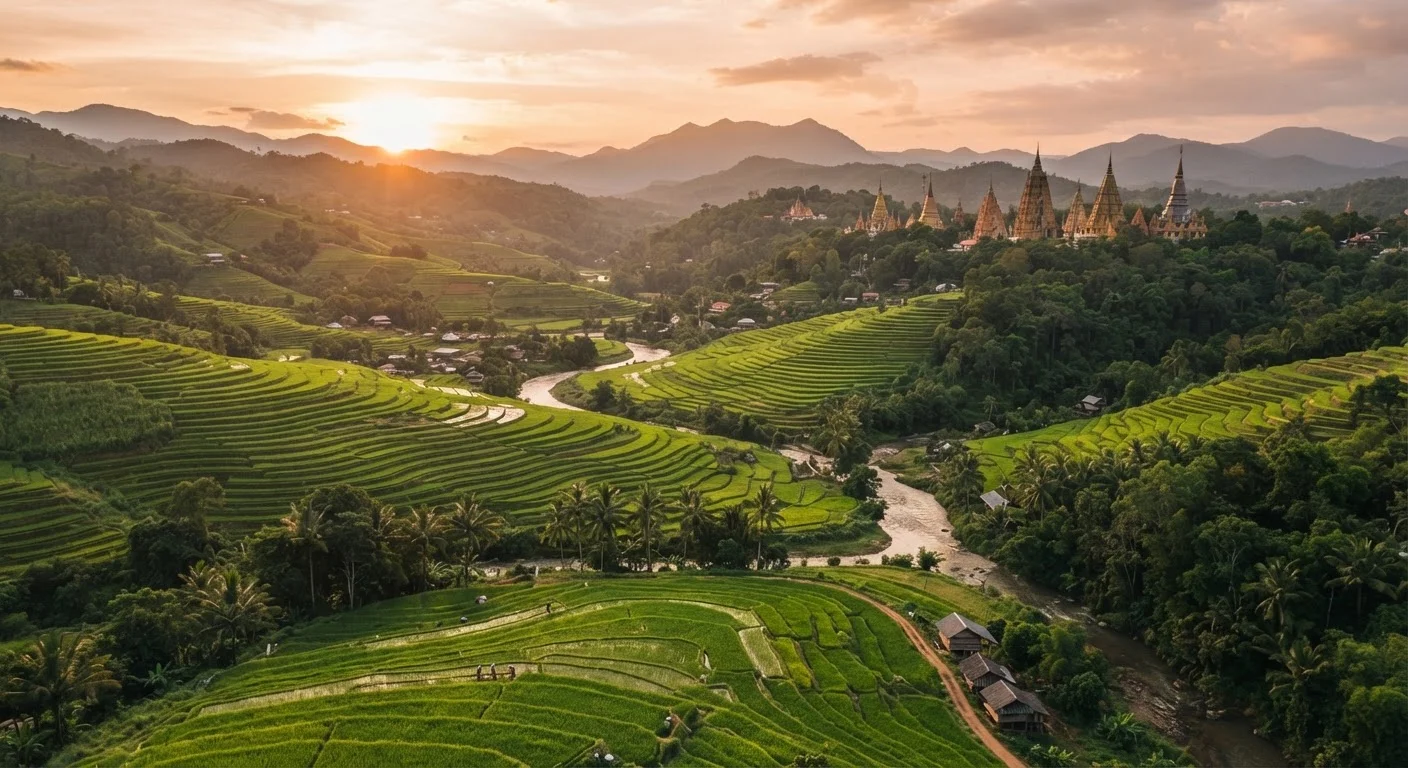
Understanding the Region
Southeast Asia is not a single destination - it is a collection of eleven sovereign nations spanning a landmass roughly the size of the continental United States. Thailand, Vietnam, Cambodia, Laos, Myanmar, Malaysia, Indonesia, the Philippines, Singapore, Brunei, and Timor-Leste each have distinct governments, currencies, languages, religious traditions, and traveler infrastructure. Planning a trip here as if it were one homogeneous place is the most common mistake first-time visitors make.
The region divides loosely into mainland Southeast Asia (Thailand, Vietnam, Cambodia, Laos, Myanmar) and maritime Southeast Asia (Indonesia, the Philippines, Malaysia, Singapore, Brunei). Mainland destinations are generally more accessible overland; maritime destinations involve more ferry or flight connections. Understanding this geography early shapes every subsequent planning decision.
If you're new to international trip planning, start with the fundamentals of building a trip from scratch before diving into regional specifics.
Visas and Entry Requirements
Visa rules across Southeast Asia vary by both destination country and traveler nationality. Americans, for example, generally receive visa-on-arrival or visa-free entry to Thailand (up to 30 days by air, longer for some arrival types), Vietnam (up to 45 days visa-free as of recent policy changes), and Cambodia (visa-on-arrival available). Rules for Myanmar, Laos, and Indonesia vary and have changed in recent years.
Always Verify Visa and Entry Rules Officially
Entry requirements, visa fees, permitted stay durations, and health documentation rules can change without much advance notice. Always verify current requirements through the official embassy or consulate website of each destination country and check the U.S. Department of State's travel information pages before finalizing plans. Do not rely solely on third-party travel blogs for this information. Overstaying a visa in any Southeast Asian country carries real legal consequences, including fines, detention, or deportation.
Entry requirements, visa fees, permitted stay durations, and health documentation rules can change without much advance notice. Always verify current requirements through the official embassy or consulate website of each destination country and check the U.S. Department of State's travel information pages before finalizing plans. Do not rely solely on third-party travel blogs for this information.
Overstaying a visa in any Southeast Asian country carries real legal consequences, including fines, detention, or deportation. Track your permitted days carefully.
Health Considerations Before You Go
Health preparation is one of the most important - and most commonly delayed - parts of planning a Southeast Asia trip. The U.S. Centers for Disease Control and Prevention (CDC) maintains destination-specific health guidance that covers recommended and required vaccinations, disease risks (including dengue fever, malaria in some areas, and others), food and water safety, and more.
Schedule an appointment with a travel medicine clinic or your primary care provider at least four to six weeks before departure. Some vaccine series require multiple doses over several weeks. Malaria prophylaxis, if recommended for your specific destinations, also requires lead time. Travelers should obtain comprehensive travel health insurance that covers medical evacuation - medical facilities vary enormously across the region, and evacuation costs without insurance can be financially catastrophic.
This article provides general travel information only and is not a substitute for personalized medical advice. Consult a qualified healthcare provider for guidance specific to your health history and itinerary.
Seasonality and When to Travel
One of the most consequential planning variables in Southeast Asia is weather - and there is no single "best time to visit" that applies to the whole region. The mainland and maritime zones follow different monsoon patterns, and even within a single country, climate can vary dramatically between north and south.
As a general framework: the Gulf of Thailand coast (Koh Samui, Koh Phangan) experiences heavy rain from October through December, while the Andaman coast (Krabi, Phuket) is driest from November through April. Vietnam's narrow geography means the north, central, and south regions have distinct wet seasons that don't overlap. Indonesia's 17,000 islands span different weather patterns entirely.
Seasonality affects not just weather, but crowd levels, pricing, and access to specific experiences - read up on those tradeoffs before committing to dates. Shoulder season travel often provides a practical middle ground: fewer crowds than peak season with generally manageable weather.
When booking flights between Southeast Asian countries, check that your routing doesn't require an unintended transit visa - some connection hubs outside the region (like Taipei or Tokyo) may require one depending on your nationality.
Visa requirements for transit passengers are frequently overlooked and can result in denied boarding or unexpected costs at the airport.
Keep a digital and physical copy of every key document: passport bio page, visa approvals, travel insurance policy number, and emergency contacts. Store the digital copies in a cloud service accessible without your phone.
Lost or stolen documents are among the most disruptive travel emergencies; having redundant copies dramatically speeds up resolution with embassies and insurers.
Getting Around the Region
Transportation within Southeast Asia ranges from seamless to genuinely challenging depending on where you're going. Budget airlines - several regional carriers operate dense networks - make hopping between major hubs practical and often affordable. Overnight sleeper trains between cities in Thailand and Vietnam are a comfortable overland alternative that saves on accommodation costs for one night.
Island destinations in the Philippines and Indonesia require ferries or domestic flights; transit times between islands are frequently underestimated by travelers looking at maps. A 200-kilometer distance in the Philippines can involve a domestic flight plus a two-hour ferry and still take most of a day. Build realistic travel buffers into your schedule.
Ride-hailing apps (Grab dominates much of mainland Southeast Asia) work reliably in cities. In rural areas, motorbike taxis and tuk-tuks remain common. If you plan to rent a motorbike - a popular choice in Vietnam and Thailand - verify your travel insurance covers it, carry an appropriate license, and wear a helmet consistently.
Building a Realistic Itinerary
The most common itinerary mistake in Southeast Asia is trying to cover too much. A two-week trip spanning five countries sounds appealing but often results in long transit days, surface-level experiences, and traveler fatigue. A focused itinerary - two or three destinations explored at depth - typically produces more satisfying travel.
A well-structured itinerary balances movement with rest and accounts for travel days honestly. If you're traveling with others, group trip logistics add coordination complexity that solo travelers don't face - factor that in when setting a pace. For broader travel guidance applicable across your whole trip, the Travel Tips hub covers safety, packing, and on-the-road problem-solving.
Whatever itinerary you build, hold some days loosely. Southeast Asia rewards flexibility - an unexpected festival, a well-reviewed guesthouse in a smaller town, or a weather delay can all reshape a trip in worthwhile ways. Planning thoroughly and then traveling with some openness is the balance most experienced regional travelers describe.
The content on this site is provided for informational purposes only and should not be considered a substitute for professional advice. While we strive to provide accurate and up-to-date information, we make no guarantees regarding its completeness or accuracy. Always consult a qualified professional for advice specific to your circumstances before making any decisions.