

Why Misconceptions About Africa Persist
Few continents are as thoroughly misrepresented in popular travel culture as Africa. Decades of media coverage focused narrowly on conflict, poverty, or wildlife documentaries have compressed an enormous, diverse continent into a handful of images that don't come close to capturing the full picture. The result: travelers either romanticize it as an untouched wilderness or avoid it entirely out of unfounded fear.
Africa is the world's second-largest continent, home to 54 recognized countries, more than 2,000 languages, and ecosystems ranging from Saharan desert to equatorial rainforest to Mediterranean coastline. Treating it as a single destination - the way someone might research a trip to, say, Denmark - is a planning error that leads to poor decisions before a traveler even books a flight.
The myth-and-fact pairs below address the most common misconceptions our editorial team hears from readers who are considering or actively planning travel to African destinations. The goal isn't to oversell - every destination has real challenges - but to replace vague assumptions with accurate, country-specific thinking. For a broader look at how short visits can distort impressions of any place, see our piece on how tourist impressions often miss the point.
Common Myths - and What's Actually True
These paired corrections cover the misconceptions that most frequently derail trip planning. Read them as starting points, not definitive guides - conditions vary widely across countries and change over time. Always verify entry requirements, health advisories, and safety conditions through official government travel portals before you go.
Myth
Africa is one country - or at least one kind of place. You research "Africa" the same way you'd research a single destination.
Fact
Africa is a continent containing 54 sovereign nations, each with its own government, visa rules, currency, language, culture, and travel conditions.
This is the foundational error from which most other misconceptions flow. Egypt and Ethiopia, Senegal and South Africa, Rwanda and Nigeria - these countries are as different from one another as Portugal is from Pakistan. Climate, infrastructure, political stability, tourism development, and local customs all vary enormously. Country-specific research isn't just helpful; it's the only approach that produces a workable travel plan.
Myth
African cities are underdeveloped and lack the infrastructure that international travelers expect.
Fact
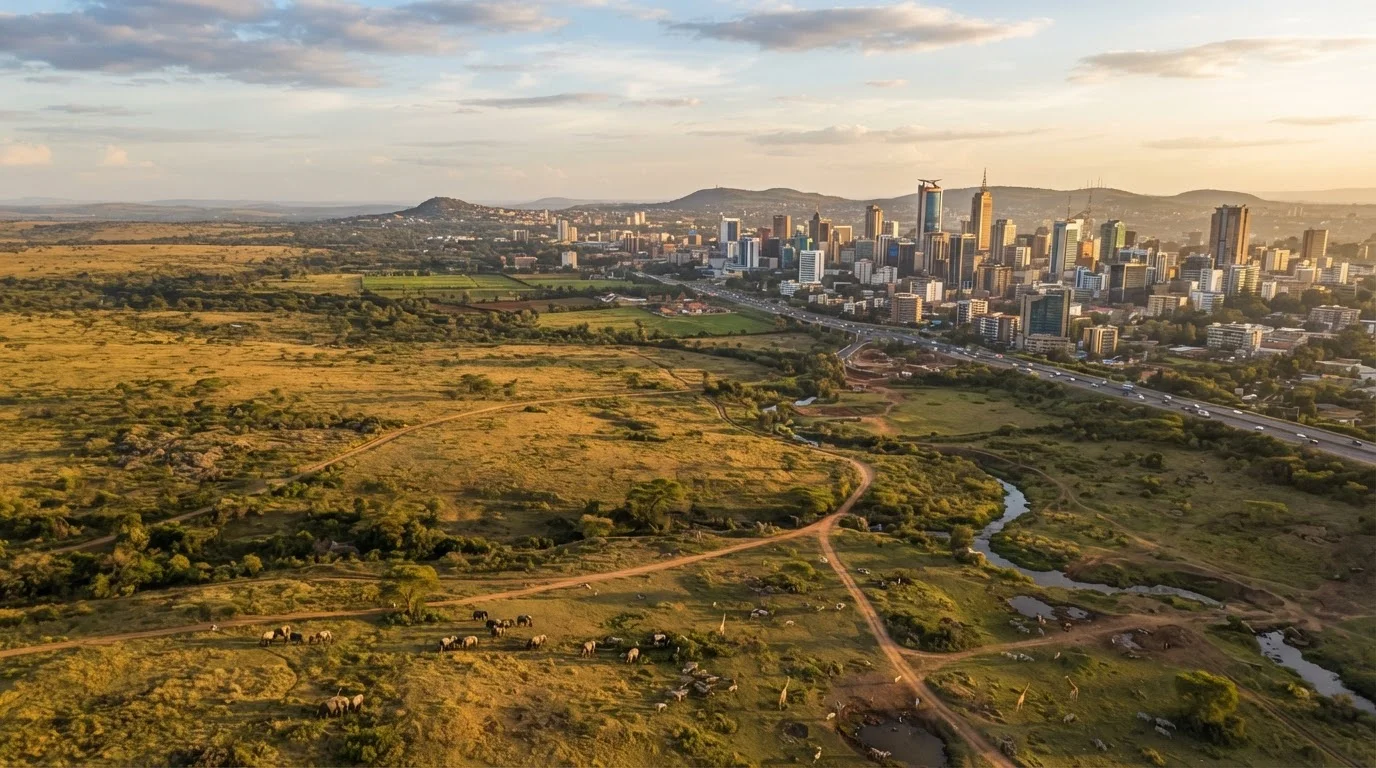
Many African cities - including Nairobi, Cape Town, Accra, Kigali, and Lagos - have modern airports, reliable urban transport, international hospitals, and sophisticated hospitality infrastructure.
Kigali, Rwanda is frequently cited in urban planning discussions for its cleanliness, road quality, and public safety. Cape Town's international airport handles millions of passengers annually. Nairobi hosts the African headquarters of dozens of multinational organizations. That said, infrastructure quality varies enormously between and within countries, and rural and remote areas in many nations present genuine logistical challenges. Research the specific cities and regions on your itinerary - not the continent as a whole.
Myth
Africa is uniformly dangerous, and the safety risks make it unsuitable for most tourists.
Fact
Safety conditions range from very stable and tourist-friendly to genuinely high-risk, depending on the specific country and region - just as they do on every other continent.
Countries like Botswana, Rwanda, Namibia, and Mauritius consistently appear in international safety and tourism indexes as low-risk, well-managed destinations. Others have active conflict zones, elevated crime in specific urban areas, or ongoing political instability. The error is generalizing: a U.S. State Department travel advisory for one country does not apply to its neighbors. Check advisories at the country and regional level, and apply the same geographic nuance you'd use when evaluating safety in any other part of the world.
Myth
A trip to Africa means a safari. That's the main - or only - reason to go.
Fact
Wildlife safaris are one category of African travel experience among many. The continent offers ancient historical sites, world-class beaches, vibrant urban culture, mountain trekking, and culinary tourism.
Morocco's medinas and Atlas Mountains, the Swahili coast beaches of Zanzibar, Egypt's archaeological sites, the wineries of South Africa's Western Cape, and the mountain gorilla treks of Uganda represent the range of what's available. Travelers who only associate Africa with safari are likely to overlook destinations that might suit their actual interests far better. Define what kind of travel experience you want first, then identify which African country or region delivers it.
Myth
You need a long list of vaccinations and will likely get seriously ill traveling in Africa.
Fact
Health precautions vary by country and region. Some destinations require few additional preparations beyond routine vaccinations; others involve specific requirements or recommendations travelers must plan for well in advance.
Malaria risk, for example, is high in some sub-Saharan countries, low or absent in others, and zero in most of North Africa. Yellow fever vaccination is required for entry to certain countries, while others don't require it at all. The appropriate step is consulting a travel medicine clinic with your specific itinerary - not assuming worst-case conditions apply everywhere. Schedule this appointment at least four to six weeks before travel, as some vaccines require multiple doses or time to become effective.
Myth
Africa is cheap to travel - it's a developing continent, so costs should be low.
Fact
Travel costs vary enormously across African destinations. Some countries and itinerary types are expensive by any international standard.
Private safari lodges in Botswana, Tanzania's Serengeti, or South Africa's private game reserves can cost several hundred to over a thousand U.S. dollars per night. Even mid-range travel in some East African countries is not particularly inexpensive when internal flights, park fees, and guided access are factored in. Other destinations - Morocco, parts of Ethiopia, Egypt - can be genuinely affordable. Budget by country and itinerary type, not by continental assumption.
Once you've corrected these foundational assumptions, the practical work of trip planning begins. The Travel Tips hub is a good place to continue building a country-specific research checklist.
Planning an Africa Trip the Right Way
The single most important shift in mindset is this: stop researching "Africa" and start researching the specific country - or countries - you actually intend to visit. Morocco and Mozambique share a continent and almost nothing else. Kenya's safari infrastructure differs substantially from Rwanda's. South Africa's visa process is not the same as Tanzania's.
A few practical principles apply broadly, however. First, consult your country's official travel advisory system (for U.S. travelers, that's travel.state.gov) for country-level safety ratings and any current alerts. Second, schedule a pre-travel appointment with a travel medicine clinic at least four to six weeks before departure - required and recommended vaccinations vary by destination and some require time to take effect. Third, review your travel insurance carefully; many standard policies have exclusions that matter in remote destinations. Our article on travel insurance myths explains what travelers commonly misread in their policies.
Finally, remember that over-planning an itinerary is its own hazard. Long overland legs, multiple internal flights, and packed day schedules leave little room for the unexpected - and the unexpected is common in any international travel. See why travel plans fall apart for a look at the habits that keep itineraries intact.
This article provides general travel information and education only. Entry requirements, health precautions, and safety conditions change frequently. Always verify current details through your government's official travel advisory service, the destination country's embassy, and qualified healthcare providers before traveling.
The content on this site is provided for informational purposes only and should not be considered a substitute for professional advice. While we strive to provide accurate and up-to-date information, we make no guarantees regarding its completeness or accuracy. Always consult a qualified professional for advice specific to your circumstances before making any decisions.