

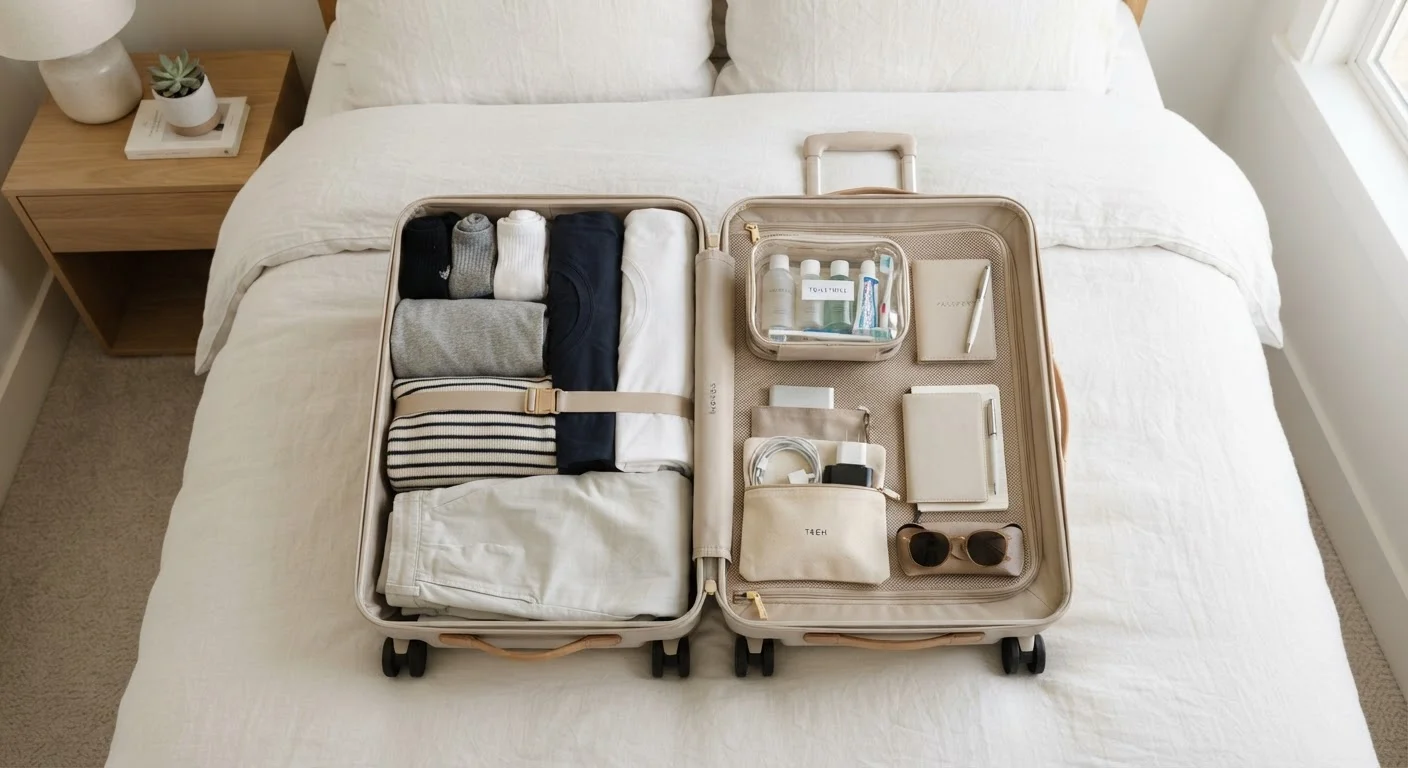
Why carry-on only works for two-week trips
The instinct to check a bag for a two-week trip is understandable - two weeks feels long, and long trips feel like they require more stuff. In practice, the opposite logic applies: the longer you travel, the more access you'll have to laundry facilities, pharmacies, and local stores that can supply anything you forget or run out of. Carry-on travel eliminates baggage fees, removes the risk of lost luggage, and gives you the freedom to move quickly through airports and between cities without waiting at carousels or managing oversized luggage on public transit.
The key insight is that two weeks of travel doesn't require two weeks of clothing - it requires a week of clothing and one mid-trip laundry session. Once you accept that premise, the logistics of fitting everything into a carry-on become much more manageable. Understanding the broader principles behind smart packing decisions can help: what you bring affects your mobility and stress throughout the trip.
What you will need
What you'll need before you start packing
Effective packing begins before any item touches your bag. Review your itinerary carefully: What is the temperature range at your destination? Will you need formal clothing, hiking gear, or beach wear? Are you moving between multiple cities, or based in one place? The answers directly determine your clothing system. A single-climate trip is easier to pack for than a multi-climate itinerary - the latter may require layering strategies rather than extra clothing categories.
Gather everything you think you want to bring and lay it on your bed before packing a single item. This visual audit is the most effective way to identify redundancies. Then cut 20% of what's in front of you before you start. Most travelers find they could cut even more.
Packing Cubes
Organize clothing by category and compress contents to reclaim usable space inside the bag.
Luggage Scale
Confirm your packed bag meets airline weight limits before you reach the check-in counter.
TSA-Approved Quart-Sized Toiletry Bag
Holds all carry-on liquids in a format accepted at security checkpoints.
Compression Packing Bags
Reduce the volume of bulky items like sweaters or jackets by removing excess air.
Slim Travel Wallet or Document Organizer
Keeps passport, boarding passes, and cards accessible without adding bulk to your bag.
Step-by-step: packing your carry-on
Follow these steps in order. Each builds on the previous, and skipping steps - especially the wardrobe planning and weight check - is where most travelers run into trouble.
Choose the right bag for the job
Not all carry-ons are created equal. Most major U.S. carriers allow a carry-on bag up to approximately 22 x 14 x 9 inches, but dimensions vary - confirm your airline's specific limits. Look for a bag with structured sides (which protects contents but compresses less) or a soft-shell design (more flexible, often fits tighter overhead bins). A bag with an external laptop sleeve or front-access pockets reduces rummaging at security. If your itinerary involves budget or regional carriers, their limits may be smaller; plan accordingly.
Plan your wardrobe as a system, not a collection
The biggest mistake travelers make is packing individual outfits rather than a coordinated wardrobe. Choose a palette of two or three neutral base colors - navy, grey, black, or olive - and pack only pieces that mix and match freely. For a two-week trip, a working formula is: 5-6 tops, 3 bottoms, 1 dress or versatile layer, and 1 lightweight jacket or cardigan. That creates well over a week of distinct combinations before you need to repeat. Plan for laundry mid-trip using a hotel sink or a local laundromat - this is the single biggest unlock for packing light on longer trips.
Fabric choice matters. Merino wool and synthetic-blend travel fabrics resist odor, dry quickly, and wrinkle less than cotton. They're worth the investment for multi-week travel. See how fabric and versatility affect every packing decision for a deeper look at the principles behind smart clothing choices.
Handle shoes and bulky items first
Shoes are the most space-inefficient items in any bag. Limit yourself to three pairs: one for walking (worn on travel days), one versatile casual pair, and one that covers any specific activity or dress requirement on your trip. Pack shoes sole-to-sole and place them at the bottom or back of the bag - the firmest, flattest section. Stuff socks or small items inside shoes to use dead space. If you're bringing a jacket too bulky to pack, wear it on the plane.
Use packing cubes and roll your clothes
Packing cubes bring order to an otherwise chaotic bag and let you locate items without unpacking everything. Assign cubes by category: tops in one, bottoms in another, underwear and socks in a third. Rolling clothing (rather than folding flat) reduces wrinkles and lets you see everything at a glance when you open a cube. Heavier, denser items like jeans belong in the main cavity against the bag's back panel; lighter layers go toward the top. Use any remaining gaps - around shoes, between cubes - for socks, accessories, or a foldable day bag.
Pack toiletries strategically
Plan your toiletry kit around the 3-1-1 liquids rule if flying through U.S. or European security. Decant products into small refillable containers rather than bringing full-size bottles. Better still, switch to solid alternatives where possible: shampoo bars, conditioner bars, solid sunscreen, and toothpaste tablets eliminate most liquid concerns entirely and last longer than their bottled equivalents. Pack the toiletry bag in an accessible outer pocket so it can be removed quickly at security. For a two-week trip, consider purchasing bulky items like shampoo or body wash at your destination to avoid packing them at all.
Manage electronics and documents
Electronics are where weight accumulates invisibly. Audit every cable, adapter, and device before it goes into the bag. A single multi-port USB-C charger often replaces three separate chargers. Pack your laptop or tablet in the bag's dedicated sleeve or a padded packing cube - not loose where it can shift and damage other contents. Keep your passport, travel insurance documents, airline confirmation, and any visa paperwork in a slim organizer in your personal item (the under-seat bag), not buried in your carry-on overhead. For a full departure-day checklist mindset, this trip planning primer covers organizing documents alongside logistics.
Do a final weight check and edit ruthlessly
Once packed, weigh your bag. If it exceeds your airline's carry-on weight limit, identify the heaviest non-essential items first - extra shoes, redundant clothing, oversized electronics accessories. A useful editing rule: if you haven't thought about an item since you packed it, it probably doesn't need to come. Aim for a bag light enough that you can lift it overhead comfortably and carry it for 20 minutes without strain. If you're undecided about the carry-on-only approach, the honest trade-offs between carry-on and checked baggage are worth reviewing before you commit.
Test Your Pack Before Travel Day
At least two days before departure, pack your bag fully and carry it around your home for 20 minutes. This reveals whether the bag is too heavy for comfort and gives you time to remove items without the pressure of an imminent flight. A bag that strains your shoulder at home will be miserable across a busy airport.
Verify Carry-On Rules Before You Fly
Carry-on size and weight limits vary significantly between airlines and even between fare classes on the same carrier. Budget carriers in particular often enforce strict overhead bin dimensions. Always check the specific airline's policy before your departure date - and verify again if your itinerary involves a connecting flight on a different carrier.
Staying organized throughout your trip
A well-packed bag is only useful if it stays organized for the duration of your trip. Make a habit of repacking your packing cubes each morning rather than letting the bag become a loose pile. After laundry, fold and re-roll items before returning them to their cubes. Keep your toiletry bag in the same spot in your bag every time - this saves meaningful time at security checkpoints across multiple flights.
If you're combining a carry-on trip with a road trip segment, the same discipline applies to your vehicle. See how to load a car efficiently and safely for guidance on that transition. And if this is your first major trip, a ground-up planning primer can help you connect packing decisions to the broader logistics of organizing travel.
Liquids Rules Apply at Every Security Checkpoint
TSA regulations in the United States limit liquids in carry-on bags to containers of 3.4 oz (100ml) or less, all fitting in a single quart-sized clear bag. International checkpoints may apply similar or stricter rules. Solid toiletry alternatives - shampoo bars, solid deodorant, toothpaste tablets - can help you avoid this constraint entirely on longer trips.
The content on this site is provided for informational purposes only and should not be considered a substitute for professional advice. While we strive to provide accurate and up-to-date information, we make no guarantees regarding its completeness or accuracy. Always consult a qualified professional for advice specific to your circumstances before making any decisions.