

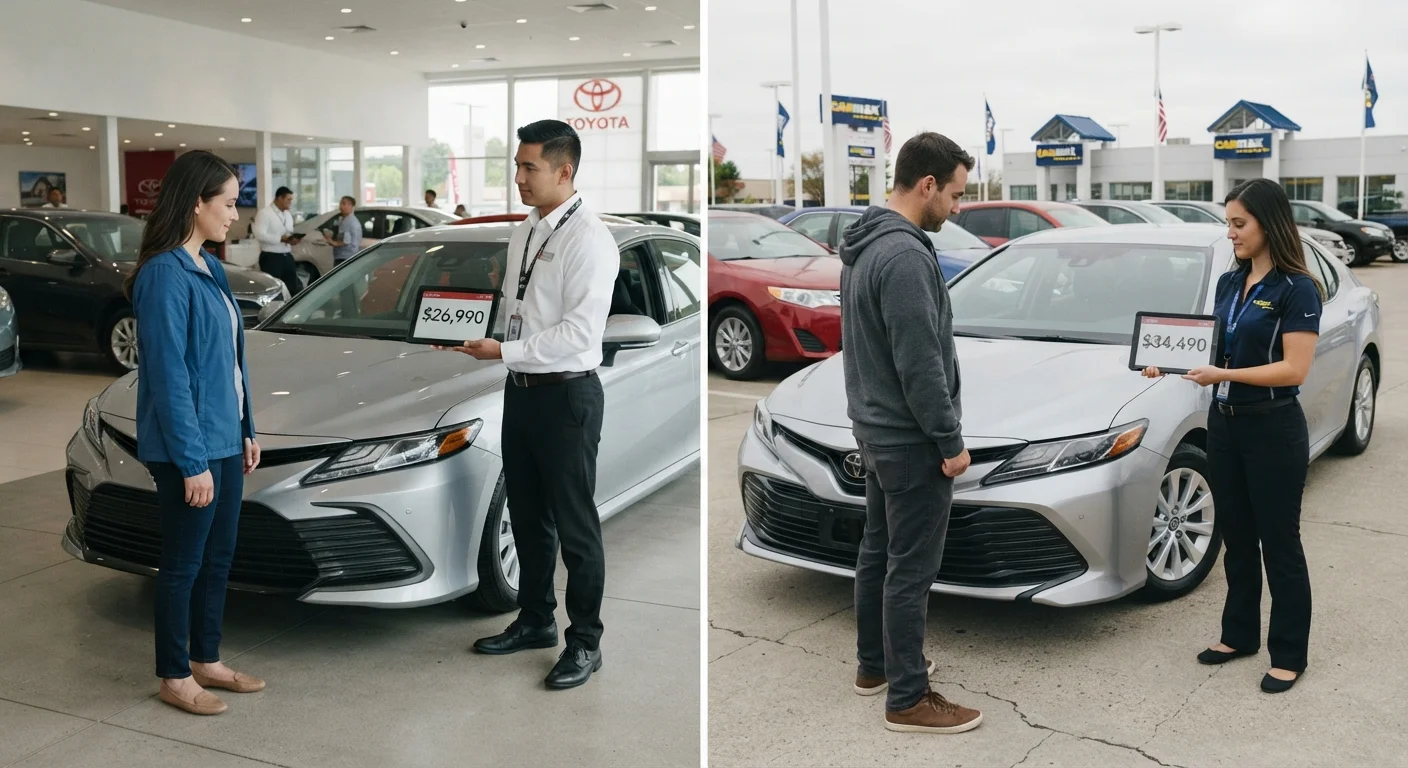
The Myth of a Single "True" Trade-In Value
Many drivers assume their vehicle has one correct trade-in value - a number a dealership either meets or doesn't. In reality, no such universal figure exists. Trade-in offers are working estimates built from several variables, and those variables produce genuinely different outcomes at different lots.
Reference tools like Kelley Blue Book or Edmunds provide useful ballpark ranges, but they're starting points, not binding prices. Dealers use their own appraisal processes, shaped by proprietary cost models and real-time inventory data. Understanding how depreciation affects your car's value over time is foundational context here - a vehicle's market decline doesn't follow a neat straight line, and dealers price accordingly.
$1,000-$3,000+
Typical trade-in quote variation for the same vehicle
Industry appraisers and consumer advocates commonly cite this range as the spread buyers can expect between the lowest and highest offers on a given vehicle in a local market.
3+
Minimum quotes recommended before accepting an offer
Consumer finance guidance consistently suggests obtaining at least three independent appraisals to establish a meaningful baseline and identify outlier offers.
15-25%
Typical dealer margin between trade-in offer and resale price
Dealers generally price used vehicles for retail resale at a margin above what they paid at trade-in or auction, reflecting reconditioning costs, overhead, and profit targets.
The Key Factors Driving Quote Variation
Several specific forces explain why two dealers examining the same car can arrive at figures hundreds or even thousands of dollars apart.
Inventory Needs
A dealer who already has five similar vehicles sitting on their used lot has little incentive to pay a premium for a sixth. Conversely, a dealer running low on a popular model type may offer above-market to acquire stock quickly. This internal demand signal is invisible to you as a seller, but it's one of the most powerful factors at work.
Reconditioning Cost Estimates
Before reselling any trade-in, dealers invest in reconditioning: detailing, mechanical inspection, paint correction, and repairs. Different service departments estimate these costs differently based on their labor rates, standards, and supplier relationships. A scratched bumper might cost one dealer $200 to fix and another $450 - and that difference comes directly out of your quote.
Local Market Demand
A fuel-efficient compact commands more interest in a dense metro area than in a rural region where full-size trucks dominate. Dealers price their offers to reflect what they're confident they can resell locally. Regional demand patterns are real and measurable, and they affect offers meaningfully.
Wholesale Auction Floor Prices
When a dealer decides not to retail a trade-in, it goes to wholesale auction. That floor sets a hard lower bound on what they'll offer you - they won't pay more for your car than they can recover at auction. Auction prices fluctuate with broader used-car market conditions, meaning your car's quote can shift week to week even if nothing about the vehicle changes.
How Dealers Structure the Conversation
One of the more common dynamics in trade-in negotiations involves combining the trade-in discussion with the new vehicle purchase into a single monthly payment conversation. This packaging can make it genuinely difficult to evaluate whether your trade-in offer is competitive, because the numbers blur together.
Common negotiation assumptions can quietly work against you in exactly this way - accepting a bundled presentation at face value makes it harder to isolate what you're actually receiving for your car. Requesting separate, written figures for the trade-in value and the new car price is a reasonable and effective approach.
It's also worth noting that dealer financing arrangements add another layer to this complexity. When financing, monthly payment figures can shift in ways that mask whether the trade-in component is competitive. Keeping all three variables - trade-in value, new car price, and financing terms - distinct and legible protects your ability to assess each on its own merits.
Approaching Trade-In Quotes More Effectively
A few practical habits can significantly change the quality of the outcome when trading in a vehicle.
- Collect multiple offers before committing. Visiting several dealerships or using online appraisal platforms to generate competing offers creates real leverage. Dealers are aware that you can walk.
- Document your vehicle's condition and service history. A complete maintenance record reduces a dealer's uncertainty about reconditioning needs, which can soften downward adjustments to their offer.
- Time your trade-in strategically. Certain vehicle types are more in demand at specific times of year. Trucks and SUVs often see stronger demand heading into winter in colder regions; convertibles tend to peak in spring. These seasonal patterns are general tendencies, not guarantees, but they're worth considering.
- Separate your trade from your purchase negotiation. Establishing a standalone trade-in figure before introducing your intended new vehicle purchase keeps both negotiations cleaner and more transparent.
It also pays to be aware of how dealer add-ons can affect the overall value of a deal. When a trade-in offer seems unusually generous, it's sometimes offset elsewhere in the transaction.
Frequently Asked Questions
Each dealership factors in its own inventory needs, local market demand, and estimated reconditioning costs, all of which vary. One dealer may desperately need your model for their used lot while another already has several in stock. These internal dynamics directly influence how much they're willing to offer.
Variation of several hundred to a few thousand dollars for the same vehicle is common. High-demand vehicles in tight markets can see even wider spreads. The best way to gauge the range is to collect at least three quotes before making a decision.
Yes, significantly. Dealers visually inspect your vehicle and estimate what it will cost to prepare it for resale - detailing, mechanical repairs, cosmetic fixes. Higher estimated reconditioning costs reduce the offer, and different appraisers may reach different cost conclusions.
Generally, yes. Negotiating them together can obscure whether you're actually getting a good deal on either. Dealers can appear to offer a higher trade-in value while simultaneously adjusting the new car price in the opposite direction. Separating the two transactions gives you a clearer picture.
Using tools like national used-car platforms or third-party appraisal services to establish a baseline value is a practical step. It won't lock any dealer into a specific number, but it gives you a reference point to evaluate whether a given offer is reasonable.
Absolutely. Used vehicle market conditions shift with fuel prices, seasonal demand, interest rates, and broader economic factors. A car that commands a strong trade-in value today may be worth noticeably less in six months if market conditions change.
The content on this site is provided for informational purposes only and should not be considered a substitute for professional advice. While we strive to provide accurate and up-to-date information, we make no guarantees regarding its completeness or accuracy. Always consult a qualified professional for advice specific to your circumstances before making any decisions.