

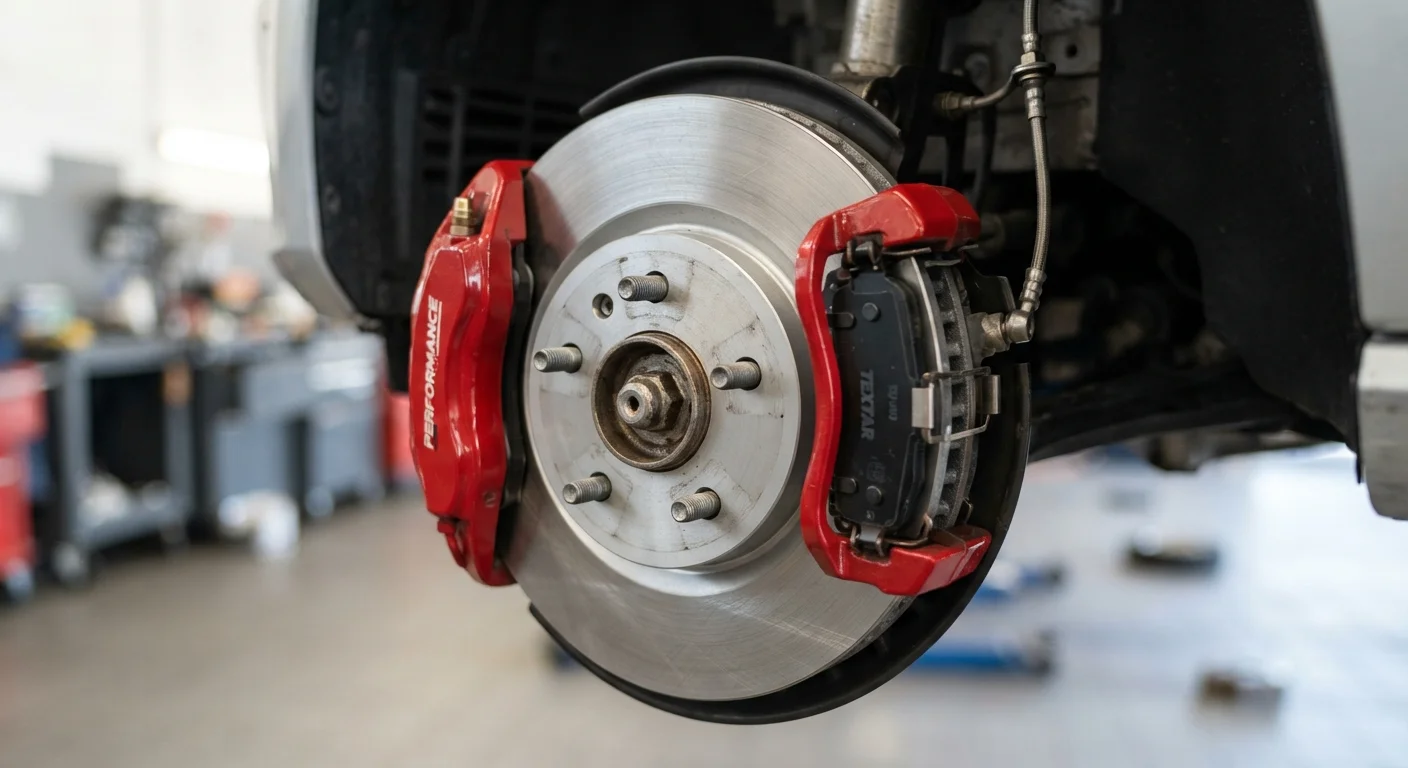
The Three Core Components of Your Brake System
Every time you press the brake pedal, three components do the physical work of stopping your vehicle: the brake pads, the rotors, and the calipers. Understanding what each one does makes it easier to recognize when something's wrong and communicate clearly with a mechanic.
Brake pads are flat friction materials that press against the rotor surface. They're designed to wear gradually over time - they are, intentionally, the sacrificial part of the system. Most pads include a small metal wear indicator that produces a high-pitched squeal when the pad wears thin, alerting you to schedule service.
Rotors (also called brake discs) are the large metal discs that spin with your wheels. The pad clamps onto the rotor surface to create the friction that slows the wheel. Rotors must absorb and dissipate a tremendous amount of heat. Over thousands of stops, they can develop surface rust, scoring, or warping - the last of which causes a noticeable pulsing or vibration in the pedal.
Calipers are the hydraulic clamps that hold the brake pads and squeeze them against the rotor when you apply the brakes. Most modern vehicles use floating calipers with a single piston, though performance vehicles often use fixed multi-piston designs for greater clamping force. A seized caliper - one that doesn't release fully - can cause a wheel to drag and accelerate pad and rotor wear on one side.
How Hydraulics Turn Pedal Pressure Into Stopping Force
Your braking system is hydraulic, meaning it uses fluid to transmit force. When you press the brake pedal, you're compressing a component called the master cylinder, which pushes brake fluid through a network of steel lines and rubber hoses toward each wheel's caliper. The fluid pressure forces the caliper pistons outward, squeezing the pads against the rotor.
Brake fluid is specially formulated to withstand extreme heat without boiling - a critical property, since boiling fluid produces compressible vapor bubbles that cause a dangerous loss of pedal firmness. Over time, brake fluid absorbs moisture from the air, which lowers its boiling point. This is one reason periodic fluid inspection matters. For more on what your car's fluids do and when to check them, see our guide to car fluids.
Check Your Brake Fluid Regularly
Most vehicles have a translucent brake fluid reservoir near the firewall in the engine bay, with MIN and MAX markings. Fluid that looks dark brown or black has likely absorbed significant moisture and may benefit from professional inspection. Always consult your owner's manual before adding fluid - using the wrong type can damage seals and compromise braking.
The entire hydraulic chain - from pedal to caliper - must be airtight. Air is compressible; brake fluid is not. Even a small air bubble in the lines reduces the pressure reaching your calipers, which is why a spongy or soft pedal should always be investigated promptly.
Warning Signs Every Driver Should Recognize
Brake problems rarely appear without warning. Learning to identify the early signs gives you time to address issues before they become expensive or dangerous.
- Squealing or squeaking: Usually the wear indicator making contact with the rotor. Not always an emergency, but a signal that pad inspection is due.
- Grinding: Metal-on-metal contact, meaning the pad is fully worn. This damages the rotor and requires prompt attention.
- Vibration or pulsing in the pedal: A common sign of warped rotors, which no longer have a perfectly flat surface for the pads to grip.
- Pulling to one side during braking: Can indicate uneven pad wear, a stuck caliper, or a brake line issue on one side of the vehicle.
- Soft or spongy pedal: Often points to air in the brake lines or low/contaminated brake fluid.
- Vehicle taking longer to stop: Any noticeable increase in stopping distance is a serious concern requiring immediate inspection.
Because brakes are safety-critical, it's worth having them inspected at least annually - or any time a warning sign appears. If you're planning a long drive, a brake check should be part of your preparation. See vehicle checks to make before a road trip for a broader pre-trip checklist.
Deferred brake maintenance doesn't just create risk - it compounds cost. Ignoring worn pads leads to rotor damage, which turns an inexpensive service into a significantly more involved repair. Skipping routine maintenance consistently follows this same pattern across nearly every vehicle system.
Frequently Asked Questions
Brake pad lifespan varies based on driving habits, vehicle weight, and pad material - but many manufacturers suggest inspection around every 20,000 to 30,000 miles. Your owner's manual will list the interval recommended for your specific vehicle. A mechanic can also measure remaining pad thickness during routine service.
Grinding typically means brake pads have worn down to the metal backing plate, which is now contacting the rotor directly. This damages the rotor and significantly reduces stopping power. It's a sign the vehicle needs brake service as soon as possible.
Driving on severely worn brake pads is dangerous and can lead to rotor damage, longer stopping distances, and potential brake failure. If you notice warning signs like grinding, squealing, or a soft pedal, have the system inspected before continuing to drive regularly.
A soft or spongy pedal is often caused by air in the brake lines or low brake fluid. It can also indicate a failing master cylinder. This symptom warrants immediate attention from a qualified mechanic, as it directly affects your ability to stop.
Not always - it depends on rotor thickness and condition. If a rotor is above its minimum thickness specification and shows no warping or deep scoring, it may be resurfaced rather than replaced. A mechanic can measure this during inspection.
Brake fade is a temporary reduction in braking power that occurs when components overheat, often during repeated hard stops or prolonged downhill braking. The friction materials in the pads become less effective as temperatures rise. Allowing brakes to cool and using engine braking on long descents can help reduce the risk.
The content on this site is provided for informational purposes only and should not be considered a substitute for professional advice. While we strive to provide accurate and up-to-date information, we make no guarantees regarding its completeness or accuracy. Always consult a qualified professional for advice specific to your circumstances before making any decisions.