

Why Battery Failures Catch Drivers Off Guard
A car battery doesn't announce its retirement. One morning everything seems fine; the next, you're sitting in a parking lot with a car that won't start. The frustrating truth is that most battery failures are preceded by weeks - sometimes months - of subtle warning signs that are easy to overlook or misattribute to something else.
Understanding what those signs look like puts you ahead of the problem. Unlike many mechanical issues, battery trouble is something everyday drivers can spot without special training. You just need to know what to pay attention to. The list below covers the most common indicators that your battery is on its way out - and what each one actually means for your car.
Before diving in, it's worth noting that some of these symptoms can also point to a failing alternator (the component that charges the battery while you drive) or corroded wiring. When in doubt, a qualified mechanic can run a proper diagnosis. And if you want to get into the habit of catching problems early, our DIY car check guide is a solid place to start.
The Engine Cranks Slowly Before Starting
When you turn the key or press the start button, the starter motor draws a large burst of power from the battery. If that crank sounds labored - slower than usual, almost like the engine is reluctant to turn over - the battery may not be delivering enough power to meet the demand.
This is often the first symptom drivers notice, and it tends to be most pronounced on cold mornings, since low temperatures reduce a battery's effective output. A single slow start might mean nothing, but a pattern of sluggish cranking is a dependable early warning.
A labored crank on cold mornings is often the first dependable sign of battery decline.
Your Headlights Dim When Idling
At idle, the engine runs slowly, and the alternator produces less electrical output. A healthy battery compensates by supplementing the car's power needs. A weakening battery struggles to do this, which is why you might notice your headlights appear noticeably dimmer when you're stopped at a light compared to when you're driving at speed.
If the lights brighten again as you rev the engine, that contrast is a useful clue that the battery isn't holding charge effectively.
Headlights that brighten as you rev the engine point directly to a battery struggling at idle.
Electrical Accessories Behave Erratically
Modern vehicles run a significant number of systems on electrical power - power windows, heated seats, infotainment displays, backup cameras, and more. When the battery weakens, these systems may respond more slowly, reset unexpectedly, or behave inconsistently in ways that seem unrelated to the battery.
Sluggish power windows or a radio that resets to default settings after every drive are worth noting, particularly if they appear alongside other symptoms on this list.
Sluggish power windows and randomly resetting electronics often trace back to a struggling battery.
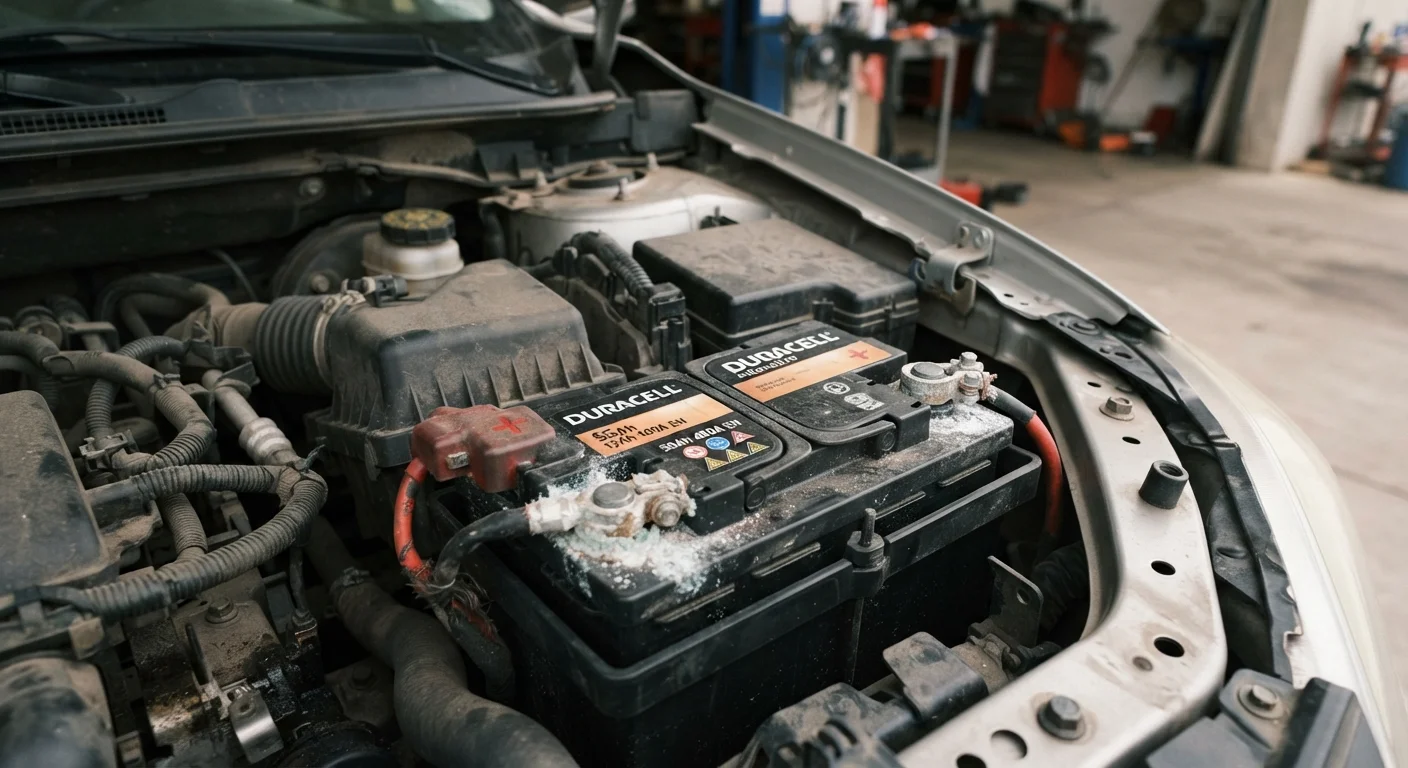
You See Corrosion on the Battery Terminals
Battery terminals - the metal connectors where cables attach to the battery - can develop a white, blue, or greenish crusty buildup over time. This corrosion increases electrical resistance, which means less current reaches the starter and other components, even if the battery itself still holds a reasonable charge.
In some cases, heavy terminal corrosion can cause symptoms that look exactly like a dead battery. Terminal cleaning is a relatively simple task, but if the battery is also aging, cleaning alone may only buy a little time.
Heavy terminal corrosion can mimic a dead battery - clean terminals before assuming the battery is finished.
The Battery Case Looks Swollen or Misshapen
A battery that has been subjected to extreme heat - either from the engine bay or from overcharging - can swell or warp. If the rectangular plastic case looks bloated, bulging on the sides, or visibly out of shape, the battery's internal chemistry has been compromised.
A swollen battery should be replaced without delay. Beyond being unreliable, a physically damaged battery carries safety risks and should be handled by a professional.
A swollen or warped battery case is a safety concern and warrants immediate professional attention.
The Battery Is More Than Four or Five Years Old
Age is a legitimate warning sign on its own. Most car batteries are rated for roughly three to five years under normal driving conditions, though actual lifespan varies with climate, usage patterns, and battery type. Extreme heat accelerates degradation; frequent short trips that prevent a full recharge do too.
If your battery is approaching or past the four-year mark, having it load-tested annually is a reasonable precaution - even if it hasn't shown obvious symptoms yet. It's a small step that can prevent a frustrating and avoidable breakdown.
A battery past four years old deserves annual load testing, regardless of how well the car seems to start.
What to Do When You Spot These Signs
Identifying a potential battery problem is only half the job. The next step is getting it confirmed. Most auto parts stores and repair shops offer free or low-cost battery load tests - a quick diagnostic that measures how much charge the battery holds under realistic demand. This is far more reliable than simply checking voltage with a basic multimeter, which can show a normal reading even on a battery that's about to fail.
If your battery is more than three to four years old and showing any of the signs above, testing it proactively - before a breakdown - is a practical move. Battery-related dashboard warning lights like the battery icon or check-engine indicator are also worth investigating promptly rather than hoping they resolve on their own.
For drivers planning a long drive, a battery check belongs on your pre-trip list. See our vehicle checks before a road trip for a full rundown of what to inspect before heading out on the highway.
Get a Load Test, Not Just a Voltage Check
A standard voltage reading can show a normal result even on a battery that's close to failure. A load test applies simulated demand to the battery and measures how it performs under real-world conditions. Many auto parts retailers perform this test for free, and it takes only a few minutes. If your battery is aging or showing symptoms, ask specifically for a load test rather than a simple voltage check.
The content on this site is provided for informational purposes only and should not be considered a substitute for professional advice. While we strive to provide accurate and up-to-date information, we make no guarantees regarding its completeness or accuracy. Always consult a qualified professional for advice specific to your circumstances before making any decisions.