

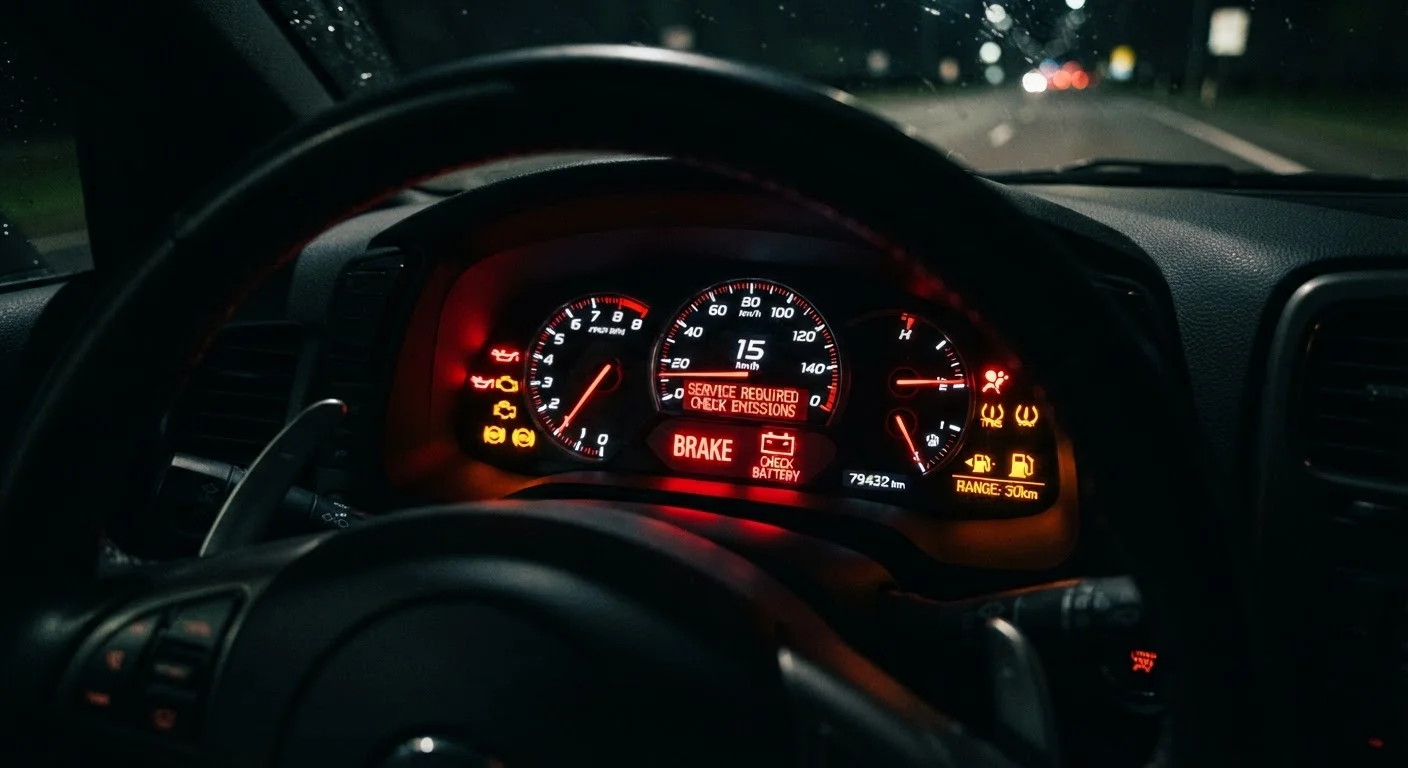
The Color Code: Red, Amber, and Everything Else
Before diving into individual symbols, understand the universal priority system built into every modern dashboard. Warning lights use color to communicate urgency at a glance.
- Red: Stop or act immediately. Red lights signal conditions that can cause engine damage, injury, or complete vehicle failure if ignored. Pull over safely as soon as conditions allow.
- Amber/Yellow: Attention required, but not necessarily right now. These lights flag developing issues - things that need a mechanic's attention soon, but usually won't strand you mid-commute.
- Green or Blue: Informational only. These confirm that a system is active - high beams, turn signals, cruise control. No action needed.
Some vehicles also use white or orange variations depending on manufacturer. When in doubt, consult your owner's manual, which contains the authoritative symbol guide for your specific make and model.
| Red light response | Stop driving as soon as safely possible |
| Amber light response | Schedule service within days, not weeks |
| Most common warning light | Check Engine (malfunction indicator lamp) |
| TPMS threshold | Typically triggers when a tire is 25% below recommended pressure (U.S. NHTSA TPMS standard) |
| Flashing vs. solid check engine | Flashing = urgent misfire; solid = schedule service |
| Where to find your symbol guide | Owner's manual instrument cluster section |
The Lights You Should Know Cold
Most drivers will encounter the same handful of warning lights throughout their ownership. Here's what each means and how urgently to respond.
Check Engine Light (Amber Engine Icon)
This is the most misunderstood light on any dashboard. It doesn't mean your engine is about to explode - but it also shouldn't be ignored. The light can be triggered by anything from a loose gas cap to a failing oxygen sensor or catalytic converter. A solid amber check engine light means schedule a diagnostic soon. A flashing check engine light, however, indicates a serious misfire that can damage the catalytic converter - reduce speed and get to a shop the same day.
Oil Pressure Warning (Red Oil Can Icon)
This is a genuine stop-now emergency. Low oil pressure means your engine's moving parts aren't being lubricated, and internal damage begins within minutes. Pull over safely, turn off the engine, and check the oil level before driving further. Do not confuse this with the oil change reminder, which is amber and appears as mileage-based maintenance alert.
Temperature Warning (Red Thermometer Icon)
An overheating engine can warp cylinder heads and cause catastrophic damage. If this light appears, turn off the A/C, pull over, and let the engine cool completely before checking coolant levels. Never open the radiator cap while the engine is hot.
Battery / Charging System (Red Battery Icon)
This light signals that the vehicle's electrical system isn't charging properly - often a failing alternator or a battery reaching the end of its life. Recognizing early battery warning signs can help you avoid being stranded unexpectedly. Drive to a shop promptly rather than continuing to run systems that drain the battery.
Tire Pressure Monitoring System - TPMS (Amber Exclamation in Tire)
One or more tires are significantly under-inflated. This affects handling, fuel economy, and tire wear. Check all four tires - including the spare on vehicles equipped with a TPMS sensor there - and inflate to the pressures listed on the door jamb sticker, not the tire sidewall.
Brake System Warning (Red Circle with Exclamation or "BRAKE")
If this light appears and your parking brake is fully released, treat it seriously. It can indicate low brake fluid, worn pads, or a fault in the ABS system. Reduced braking performance is a safety issue - have it inspected the same day.
When a Light Comes On: A Practical Response Framework
A warning light is your car's way of flagging a condition it can't resolve on its own. The right response depends on color and context.
- Red light appears: Find a safe place to stop. Assess whether you can safely drive a short distance to a shop or need roadside assistance. When uncertain, don't drive.
- Amber light appears: Note when it appeared and whether any symptoms accompany it (unusual sounds, smells, or handling changes). Schedule a diagnostic within a few days.
- Light comes and goes: Intermittent lights still store diagnostic codes. A mechanic can read those codes even after the light turns off, so don't wait for it to return.
Being prepared matters. A well-stocked vehicle can help you manage minor roadside situations while you wait for help - see what to keep in a car emergency kit for a practical breakdown of essentials.
Malfunction Indicator Lamp (MIL)
The official term for the check engine light. It illuminates when the vehicle's onboard diagnostic system detects a fault in the engine or emissions systems.
OBD-II Code
A standardized fault code stored by your vehicle's onboard diagnostics system when a warning is triggered. Mechanics use a scan tool to read these codes and pinpoint the issue.
TPMS
Tire Pressure Monitoring System. A federally mandated electronic system that alerts the driver when one or more tires fall significantly below the recommended inflation pressure.
Alternator
A generator driven by the engine that keeps the battery charged while the vehicle is running. A failing alternator can drain the battery even while driving.
ABS
Anti-lock Braking System. An electronic safety system that prevents wheels from locking during hard braking, helping drivers maintain steering control in emergency stops.
The content on this site is provided for informational purposes only and should not be considered a substitute for professional advice. While we strive to provide accurate and up-to-date information, we make no guarantees regarding its completeness or accuracy. Always consult a qualified professional for advice specific to your circumstances before making any decisions.