

How the Two Methods Work
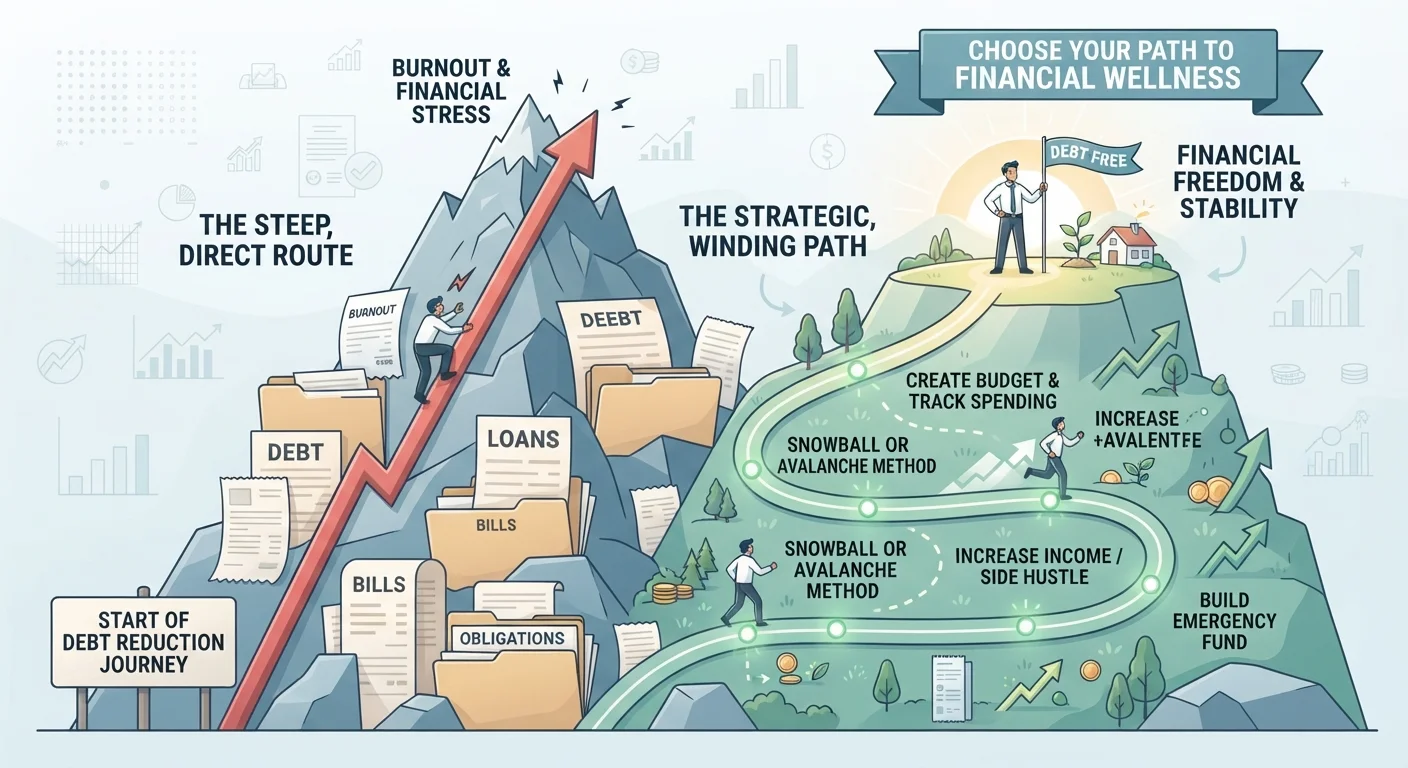
Both the debt avalanche and debt snowball follow the same basic structure: you make minimum payments on every debt you carry, then direct any remaining money toward one specific target account. The difference is entirely in how you choose that target.
Debt Avalanche: Rank your debts from highest interest rate to lowest. Every extra dollar goes to the highest-rate balance until it's gone. Then you roll that payment into the next-highest-rate debt, and so on. Because you're attacking the debt that costs you the most first, you limit how much interest accumulates across all your accounts.
Debt Snowball: Rank your debts from smallest balance to largest, ignoring interest rates. Extra payments go to the smallest balance first. Once it's paid off, you redirect that freed-up payment to the next-smallest debt. The goal here isn't mathematical efficiency - it's psychological momentum. Each eliminated account is a tangible win that reinforces the habit of repayment.
To understand why interest rates matter so much in the avalanche approach, it helps to know how compound interest grows your balances when left unchecked.
Track Every Debt Before You Start
Before choosing a method, list every debt you carry: the balance, interest rate, and minimum payment. This single exercise clarifies exactly what you're dealing with and makes it much easier to rank debts in avalanche or snowball order. A simple spreadsheet or even a handwritten list is enough to get started.
The Real Difference: Math vs. Motivation
On paper, the avalanche method wins every time. Paying less interest means more of your money actually reduces principal, which accelerates payoff across all accounts. For someone with a high-rate credit card and a lower-rate car loan, tackling the credit card first is the clearly cheaper path.
But personal finance isn't a pure math exercise. Research in behavioral economics has consistently found that people are more likely to stick with a plan when they experience early, visible progress. This is where the snowball has a practical edge: knocking out a $400 medical bill quickly produces a real sense of accomplishment that can sustain effort over a long repayment timeline.
The honest answer is that the best method is the one you'll actually follow through on. A perfectly optimized avalanche plan that gets abandoned after three months produces worse outcomes than a snowball plan completed over two years.
A Hybrid Approach Is Legitimate
You don't have to choose one method exclusively. Some people pay off one or two small balances first (snowball logic) to simplify their debt picture, then switch to avalanche order for the remaining higher-rate debts. What matters is consistency: make minimums on everything, every month, and keep directing extra money somewhere intentional.
Comparing These Methods to Other Repayment Strategies
The avalanche and snowball are do-it-yourself strategies - you reorganize your repayment priorities without taking on new debt or changing your account terms. Other approaches work differently.
Debt consolidation combines multiple debts into a single loan, ideally at a lower interest rate. It simplifies repayment but requires qualifying for new credit and carries its own costs and risks. Similarly, using a personal loan to pay off high-interest debt can reduce your rate, but the strategy only works if you don't accumulate new balances in the meantime.
Unlike those approaches, both the avalanche and snowball require no new credit applications, no fees, and no changes to existing account terms. They're accessible to almost anyone who can free up even a modest amount of extra cash each month. For a broader introduction to managing what you owe, our beginner's overview of getting out of debt is a useful starting point.
~$6,000
Average American credit card debt per household
According to Federal Reserve data, revolving credit card balances remain a significant component of household debt for many American families.
20%+
Typical credit card APR in recent years
The Federal Reserve has reported average credit card interest rates exceeding 20% in recent rate environments, making high-rate debt especially costly to carry.
3 in 10
Adults who carry credit card debt month to month
Survey data from the American Bankers Association indicates a substantial share of cardholders carry a balance rather than paying in full each month.
Choosing the Right Approach for Your Situation
A few practical factors can help guide your choice:
- If your highest-rate debt also has a large balance, the avalanche can feel discouraging early on because payoff takes longer. A hybrid approach - clearing one or two small debts first, then switching to avalanche order - can help.
- If your debts are close in interest rate, the financial difference between methods shrinks. In that case, the snowball's motivational benefits may tip the decision.
- If you're highly disciplined and focused on minimizing cost, the avalanche is the cleaner choice mathematically.
Regardless of which method you choose, the strategy only works within a stable budget. If you haven't yet mapped out your monthly income and expenses, the budgeting basics hub covers the foundational steps. And if you're unsure whether to prioritize debt repayment over building savings simultaneously, that question deserves its own consideration - see our piece on paying off debt vs. building savings.
This article is for general informational purposes only and does not constitute personalized financial advice. For guidance specific to your situation, consider consulting a licensed financial advisor or a nonprofit credit counseling agency.
Frequently Asked Questions
The avalanche method almost always saves more money in total interest paid. By eliminating your highest-rate balances first, you slow the growth of interest charges across your entire debt load. The difference can be hundreds or even thousands of dollars depending on your balances and rates.
Yes. There's no rule locking you into one approach. Some people start with the snowball to build confidence, then switch to the avalanche once they've eliminated a few small debts. What matters most is maintaining consistency and momentum.
If your budget is too tight for extra payments, focus first on making every minimum payment on time to avoid penalties and credit damage. Once you've stabilized your budget, even a small additional amount - applied consistently - will make a difference over time.
Neither method inherently harms your credit score. Paying off balances reduces your credit utilization, which generally has a positive effect. What matters is that you continue making on-time minimum payments across all accounts throughout the process.
Most financial educators recommend having at least a small emergency fund - often cited as $500 to $1,000 - before aggressively paying down debt. Without it, an unexpected expense can push you back into debt just as you're making progress. See our guide on <a href="/finance/saving-and-debt/paying-off-debt-vs-building-savings-when-to-prioritize-which">balancing debt payoff and savings</a> for a fuller discussion.
Yes. Debt consolidation and personal loans are two strategies that restructure what you owe rather than just changing the repayment order. They come with their own trade-offs and aren't right for everyone. A licensed financial counselor can help you evaluate all your options.
The content on this site is provided for informational purposes only and should not be considered a substitute for professional advice. While we strive to provide accurate and up-to-date information, we make no guarantees regarding its completeness or accuracy. Always consult a qualified professional for advice specific to your circumstances before making any decisions.