

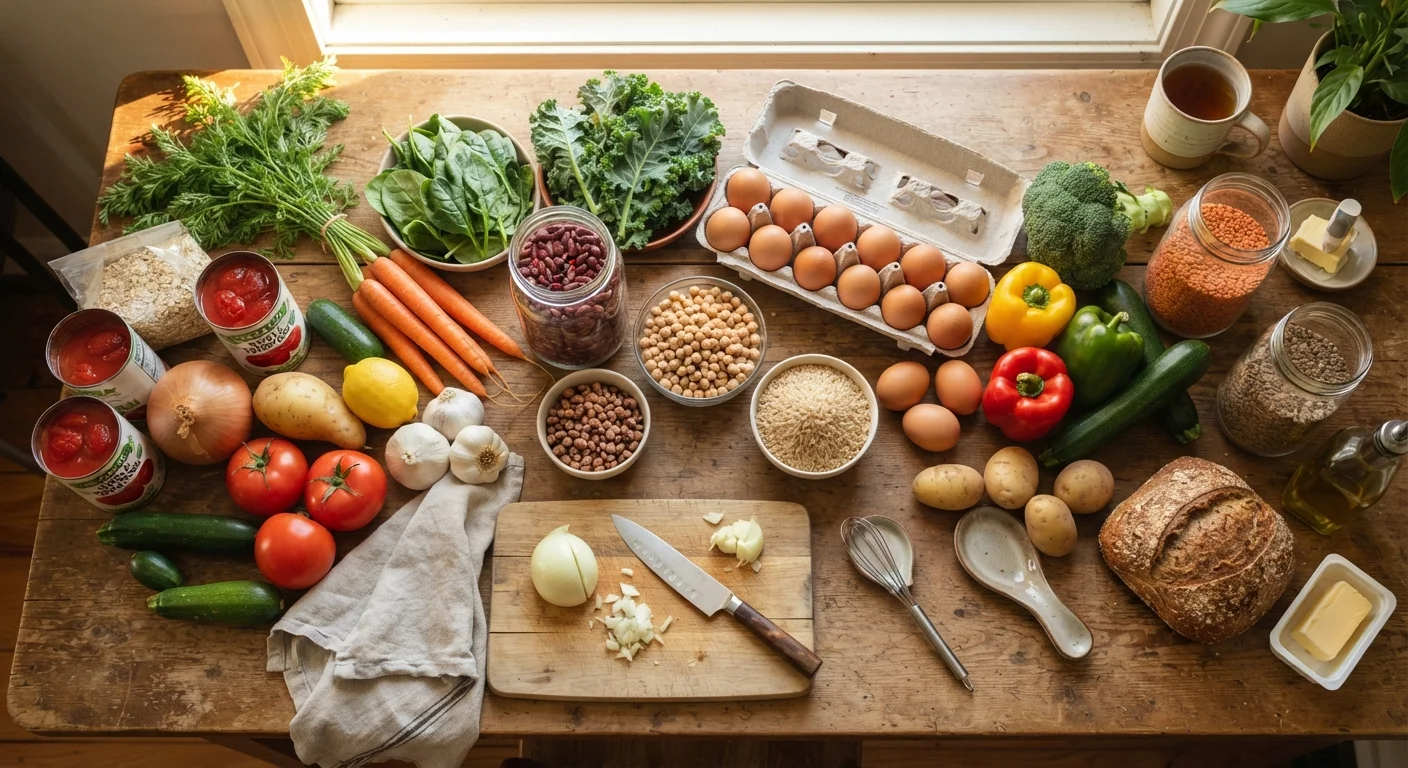
Why Budget Nutrition Is More Achievable Than You Think
A common assumption is that eating well requires trips to upscale health food stores, premium supplements, or specialty ingredients. In reality, nutrition science consistently points to a core set of affordable, widely available foods that deliver the nutrients most people need. A conventional supermarket or discount grocery store carries nearly everything required for a balanced diet.
The challenge is less about access to "superfoods" and more about knowing which everyday choices deliver the most nutritional value per dollar. This article breaks down the principles that make budget-friendly nutrition not just possible, but sustainable. For a practical framework on how to structure these meals, see Building a Balanced Plate.
This article is for general informational and educational purposes only. It is not a substitute for professional medical or dietary advice. Speak with a registered dietitian or qualified healthcare provider for guidance specific to your health needs.
Best Practices for Nutritious Eating on a Budget
The following practices are grounded in established dietary guidance. Each one is designed to be actionable without requiring specialized stores, expensive products, or culinary expertise.
Build your meals around dried or canned legumes as a primary protein and fiber source.
Legumes - including lentils, black beans, chickpeas, and kidney beans - provide protein, dietary fiber, iron, and folate at a fraction of the cost of animal proteins. They are shelf-stable, versatile, and widely available. Regular consumption is associated with improved cardiovascular and metabolic health markers in population-level research.
Choose frozen vegetables over fresh when fresh options are out of season or over budget.
Vegetables are flash-frozen at peak ripeness, which preserves most of their vitamins and minerals. Studies comparing frozen and fresh produce have generally found comparable nutritional content - and sometimes higher levels of certain nutrients in frozen varieties after transit and storage time are factored in. Frozen vegetables also dramatically reduce food waste.
Anchor meals with whole grains rather than refined carbohydrates.
Whole grains - such as oats, brown rice, barley, and whole wheat bread - provide fiber, B vitamins, magnesium, and slower-digesting carbohydrates compared to their refined counterparts. Dietary fiber supports digestive health and helps maintain satiety between meals. Whole grains are typically inexpensive in bulk or store-brand form.
Plan meals for the week before shopping and build your list around overlapping ingredients.
Meal planning reduces impulse purchases and cuts food waste - two of the biggest drivers of overspending on groceries. When ingredients serve multiple meals (e.g., a bag of onions used in soup, stir-fry, and eggs), cost per meal drops considerably. Planning also makes it easier to ensure nutritional variety across the week.
Use eggs as a versatile, affordable whole-food protein throughout the week.
Eggs are among the most nutritionally complete and cost-effective foods available at most grocery stores. They contain high-quality protein, healthy fats, choline, and several vitamins and minerals. They are quick to prepare and pair with nearly any vegetable or grain, making them a practical anchor for low-cost meals.
Smart Shopping Habits That Reinforce Good Nutrition
What you buy shapes what you eat. A few deliberate shopping habits can close the gap between intention and action without adding to your grocery bill.
If you're building a broader financial plan that includes your food budget, setting up a basic budget is a useful companion step. Understanding where your money goes each month often reveals room to prioritize quality staples without overspending.
Protein Without the Premium Price Tag
Protein is one of the most discussed nutrients in popular health media, often alongside expensive powders or specialty bars. However, high-quality protein is readily available in affordable, whole-food forms. Eggs, canned tuna, low-fat dairy, dried or canned legumes, and tofu are all cost-effective sources that cover the full range of essential amino acids - either on their own or when combined.
For a more detailed breakdown of how different protein sources compare nutritionally, Protein Sources Across Different Eating Patterns offers a useful reference across a range of dietary styles.
~$0.25
Average cost per serving of dried lentils
USDA food price data consistently places dried legumes among the lowest-cost protein sources available in U.S. grocery stores.
90%+
Nutrients retained in flash-frozen vegetables
Research published in nutritional science journals has found that freezing preserves the majority of vitamins and minerals in most vegetables when processed promptly after harvest.
Pairing plant-based proteins - such as rice and beans - across meals is a well-established way to ensure a complete amino acid intake without relying on animal products or spending more. This approach is particularly useful for households trying to reduce both costs and meat consumption simultaneously.
The content on this site is provided for informational purposes only and should not be considered a substitute for professional advice. While we strive to provide accurate and up-to-date information, we make no guarantees regarding its completeness or accuracy. Always consult a qualified professional for advice specific to your circumstances before making any decisions.