

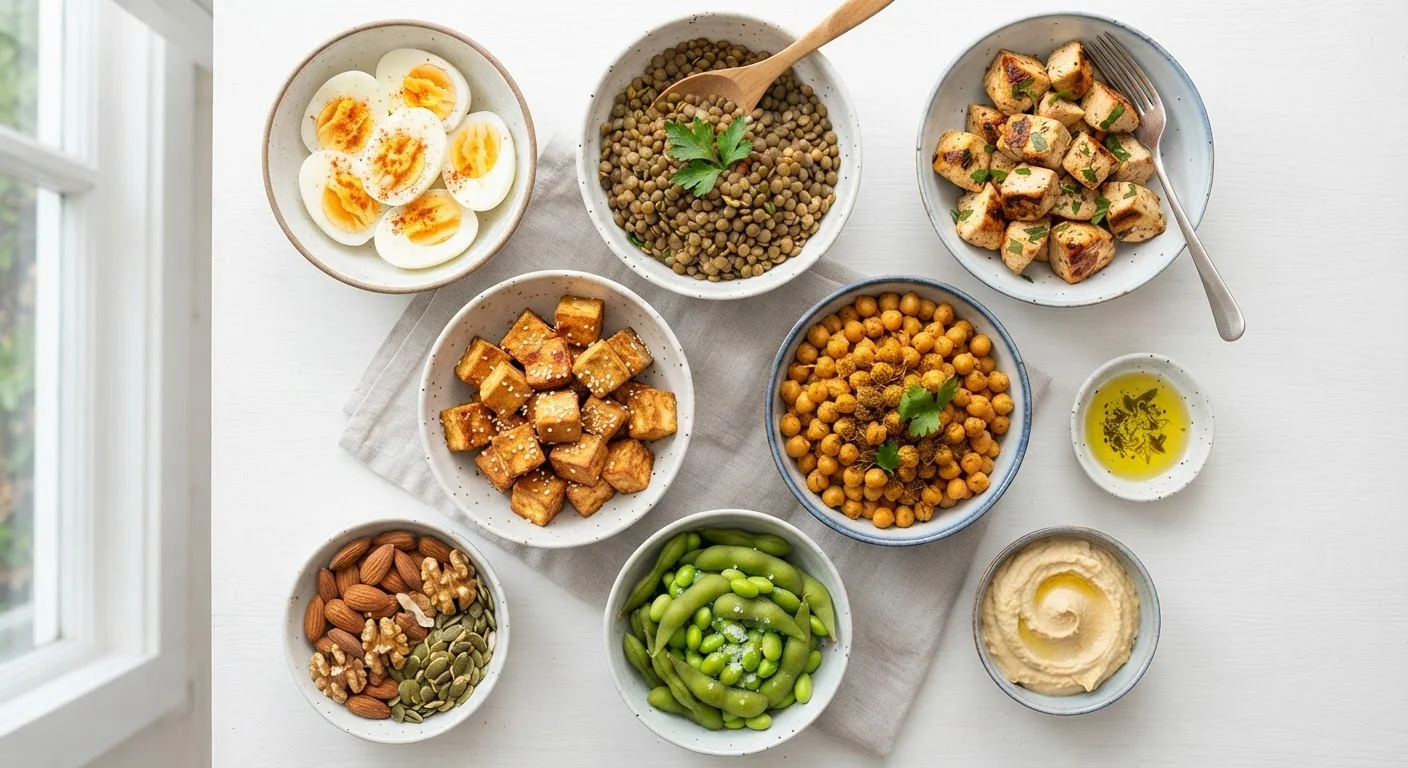
Why Protein Quality Matters as Much as Quantity
Most nutrition conversations focus on how much protein to eat. But not all protein is nutritionally identical. Two foods can contain the same grams of protein per serving while delivering very different combinations of amino acids - the building blocks your body uses for muscle repair, enzyme production, immune function, and more.
Proteins are classified by their amino acid completeness. Animal-based proteins - meat, poultry, fish, eggs, and dairy - are generally considered complete proteins, meaning they supply all nine essential amino acids your body cannot make on its own. Many plant proteins are considered incomplete, lacking or providing low amounts of one or more essential amino acids. However, this distinction matters less across a full day of eating than many people assume: a varied plant-based diet can readily meet all amino acid needs.
This reference is designed to help you quickly compare common protein sources across eating patterns - whether you follow an omnivore, vegetarian, vegan, flexitarian, or other approach. For guidance on building complete meals around these foods, see our balanced plate framework.
Complete protein
A food that contains all nine essential amino acids in adequate amounts. Most animal-based proteins and a handful of plant foods - such as soy and hemp - qualify as complete proteins.
Essential amino acids
The nine amino acids the human body cannot synthesize on its own and must obtain from food. They include leucine, lysine, methionine, and six others critical to metabolism and tissue repair.
Incomplete protein
A protein source that is low in or missing one or more essential amino acids. Many plant foods fall into this category, though a varied diet can compensate for individual gaps.
Protein complementing
A dietary strategy of pairing two incomplete plant proteins so their amino acid profiles offset each other's weaknesses. Classic examples include rice and beans, or bread and legume spreads.
Bioavailability
The proportion of a nutrient that the body can actually absorb and use. Animal proteins generally have higher bioavailability than plant proteins, though cooking and preparation can improve absorption from plant sources.
Leucine
An essential amino acid particularly important for muscle protein synthesis. It is abundant in animal proteins and in soy; lower in most other plant foods.
This article provides general nutrition information and is not a substitute for personalized medical or dietitian advice. Consult a qualified healthcare professional for guidance specific to your health needs.
Protein Content by Food Category
The figures below reflect approximate values for common serving sizes based on USDA nutritional data. Actual values vary by preparation method, cut, or brand.
| Protein in tempeh (3 oz) | ~16 g (USDA FoodData Central) |
| Protein in cooked chicken breast (3 oz) | ~26 g (USDA FoodData Central) |
| Plant foods that are complete proteins | Soy (tofu, tempeh, edamame), hemp seeds, quinoa |
| Essential amino acids humans require from diet | 9 (National Institutes of Health) |
| Protein in cooked lentils (½ cup) | ~9 g (USDA FoodData Central) |
| Protein in one large egg | ~6 g (USDA FoodData Central) |
Animal-Based Sources
- Chicken breast (3 oz, cooked): ~26 g protein - complete amino acid profile, low in saturated fat when skinless.
- Canned tuna (3 oz): ~22 g protein - complete profile, also a source of omega-3 fatty acids.
- Eggs (1 large): ~6 g protein - complete profile; the egg white is pure protein while the yolk contains fat-soluble nutrients.
- Greek yogurt (6 oz, plain): ~15-17 g protein - complete profile, also provides calcium and live cultures.
- Cottage cheese (½ cup): ~14 g protein - high in casein, a slower-digesting protein.
Plant-Based Sources
- Cooked lentils (½ cup): ~9 g protein - incomplete but high in lysine, complementing grains well. Also a strong source of fiber and iron.
- Firm tofu (3 oz): ~8 g protein - considered a complete protein, one of few plant foods with this distinction.
- Edamame (½ cup, shelled): ~9 g protein - complete protein, high in fiber and folate.
- Black beans (½ cup, cooked): ~7-8 g protein - incomplete, pairs well with rice to cover methionine.
- Tempeh (3 oz): ~16 g protein - fermented soy product, complete profile, and a source of probiotics.
- Hemp seeds (3 tbsp): ~10 g protein - complete profile, also provides omega-3 and omega-6 fatty acids.
- Pumpkin seeds (1 oz): ~9 g protein - incomplete but relatively high in methionine compared to legumes.
Many plant protein sources also deliver fiber, antioxidants, and micronutrients that animal proteins do not. For a deeper look at how plant and omnivore eating patterns compare on long-term health markers, see what research says about plant-based vs. omnivore diets.
Complementary Proteins and Practical Pairing
The concept of protein complementing refers to combining two incomplete plant proteins so that each covers the amino acid gaps of the other. Classic pairings include:
- Rice + beans: Rice is low in lysine but higher in methionine; beans are the inverse. Together they approximate a complete amino acid profile.
- Whole wheat bread + peanut butter: A convenient, affordable combination that improves overall amino acid balance.
- Hummus + pita: Chickpeas and wheat together cover each other's limiting amino acids.
Importantly, these combinations do not need to be eaten in the same meal - the body draws from an amino acid pool throughout the day. Eating a variety of plant proteins across meals is sufficient for most healthy adults.
If you are managing a tight grocery budget, plant proteins like lentils, canned beans, and eggs are among the most cost-effective protein sources available. Our guide on eating well on a budget offers practical strategies for meeting nutritional needs without specialty products.
For those comparing structured eating frameworks - such as Mediterranean, DASH, or low-carb diets - protein source selection differs meaningfully by pattern. See how these diets compare side by side for a factual overview.
Individual protein needs vary based on age, health status, activity level, and other factors. A registered dietitian can help you determine appropriate targets for your specific situation.
The content on this site is provided for informational purposes only and should not be considered a substitute for professional advice. While we strive to provide accurate and up-to-date information, we make no guarantees regarding its completeness or accuracy. Always consult a qualified professional for advice specific to your circumstances before making any decisions.