

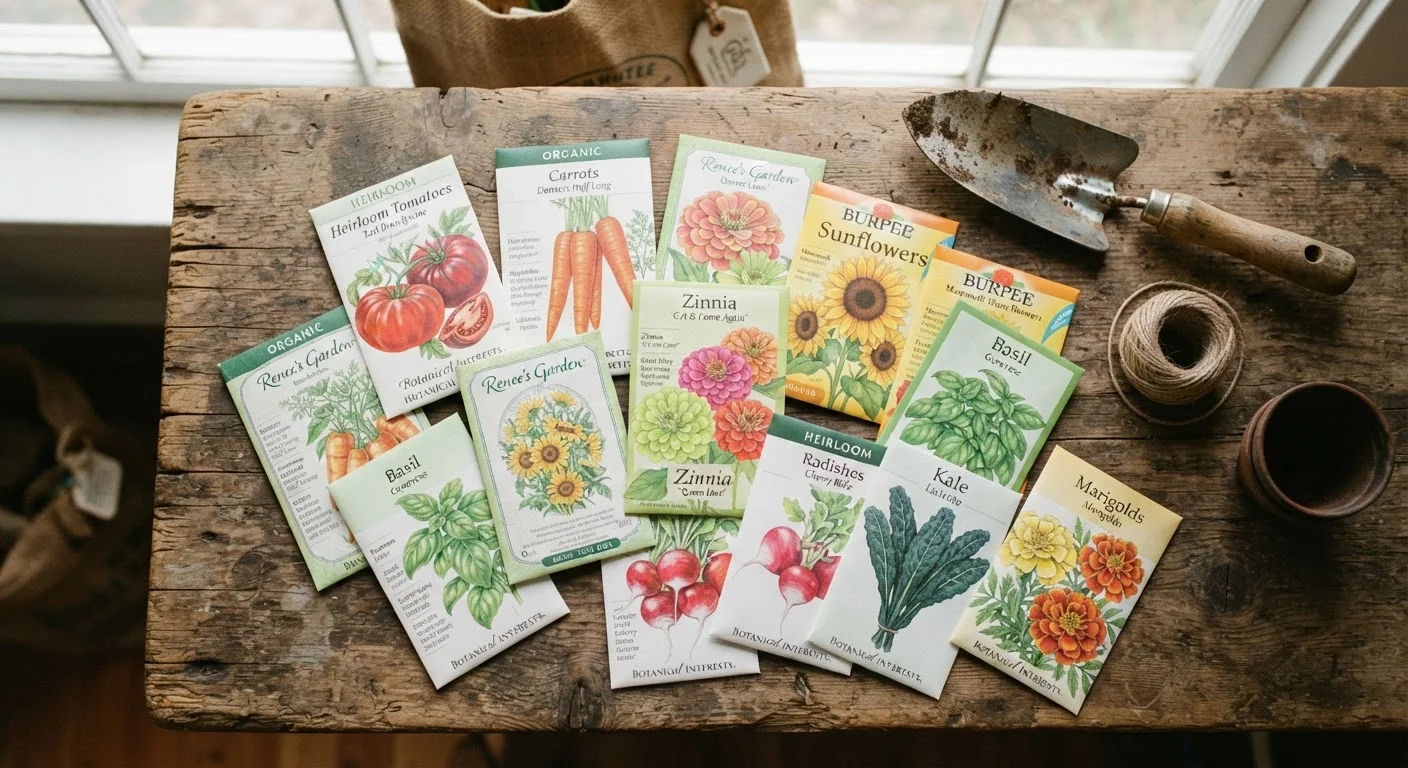
What's on the Front of the Packet
The front of a seed packet is more than marketing. It typically includes the plant's common name, its botanical (Latin) name, and a variety name. The variety matters - "Roma" and "Beefsteak" are both tomatoes, but they grow, ripen, and taste differently. A photo or illustration gives you a realistic preview of what a healthy, mature plant looks like.
You'll also often find a USDA Hardiness Zone reference or a general growing region recommendation. If your zone isn't listed, that variety may not be suited to your climate. Before you plant anything, make sure you understand the fundamentals covered in our beginner's guide to soil, sunlight, and water.
Decoding the Back Panel: The Numbers That Matter Most
The back of the packet is where the actionable planting data lives. Here's what each term means:
- Planting Depth: How deep to bury each seed, usually expressed in inches (e.g., ½" or 1"). Tiny seeds often need just a light surface covering; larger seeds go deeper. Planting too deep is one of the most common reasons seeds fail.
- Spacing: Two numbers appear here - the distance between seeds in a row, and the distance between rows. Crowding plants leads to poor air circulation and competition for nutrients.
- Days to Germination: The window within which you can expect seedlings to emerge under ideal conditions, typically expressed as a range (e.g., 7-14 days). If nothing sprouts outside that window, consult our guide on why seeds fail to germinate to troubleshoot.
- Days to Maturity: How long from planting (or transplanting) until the plant produces harvestable crops or reaches full bloom. This is critical for planning - if your growing season is 90 days and the packet says 110, that variety won't work outdoors in your area without a head start indoors.
Days to Maturity
The number of days from planting (or transplanting outdoors) until a plant is ready to harvest or has reached full flowering. It assumes reasonably ideal growing conditions.
Germination
The process by which a seed sprouts and begins to grow into a seedling. Germination requires adequate moisture, warmth, and sometimes light, depending on the species.
Hardiness Zone
A geographic designation from the USDA that indicates the average annual minimum winter temperature for a region. It helps gardeners identify which plants are likely to survive winter in their area.
Heirloom Variety
An open-pollinated plant variety that has been grown and passed down for many generations. Seeds saved from heirloom plants will reliably produce offspring with the same characteristics.
Hybrid (F1)
A plant variety created by deliberately cross-pollinating two distinct parent lines. Hybrids often show improved vigor, disease resistance, or yield, but seeds saved from them won't produce identical offspring.
Direct Sow
Planting seeds directly into outdoor garden soil rather than starting them in pots or trays indoors first. Many root vegetables and cool-weather crops prefer direct sowing.
Light requirements - such as "Full Sun" or "Partial Shade" - also appear on most packets. These terms have precise meanings that affect where you place your plants. Learn exactly what each light label means before choosing a garden bed location.
Special Labels and Symbols Explained
Many packets include additional labels that carry meaningful growing guidance:
- Direct Sow vs. Start Indoors: "Direct sow" means place seeds straight into garden soil. "Start indoors" (usually listed as X weeks before last frost) means the plant needs a head start in containers before outdoor temperatures are safe.
- Last Frost Date Reference: Instructions like "plant 2 weeks after last frost" are tied to your local last frost date, which varies by region. Check your local extension service or the USDA's plant hardiness zone map for your area's average dates. Pairing this with a seasonal planting calendar makes scheduling straightforward.
- Heirloom / Open-Pollinated: Seeds that breed true from generation to generation. You can save seeds from heirloom plants and replant them next year.
- Hybrid (F1): A cross between two parent varieties, often bred for disease resistance or uniform appearance. Saved seeds from hybrids won't reliably reproduce the same plant.
- Organic Certified: The seeds were produced without synthetic pesticides or fertilizers under a certified program.
- Treated Seeds: Coated with a fungicide or other treatment to improve germination rates. Treated seeds are not suitable for organic gardens and should be handled with care.
Packet date / Packed for: Seeds lose viability over time. Most packets are labeled with the year they were packed for. Using seeds one year past this date is often fine, but germination rates typically decline each year after that.
Seed Packet Dates vs. Expiration Dates
Seed packets don't expire the way food does - the "packed for" year indicates peak viability, not a hard cutoff. Many seeds remain viable for 2-4 years if stored in a cool, dry, dark location. To test older seeds, place 10 seeds on a damp paper towel, seal in a bag, and check for sprouting after the packet's listed germination period. A 70% or better sprout rate (7 out of 10) generally means the seeds are still worth planting.
The content on this site is provided for informational purposes only and should not be considered a substitute for professional advice. While we strive to provide accurate and up-to-date information, we make no guarantees regarding its completeness or accuracy. Always consult a qualified professional for advice specific to your circumstances before making any decisions.