

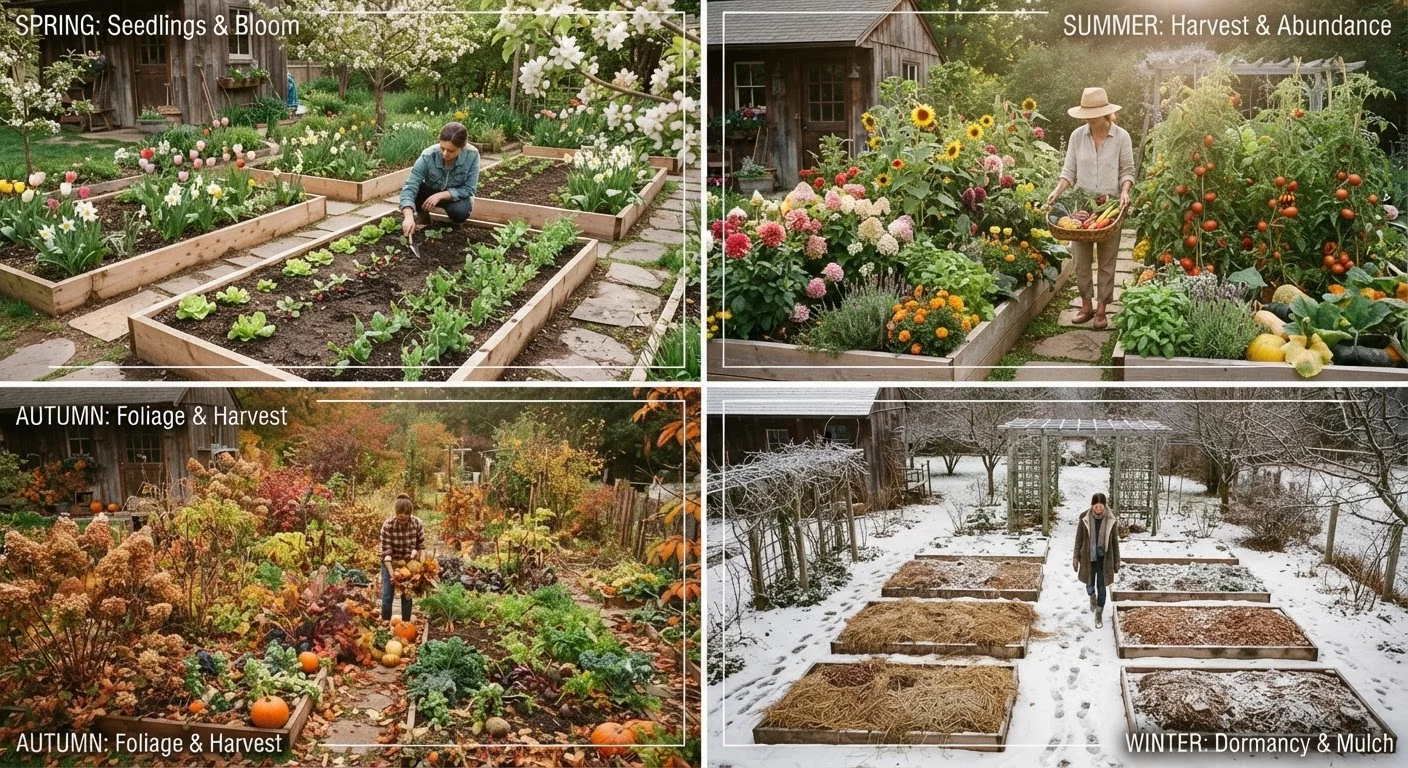
How to Use a Gardening Calendar
A gardening calendar isn't a rigid rulebook - it's a rhythm. Exact timing shifts depending on where you live, so your most important reference is your last spring frost date and your first fall frost date. The USDA Plant Hardiness Zone Map is a useful companion for understanding what your winters can and can't sustain. See how hardiness zones affect plant selection for a deeper look.
Before you commit seeds or transplants to any bed, make sure you have a handle on the three fundamentals: soil quality, sunlight hours, and watering needs. Our beginner's guide to soil, sunlight, and water covers everything you need to assess before planting anything.
Use the seasonal breakdowns below as a checklist, adapting timing by a few weeks earlier or later based on your local climate.
| Cool-season planting window | 2-4 weeks before last spring frost; again 6-8 weeks before first fall frost |
| Warm-season planting start | After last frost date, once overnight temps stay above 50°F |
| Typical weekly water need (vegetables) | ~1 inch per week (rain + irrigation combined) |
| Best time to divide perennials | Early spring or early fall, when temperatures are mild |
| Garlic planting window | Fall (4-6 weeks before ground freezes) for summer harvest |
| Soil temperature for seed germination | Most vegetable seeds germinate best between 60-85°F |
Spring: Plant, Prepare, and Get Ahead
Spring is the busiest season in the garden. As soil temperatures climb above 50°F, it's time to act - but not all at once.
Early Spring (Before Last Frost)
- Test and amend soil with compost or aged manure. See how to make your own compost to prep a pile now for next year.
- Start cool-season crops indoors: lettuce, broccoli, cabbage, and onions do well with a 6-8 week head start.
- Clean and sharpen garden tools; replace any worn hoses or soaker lines.
- Apply a layer of mulch to beds once the ground thaws to suppress early weeds.
Mid-to-Late Spring (After Last Frost)
- Direct-sow warm-season vegetables - beans, squash, corn, and cucumbers - once overnight temperatures stay consistently above 50°F.
- Transplant tomato and pepper seedlings after hardening them off over 7-10 days.
- Prune dead or winter-damaged wood from shrubs and trees once new growth appears.
- Divide overcrowded perennials and replant divisions to fill bare spots.
For layout guidance before you break ground, vegetable garden spacing and rotation planning will help you organize beds for maximum productivity.
Summer: Maintain, Harvest, and Watch for Stress
Summer is less about planting and more about consistency. Heat, drought, and pests all peak between June and August, so your job is to keep plants well-supported.
- Water deeply and infrequently - most vegetables need about 1 inch of water per week. Early morning watering reduces fungal disease risk.
- Deadhead flowering annuals and perennials regularly to extend bloom time through the season.
- Harvest frequently - leaving ripe vegetables on the vine signals the plant to stop producing. Beans, zucchini, and cucumbers are notorious for this.
- Succession plant fast-maturing crops like lettuce and radishes every two to three weeks for a continuous harvest.
- Monitor for pests and diseases weekly. Catching problems early - before they spread - is far more effective than treating established infestations.
- Apply a second round of mulch mid-summer to conserve soil moisture as temperatures climb.
Building steady garden habits throughout the season makes summer maintenance feel routine rather than reactive.
Fall: Harvest, Clean Up, and Set Up Next Year
Fall is the season experienced gardeners treat as an investment in next spring. A few hours of work now can dramatically reduce your workload in March and April.
- Plant cool-season crops for a second harvest: kale, spinach, arugula, and garlic all do well when planted 6-8 weeks before your first fall frost date.
- Dig and store tender bulbs - dahlias, cannas, and gladioli won't survive hard freezes and should be dried and stored indoors.
- Cut back spent perennials, but leave seed heads on some plants (coneflowers, black-eyed Susans) to feed overwintering birds.
- Rake and compost fallen leaves, or shred them directly onto garden beds as a free, nutrient-rich mulch layer.
- Apply a balanced, slow-release fertilizer to lawns in early fall to support root development before dormancy.
- Clean and oil tools before storing them for winter to prevent rust and extend their life.
Check our early spring prep checklist to understand which fall tasks directly feed into next year's readiness.
Winter: Plan, Rest, and Order Ahead
Winter is the garden's dormant phase - and your planning phase. The work is mostly mental and organizational, but it pays off all season long.
- Order seeds early. Seed catalogs and online inventories sell out of popular varieties by February. Ordering in December or January gives you the widest selection. Learn to read a seed packet before placing your order so you buy what your space and zone actually support.
- Review what worked and what didn't. Jot notes on yields, pest problems, and bed performance while memories are fresh.
- Plan crop rotation for next year - moving plant families around beds each season reduces soil-borne disease buildup.
- Protect vulnerable plants with burlap wraps or frost cloth if you're in a zone with unpredictable cold snaps.
- Check stored bulbs and root vegetables monthly for rot or desiccation.
Whether you're a beginner or a seasoned grower, treating winter as a reset - not a gap - keeps your gardening intentional and progressive season after season.
The content on this site is provided for informational purposes only and should not be considered a substitute for professional advice. While we strive to provide accurate and up-to-date information, we make no guarantees regarding its completeness or accuracy. Always consult a qualified professional for advice specific to your circumstances before making any decisions.