

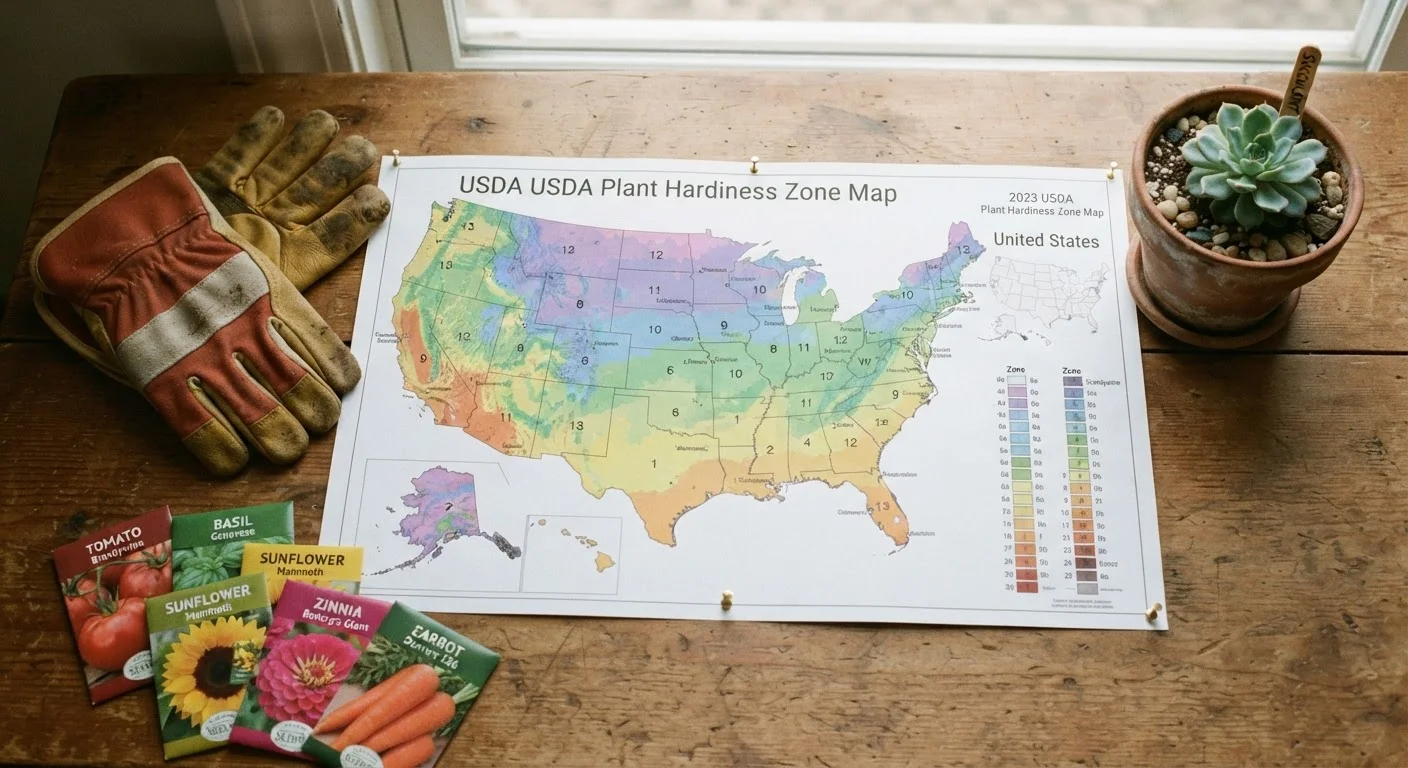
What the USDA Zone Map Actually Measures
The USDA Plant Hardiness Zone Map is built on a single, specific data point: the average annual extreme minimum winter temperature recorded over a 30-year period. That means it captures the coldest night a location typically experiences in a given year - not average winter temperature, total snowfall, or length of the cold season.
This focus on extreme cold matters because it's the primary cause of plant death over winter. A plant described as hardy in zone 7 has been shown to survive temperatures as low as 0°F to 10°F. In zone 5, lows can reach -20°F to -10°F - cold enough to kill that same plant to the roots, even if the rest of winter was mild.
Understanding what the map measures also clarifies what it doesn't measure. It says nothing about summer heat, humidity, drought, soil drainage, or rainfall - all of which significantly affect plant performance. Think of the zone as a necessary filter, not a complete picture. Our guide on soil, sunlight, and water basics covers the other fundamentals you'll want alongside your zone.
How to Read a Plant Tag Using Your Zone
Most plant tags, seed catalogs, and nursery labels include a hardiness zone range - for example, "Zones 4-9." This means the plant is expected to survive winter outdoors in those zones without special protection. If you're in zone 6, that plant is a safe perennial choice. If you're in zone 3, it will likely die over winter and should be treated as an annual or container plant.
The zone range also has an upper limit. A plant labeled zones 4-7 may struggle or fail in zone 8 not because of cold, but because of summer heat. In warmer regions, heat tolerance becomes as important a selection criterion as cold hardiness.
Check the Tag Before You Buy
Always look for the hardiness zone rating on a plant tag before purchasing. If no zone is listed, ask a nursery staff member or look up the plant by its botanical name on a reliable gardening reference site. Buying without checking the zone is one of the most common - and easily avoidable - beginner mistakes.
When shopping at a local nursery, plants stocked for sale are generally suited to your region - but always check the tag. Clearance plants or special orders may come from suppliers in different climate zones.
For plants that need to return each spring, also consider whether they are perennials or annuals. Our article on annuals vs. perennials explains how this distinction shapes long-term garden planning.
Microclimates: Why Your Yard May Have Its Own Zone
Your official zone is a regional average, but your specific yard may be warmer or colder than that average - sometimes by a full zone. These localized conditions are called microclimates, and every property has them.
A south-facing wall that absorbs and radiates heat can make the bed in front of it behave like a zone warmer. A low-lying area where cold air pools on still nights can be a zone colder than the surrounding yard. Dense tree cover, proximity to a body of water, and urban heat from pavement and buildings all create microclimates that shift effective growing conditions.
Paying attention to where frost hits first - and where it lingers last - over a season or two reveals your yard's microclimates. This knowledge lets you place cold-sensitive plants in naturally sheltered spots and reserve exposed areas for the hardiest selections.
Using Zones Alongside Other Planning Tools
Hardiness zones are a starting point, not the whole gardening plan. Pair your zone with your local average frost dates to understand the length of your growing season - essential for deciding when to start seeds and when to transplant. See our seasonal gardening calendar for a month-by-month breakdown of key tasks.
Light requirements work hand-in-hand with zone selection. A plant that's cold-hardy in your zone will still underperform if placed in the wrong light. Our guide to what plant light labels mean can help you match plants to the right spot in your yard.
Using zone information confidently means fewer failed plantings, less wasted money, and a garden that rewards your effort season after season. It's one of the simplest tools available to gardeners - and one of the most consistently overlooked.
Frequently Asked Questions
Enter your ZIP code into the USDA Plant Hardiness Zone Map tool available at the USDA Agricultural Research Service website. Your zone will appear instantly along with average minimum temperature data for your area.
Not directly. Hardiness zones indicate cold survival, not planting dates or frost timing. For planting schedules, you'll need your area's average last spring frost date and first fall frost date, which local cooperative extensions typically publish.
Sometimes. Gardeners in colder zones often grow warmer-zone plants as annuals, in containers brought indoors for winter, or in protected microclimates. The zone label tells you what will reliably overwinter in the ground without special care.
Hardiness zones measure cold tolerance; AHS (American Horticultural Society) heat zones measure how many days a year temperatures exceed 86°F. Some plants that survive your winter may still struggle through your summer heat, so both factors matter in warm climates.
The USDA updates the map periodically as climate data accumulates. The most recent major revision was released in 2023, shifting some areas into slightly warmer half-zones compared to the 2012 version.
Zone ratings are most relevant to perennial plants - trees, shrubs, and perennial flowers - that must survive winter in the ground. Most vegetables are annuals and are less affected by zone; their success depends more on season length and frost dates.
The content on this site is provided for informational purposes only and should not be considered a substitute for professional advice. While we strive to provide accurate and up-to-date information, we make no guarantees regarding its completeness or accuracy. Always consult a qualified professional for advice specific to your circumstances before making any decisions.