

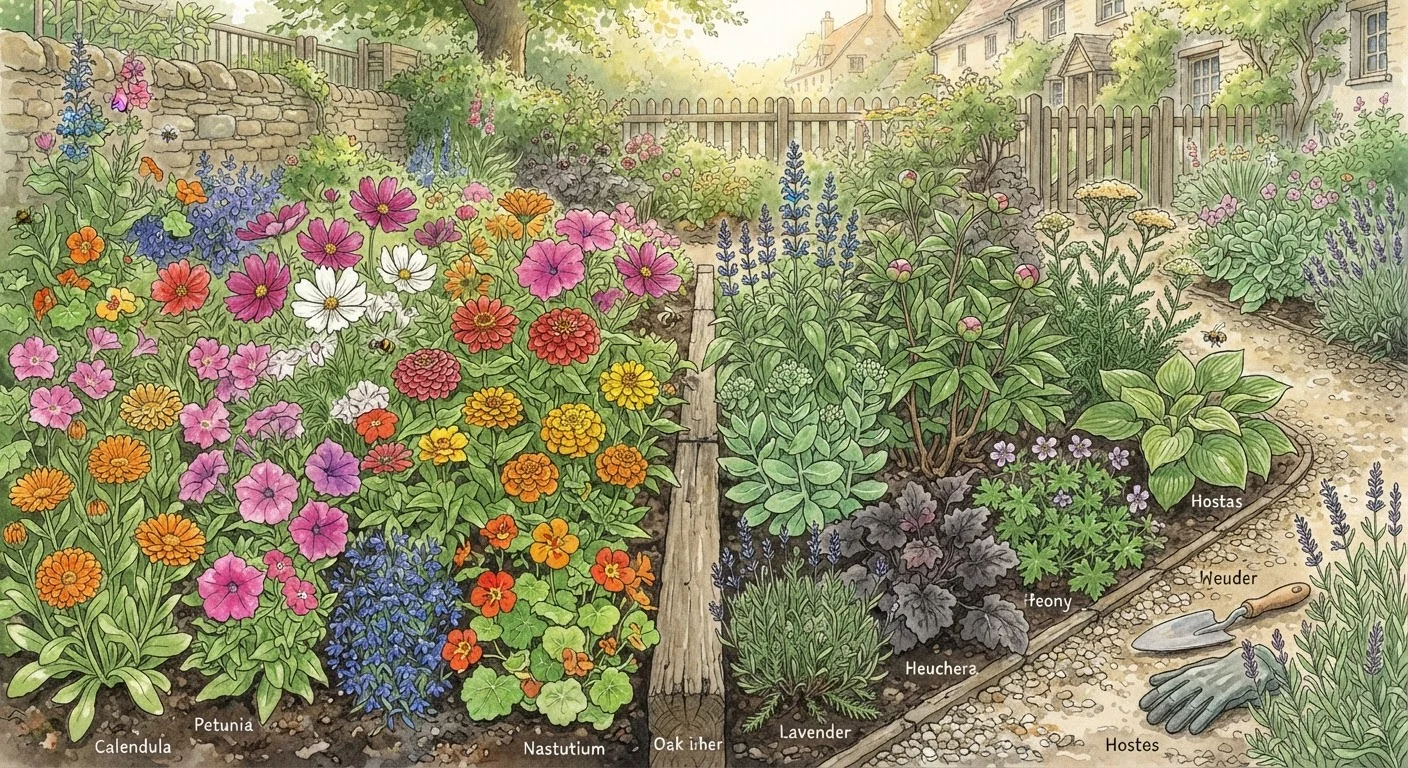
Option A
Annual Plants
The season-long performers that go all in, every year.
Best for: Gardeners who want bold, continuous color and flexibility to redesign their beds each season.
Option B
Perennial Plants
The dependable backbone of a low-maintenance garden.
Best for: Gardeners who prefer long-term investment, less replanting, and a garden that fills in and matures over time.
What Defines an Annual vs. a Perennial
The difference comes down to lifespan. Annual plants complete their entire life cycle - sprouting, growing, flowering, setting seed, and dying - within a single growing season. Once frost arrives, they're done. You'll need to replant them the following spring.
Perennial plants, by contrast, live for more than two years. Their above-ground growth dies back in cold weather, but the root system survives underground and sends up new growth when temperatures warm again. A well-chosen perennial can thrive in the same spot for many years.
There's also a third category worth knowing: biennials. These plants take two years to complete their life cycle - growing foliage the first year and flowering the second before dying. Common biennials include foxglove and hollyhock. They behave somewhere between annuals and perennials and are worth noting if you encounter them at a nursery.
Before diving deeper into plant selection, make sure you have a handle on the basics. Understanding soil, sunlight, and water before you plant anything is a strong foundation that makes every plant choice easier.
How Each Type Performs Through the Season
Annuals are workhorses. Because their biological goal is to reproduce before they die, they typically produce flowers continuously - or nearly so - across the entire growing season. That's why impatiens, zinnias, and marigolds remain popular: they deliver color from spring planting until the first hard frost without much intervention beyond regular watering and occasional deadheading.
Perennials operate differently. Most have a defined bloom window - often two to six weeks - before they shift energy back to root development. Coneflowers (echinacea) might bloom mid-summer; black-eyed Susans peak in late summer; hostas are grown primarily for foliage rather than flowers. The payoff isn't continuous bloom but the reliable rhythm of familiar plants returning each year.
| Criterion | Annual Plants | Perennial Plants |
|---|---|---|
| Lifespan | One growing season | Three or more years |
| Bloom duration | Continuous through season | Defined window (weeks) |
| Replanting required | Every spring | Rarely, once established |
| Upfront cost | Lower per plant | Higher per plant |
| Long-term cost | Ongoing seasonal expense | Reduces over time |
| Design flexibility | Full redesign each year | Fixed placement, gradual spread |
| Establishment time | Immediate performance | One to three years to peak |
| Winter survival | Dies at frost | Roots survive (zone-dependent) |
The smartest approach for most home gardens is a layered one: perennials establish the structure and rhythm of the space, while annuals fill in seasonal gaps with color. This mirrors the approach professional landscape designers use. For a fuller picture of timing, The Gardening Calendar walks through what to plant and prepare each season.
Planning and Cost Considerations
Annuals require a recurring investment - both in dollars and effort. You buy new plants or seeds each spring, which adds up. On the upside, this also gives you complete design freedom: you can change colors, move things around, and experiment each year without disturbing existing plantings.
Perennials demand more upfront. A healthy perennial division or nursery plant may cost more than a flat of annuals, and they often take a year or two to hit their stride (gardeners sometimes say: "first year sleeps, second year creeps, third year leaps"). But once established, they largely take care of themselves - spreading gradually, reducing bare spots, and eliminating the need for seasonal repurchasing.
Your climate plays a significant role in what qualifies as a perennial for your yard. A plant labeled perennial in Georgia may behave as an annual in Minnesota. Understanding USDA Hardiness Zones is an essential step before investing in perennials - it tells you which plants can realistically survive your winters.
For garden setup decisions that affect both annual and perennial choices, Raised beds vs. in-ground planting is worth reading before you commit to a layout.
Building a Garden That Works Long-Term
Most experienced gardeners don't choose between annuals and perennials - they use both intentionally. A common strategy: plant perennials as the structural backbone of a bed, then use annuals to fill gaps and add seasonal color while the perennials mature and spread.
As your perennial collection grows and fills in over the years, you may find you rely on fewer annuals. That progression is part of what makes a garden feel established rather than freshly planted every spring.
Good seasonal habits matter too. Deadheading spent blooms on annuals prolongs their flowering. Cutting back perennials at the right time encourages healthy regrowth. Good garden habits that experienced growers rely on covers the steady, low-effort practices that keep both types performing well.
The goal isn't to fill your garden with one type or the other - it's to design a space that rewards you throughout the growing season, year after year. Understanding the basic difference between annuals and perennials is where that planning begins.
The content on this site is provided for informational purposes only and should not be considered a substitute for professional advice. While we strive to provide accurate and up-to-date information, we make no guarantees regarding its completeness or accuracy. Always consult a qualified professional for advice specific to your circumstances before making any decisions.